












Professional Infrared Thermometer: Clinical Accuracy, Standards, and Selection Guide
Preface
Temperature measurement is one of the most frequently performed clinical assessments in healthcare. A single reading can trigger antimicrobial therapy decisions, blood culture orders, and patient isolation protocols. Yet research published in Clinical Medicine by Holder et al. found that all infrared devices tested against a gold-standard core-body temperature system showed poor agreement, with intra-class correlation coefficients below 0.8.
This finding raises a critical question for every healthcare facility: is the device being used accurate enough for the clinical decisions that depend on it? A professional infrared thermometer is designed to answer that question. Unlike consumer-grade models sold for home use, a clinically validated device has undergone clinical validation, meets international regulatory standards, and is built for the demands of high-volume healthcare environments.
This guide is written for hospital procurement teams, clinical engineers, infection control officers, and healthcare administrators who need to understand what makes a medical-grade infrared thermometer clinically reliable, how regulatory standards work, and what features to prioritize when selecting devices for triage, outpatient, and long-term care settings.
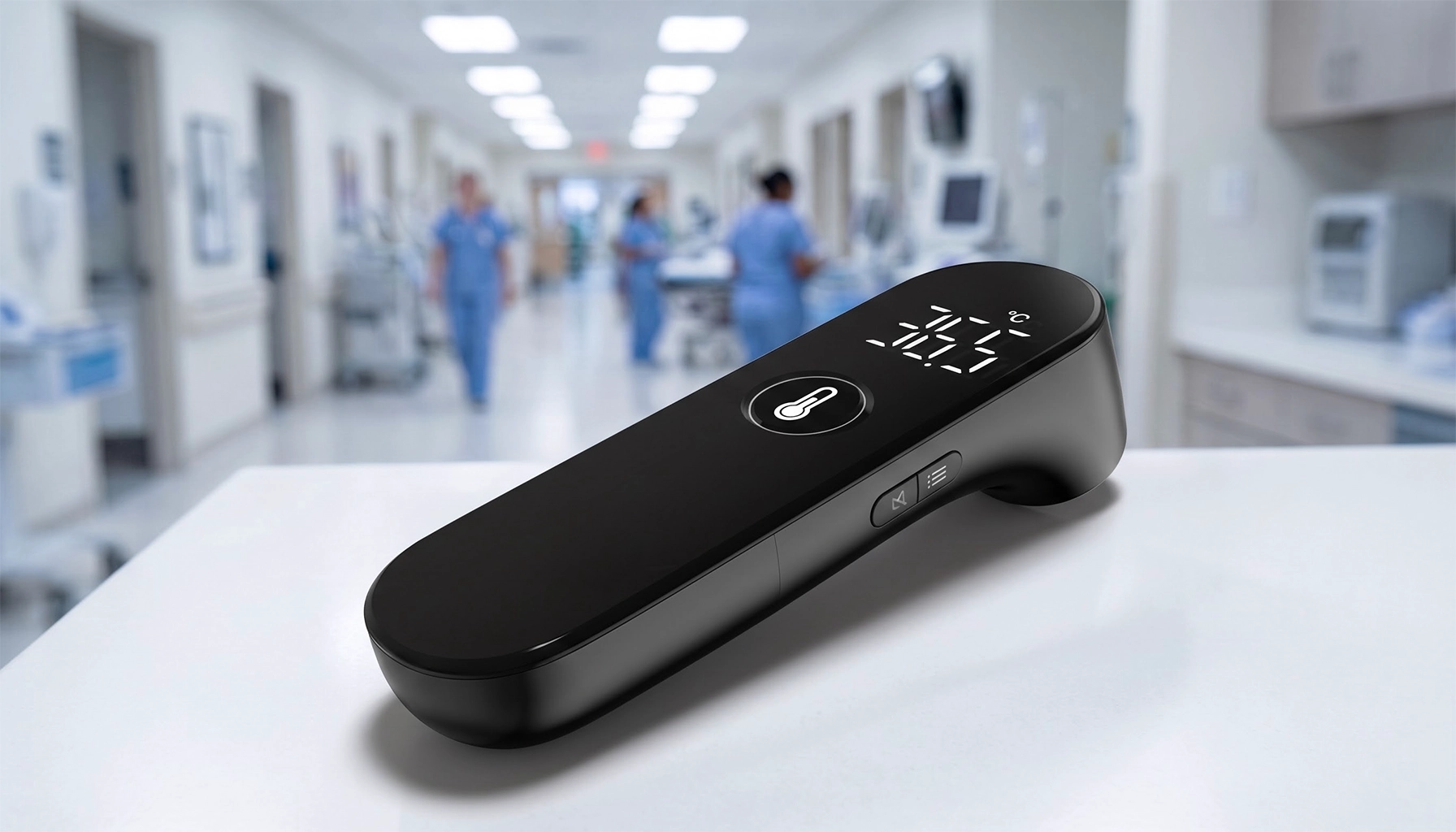
Table of Contents
1. What Is a Professional Infrared Thermometer?
A professional infrared thermometer is a medical-grade device that measures body temperature by detecting infrared radiation emitted from the skin surface, typically the forehead or temporal artery region. The key distinction between a professional infrared thermometer and a consumer model lies not in the basic measurement principle, which is the same, but in the level of clinical validation, build quality, and regulatory compliance that the device must meet.
The FDA classifies infrared thermometers as Class II medical devices under product code FLL (21 CFR 880.2910). As of June 2025, the FDA has exempted certain clinical electronic thermometers from premarket notification requirements, but devices incorporating telethermographic or continuous temperature measurement functions still require 510(k) clearance. This regulatory framework ensures that any infrared thermometer sold in the United States has been reviewed for safety and substantial equivalence to predicate devices.
Beyond regulatory clearance, a professional infrared thermometer typically features a calibrated infrared sensor with a narrow accuracy tolerance, an algorithm that converts skin surface temperature to a clinically relevant reference body site temperature, a large readable display for clinical environments, memory storage for tracking multiple readings, and durable construction designed to withstand high-volume use. These features distinguish professional devices from consumer models that may lack clinical validation or the build quality necessary for hospital workflows.
2. How Infrared Temperature Measurement Works
All infrared thermometers operate on the same fundamental physical principle: every object with a temperature above absolute zero emits infrared radiation proportional to its temperature. A professional infrared thermometer contains a thermopile sensor that absorbs this radiation and converts it into an electrical signal. A microprocessor then translates the signal into a temperature reading displayed on the device screen.
For body temperature measurement, the infrared sensor is typically directed at the forehead, where the temporal artery runs close to the skin surface. The device algorithm adjusts for the difference between skin surface temperature and estimated core body temperature. This adjustment is critical because forehead skin temperature is typically about 0.6 degrees Celsius cooler than oral temperature, and the accuracy of the conversion algorithm is one of the primary differentiators between a well-engineered device and a generic model.
The measurement distance between the sensor and the skin surface also significantly affects accuracy. The York Hospital study found that IR gun measurements taken at 3 centimeters from the forehead produced the narrowest limits of agreement compared to core-body temperature, with a bias of only 0.19 degrees Celsius. At greater distances of 6 and 9 centimeters, both bias and limits of agreement widened progressively. This finding underscores why a clinical-grade device must specify and maintain an optimal measurement distance.
3. The Clinical Accuracy Problem: Evidence from York Hospital
A study published in Clinical Medicine in 2024 by Holder and colleagues at York and Scarborough Teaching Hospital NHS Foundation Trust provides one of the most rigorous evaluations of infrared thermometer accuracy in a clinical setting. The researchers recruited 120 non-febrile adult volunteers and compared three infrared devices, an IR forehead gun, a tympanic thermometer, and a thermal camera, against the 3M Bair Hugger SpotOn system, a validated non-invasive core-body temperature monitor.
The results were sobering. No infrared device achieved an intra-class correlation coefficient above 0.8, the threshold generally considered acceptable for clinical agreement. The IR gun at 3 centimeters from the forehead produced the best agreement with SpotOn, but even this configuration yielded an ICC of only 0.32. Tympanic thermometer readings showed slightly better agreement with ICC values of 0.36 and 0.37 for left and right ears respectively, but still fell well below the acceptable threshold.
A particularly revealing finding emerged from the survey component of the study. Of 93 healthcare professionals surveyed, only 34 percent reported receiving any training on infrared thermometer use. While 50.5 percent followed manufacturer distance guidelines of 3 to 5 centimeters, 36.6 percent measured within 1 centimeter of the skin surface, well outside the recommended range. This training gap directly impacts measurement accuracy and suggests that even a validated device will underperform without proper staff education.
The study also identified that maximum facial temperature was located in the eye region for 57.1 percent of participants, the mouth region for 19.3 percent, and the neck region for 18.5 percent. The forehead, the most commonly measured site, accounted for only 1.7 percent of maximum temperature locations. This finding challenges conventional measurement practices and suggests that standardized operating procedures are essential when using any infrared thermometer.
4. Professional vs Consumer Infrared Thermometers
The distinction between professional and consumer infrared thermometers has significant clinical implications. Consumer-grade devices, widely available through retail channels, are designed for occasional home use and typically lack the rigorous clinical validation required for healthcare settings. The UK Medicines and Healthcare products Regulatory Agency has explicitly warned that poorly manufactured or uncertified infrared thermometers may be unreliable and unsuited for medical environments.
A clinical-grade device is engineered to meet several demanding requirements that consumer models do not address. Clinical accuracy validation requires testing against gold-standard reference devices in controlled studies with human subjects, not just laboratory blackbody source testing. When choosing a professional infrared thermometer, buyers should verify that clinical validation data is available. Build quality must withstand daily use in high-throughput environments such as emergency departments, triage stations, and outpatient clinics. Infection prevention protocols demand contact-free operation that eliminates cross-contamination risk without requiring disposable probe covers or frequent cleaning between patients.
The operational cost difference is also significant. Consumer devices often rely on disposable consumables such as probe covers, creating ongoing supply costs and waste disposal requirements. A medical-grade device eliminates these consumable costs through true non-contact operation, reducing both per-measurement cost and environmental impact. For facilities performing hundreds of temperature measurements daily, this cost difference accumulates substantially over time.
5. Regulatory Standards: FDA, CE MDR, and ISO Requirements
Three layers of regulatory and technical standards govern a clinical-grade infrared thermometer intended for clinical use.
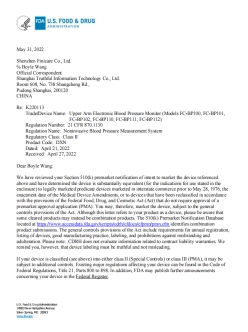
FDA 510(k) clearance. The FDA requires manufacturers to demonstrate that their device is substantially equivalent to a legally marketed predicate device. Over 20 non-contact infrared thermometer models have received FDA 510(k) clearance in recent years. Clearance confirms regulatory compliance for the US market but does not automatically guarantee clinical accuracy in real-world conditions.
ASTM E1965-98 (2016). Published by ASTM International, this standard specifies accuracy requirements for infrared thermometers used for intermittent patient temperature measurement. It requires laboratory accuracy within plus or minus 0.3 degrees Celsius when tested against a blackbody source, and it also mandates clinical validation with human subjects to confirm real-world performance.
ISO 80601-2-56 (2017). This internationally harmonized standard establishes particular requirements for basic safety and essential performance of clinical thermometers for body temperature measurement. It is referenced by regulatory bodies worldwide, including the FDA, and represents the most widely accepted benchmark for clinical infrared thermometer performance.
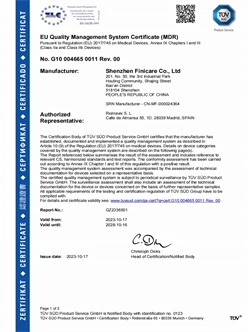
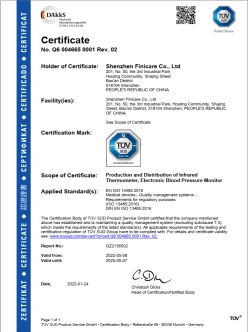
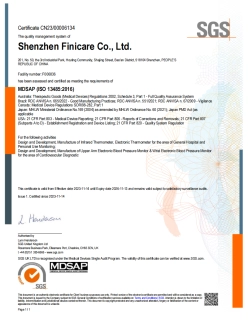
In addition to device-level standards, manufacturing quality management systems are critical. ISO 13485 certification ensures that the manufacturer maintains a quality management system specific to medical devices. The MDSAP (Medical Device Single Audit Program) enables a single audit to satisfy regulatory requirements for multiple jurisdictions including the US, Canada, Australia, Brazil, and Japan. These manufacturing-level certifications provide confidence that every unit of a medical-grade thermometer meets consistent quality standards.
6. Market Growth and Industry Trends
The global medical infrared thermometer market is projected to grow from US$ 944.6 million in 2026 to US$ 1,477.5 million by 2033, representing a compound annual growth rate of 6.6 percent. North America leads the market with a 38.0 percent share in 2025, supported by advanced healthcare infrastructure and strong regulatory standards. Asia-Pacific is the fastest-growing region, driven by expanding healthcare access and increasing investments in medical diagnostics.
Forehead-type infrared thermometers dominate the market with a 61.2 percent share in 2025, owing to their rapid readings, non-invasive nature, and suitability for both clinical and home use. The medical application segment holds 64.5 percent of the global market, reflecting the critical role of medical-grade infrared thermometer devices in infection control and clinical decision-making.
Several industry developments highlight the market momentum. In January 2025, Braun launched the ThermoScan 8 with enhanced accuracy and connectivity. Omron Healthcare introduced the GentleTemp 720 for clinical settings. In January 2026, Exergen showcased its temporal artery thermometers at the World Health Expo in Dubai. The American Academy of Pediatrics released new guidelines in March 2024 recommending contactless temperature measurement as the primary method for children, driving a 35 percent increase in pediatric infrared thermometer sales in the first quarter of 2024.
7. Finicare Professional Infrared Thermometer Technology
Finicare was established in 2017 and is a high-tech enterprise integrating research and development, manufacturing, and sales. Headquartered in Shenzhen, China, the company specializes in infrared thermometers, blood pressure monitors, pulse oximeters, mesh nebulizers, and other home and clinical medical devices. Finicare products are exported to more than eighty countries across Europe, North America, the Middle East, and Southeast Asia.
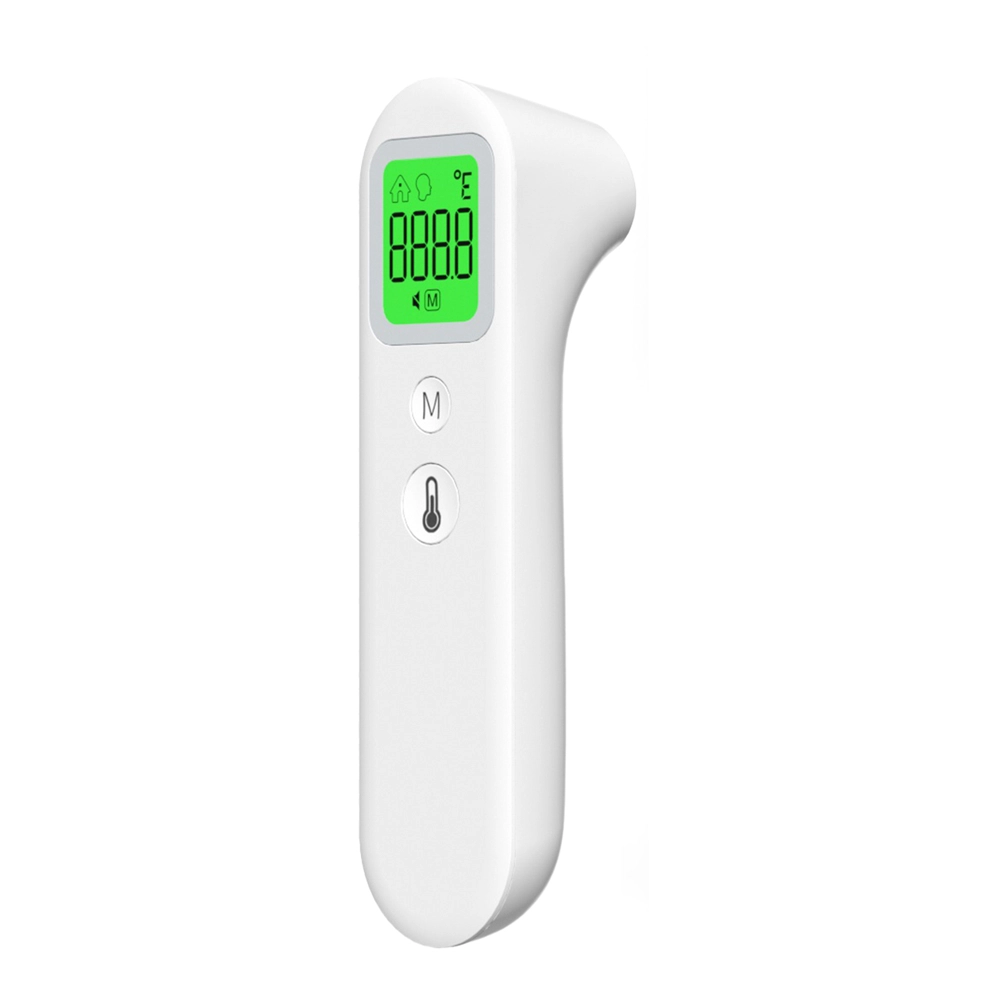
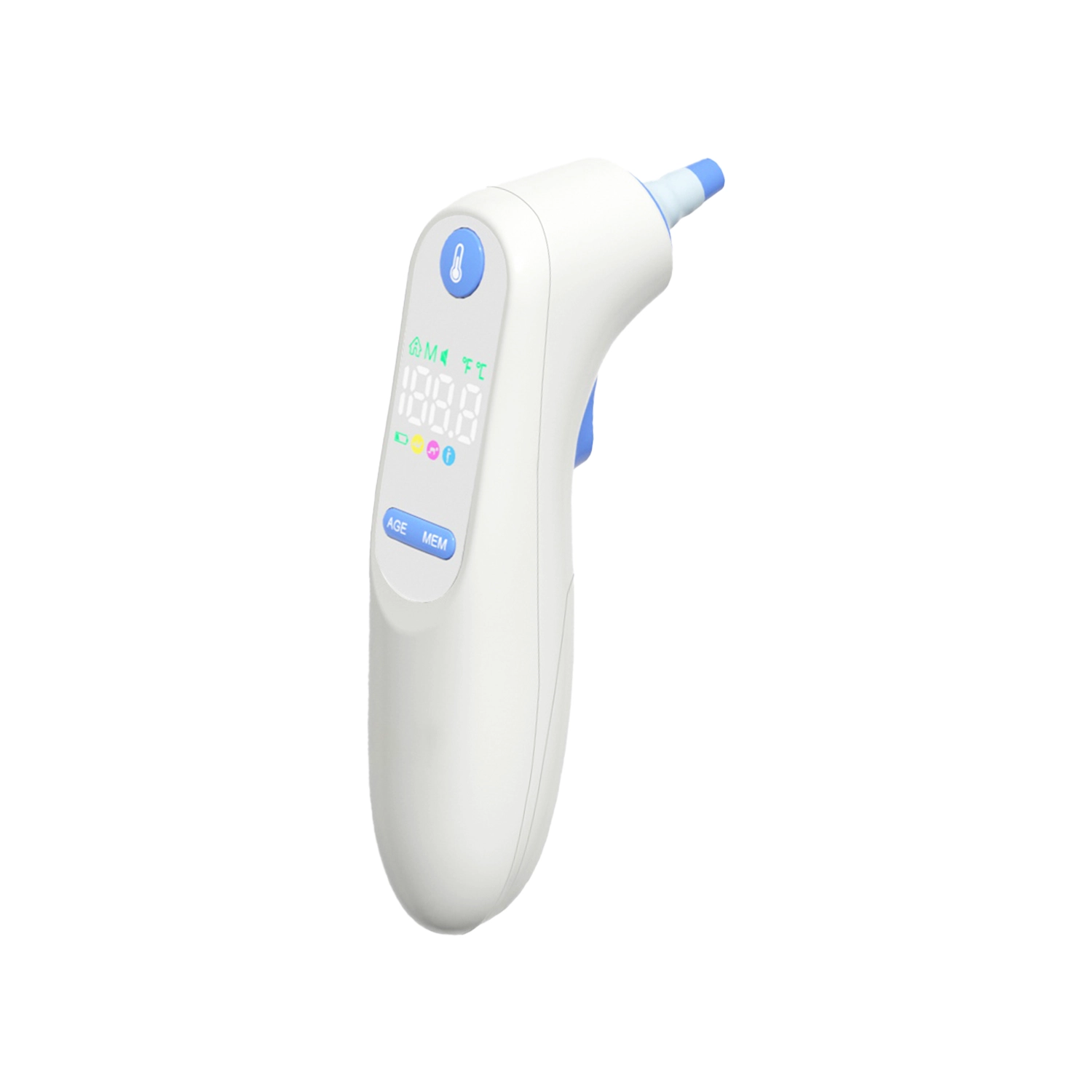
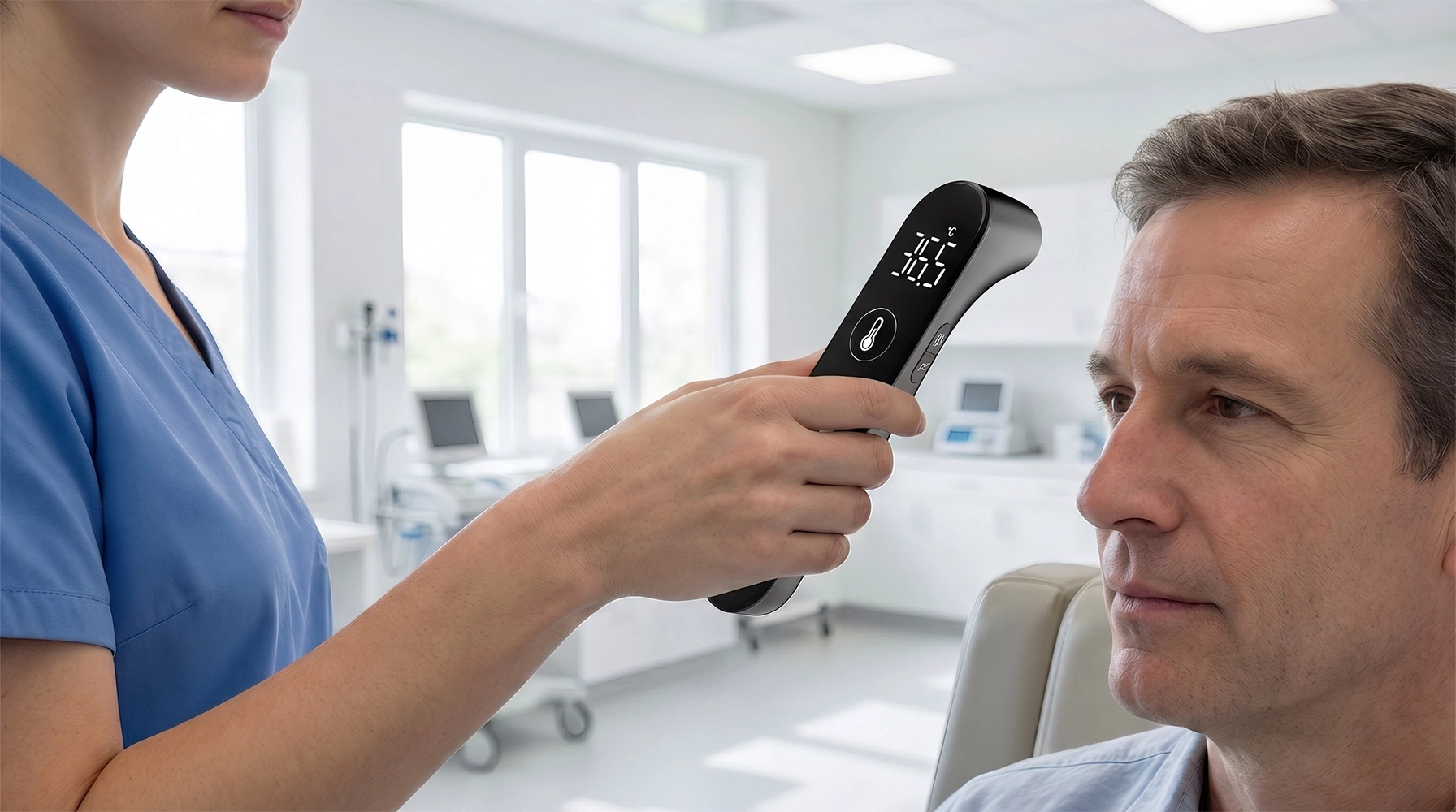
The Finicare IR209 is a professional infrared thermometer designed for both clinical and home use. It features a sleek, glossy black body with an ergonomic curved design. The infrared sensor is housed in the curved top section, positioned for optimal forehead scanning. A prominent central button with a glowing blue ring and thermometer icon serves as the main measurement trigger. Two side control buttons provide access to settings history and alert functions. The LCD display shows temperature readings in large, clearly visible digits with the degree Fahrenheit indicator.
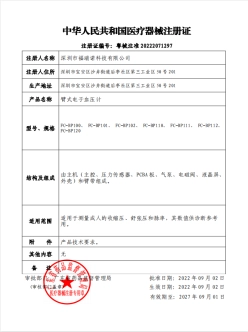
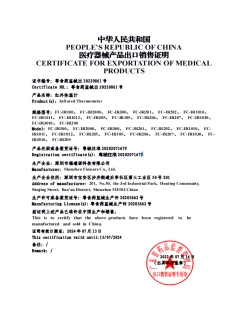
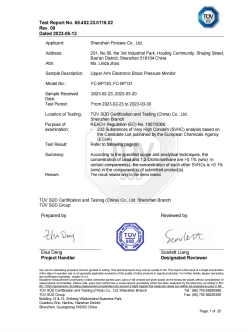
Every Finicare professional infrared thermometer is manufactured under ISO 13485 quality management and carries FDA 510(k) clearance and CE MDR marking. The full certification portfolio includes FDA 510(k), CE (MDR), TGA, MDL, UKRP, NMPA, FSC, FCC, and RoHS. Factory systems are certified to ISO 13485, MDSAP, and BSCI standards. Each unit undergoes incoming inspection, in-process quality control, final testing, and outbound audit before shipment. For OEM and ODM partners, Finicare offers customization including multilingual displays, custom measurement ranges, and connectivity integration.
Product & Scene Images
8. Best Practices for Accurate Temperature Measurement
Even the best clinical-grade device will produce inaccurate readings if used incorrectly. The research evidence points to several critical best practices.
Environmental preparation. The measurement environment should be draft-free, out of direct sunlight, and away from radiant heat sources. Room temperature should be between 16 and 40 degrees Celsius with relative humidity below 85 percent. The thermometer should acclimatize to the testing environment for 10 to 30 minutes before use. The York study maintained environmental controls including a thermostat set to 20 degrees Celsius, closed windows, and drawn blinds.
Patient preparation. The forehead test area must be clean, dry, and unobstructed by headbands, hats, or hair. The subject should have been indoors for at least 15 to 20 minutes before measurement. Sweat, drafts, and recent cold or heat exposure can all affect readings. If the forehead is visibly moist, the area should be dried gently before measurement.
Proper distance and positioning. The York study demonstrated that 3 centimeters from the forehead produced the narrowest limits of agreement. At 6 and 9 centimeters, accuracy degraded progressively. The device should be held perpendicular to the forehead at the manufacturer-specified distance. Given that only 50.5 percent of surveyed staff followed distance guidelines, training on proper positioning is essential for any facility using a medical-grade device.
Multiple readings and trend tracking. Take two to three measurements and use the highest reading, as forehead temperature can vary slightly across the measurement area. If readings vary by more than 0.5 degrees Celsius, allow the patient to rest and remeasure. Use the device memory function to track temperature trends over time rather than relying on a single measurement.
9. Special Populations and Clinical Use Cases
A non-contact infrared thermometer is particularly valuable in specific clinical scenarios where contact thermometers are impractical or pose infection risks.
Pediatric care. The American Academy of Pediatrics recommended contactless temperature measurement as the primary method for children in March 2024. Non-contact infrared thermometry allows rapid measurement without disturbing sleeping or uncooperative children. A 2022 clinical accuracy study found an intra-class correlation coefficient of 0.87 for a validated non-contact thermometer compared with tympanic measurements in children, indicating strong agreement under proper clinical protocols.
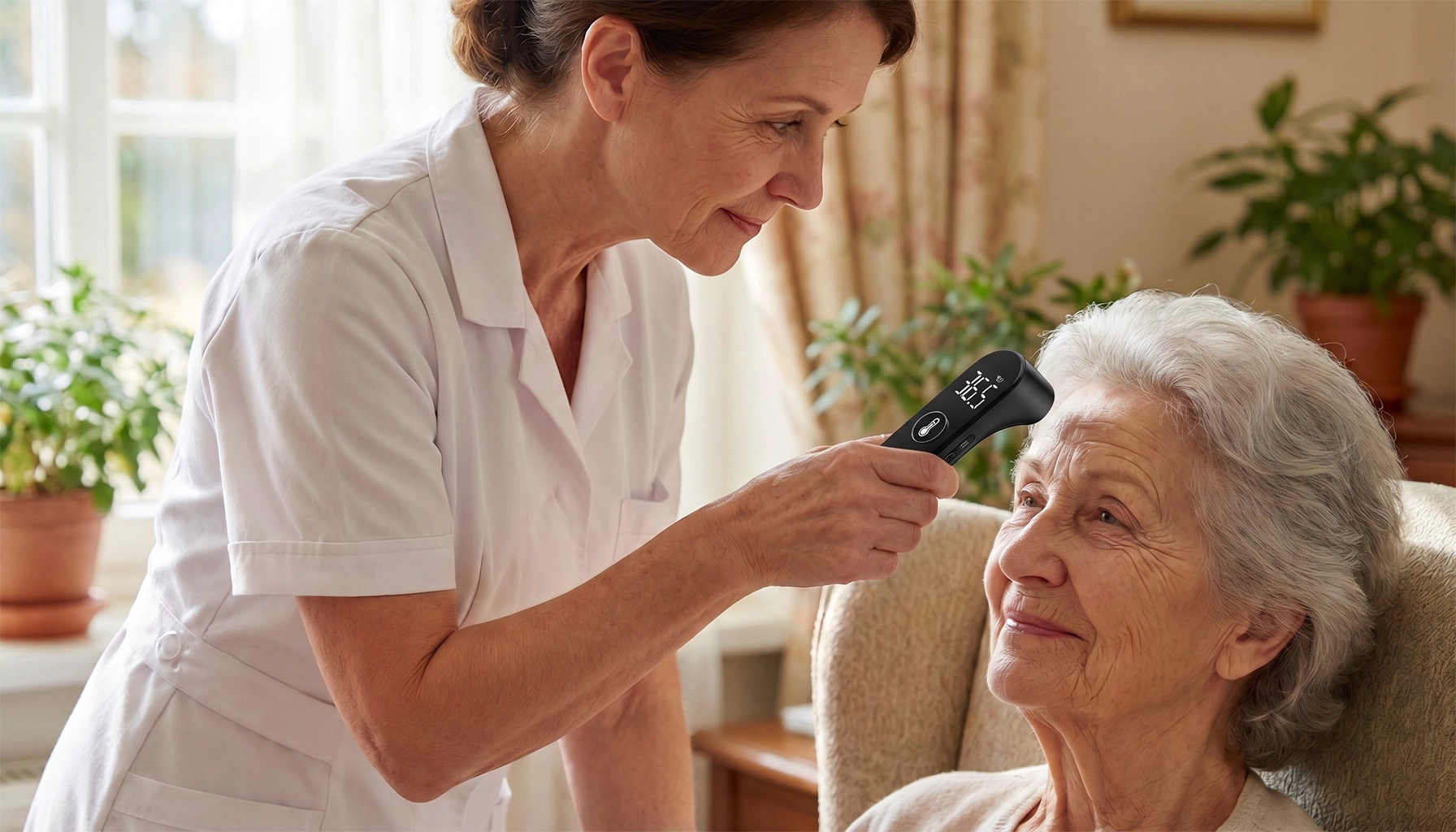
Elderly and long-term care. For seniors in nursing homes and residential care facilities, contact-free measurement offers significant advantages. Hearing aids can physically block ear thermometer placement. Arthritis or limited mobility may make oral thermometer positioning difficult. A one-button professional infrared thermometer eliminates these barriers while reducing caregiver workload in high-volume settings.
Dementia and cognitive impairment. Non-contact thermometers allow readings on sleeping or uncooperative patients without disturbance. For caregivers managing patients with dementia, the ability to measure temperature without physical contact reduces patient agitation and preserves dignity. This workflow advantage is a genuine daily benefit in long-term care environments.
Infection control and triage. In emergency departments and triage settings, a professional infrared thermometer enables rapid screening of large patient volumes without physical contact. This capability supports infection prevention pathways by eliminating a known touchpoint for cross-contamination. The contact-free design also eliminates the need for probe covers, reducing both consumable costs and waste disposal requirements.
10. Choosing the Right Professional Infrared Thermometer
When evaluating an infrared thermometer for clinical use, consider the following criteria.
Regulatory clearance. Confirm FDA 510(k) clearance or equivalent local regulatory approval. Check the FDA product code FLL listing for non-contact infrared thermometers. Verify CE MDR marking for European market compliance.
Clinical validation. Look for published clinical validation studies comparing the device against gold-standard reference systems. Laboratory accuracy against a blackbody source is necessary but not sufficient. The York study demonstrated that devices meeting laboratory standards can still show poor clinical agreement.
Measurement accuracy and speed. A clinical-grade device should deliver readings within one to three seconds. Verify the stated accuracy specification, typically plus or minus 0.2 to 0.3 degrees Celsius in laboratory conditions, and check whether clinical validation data supports this claim in real-world use.
Display and usability. A large, backlit LCD display with clearly visible digits is essential in clinical environments. Color-coded fever indicators provide instant visual feedback. Intuitive button layout reduces training requirements and minimizes user error, which the York study identified as a major accuracy factor.
Memory and connectivity. Look for devices that store at least 20 to 30 readings for trend tracking. Bluetooth connectivity for smartphone app integration and electronic health record systems is increasingly valuable for longitudinal temperature monitoring.
Build quality and durability. The device must withstand daily use in demanding clinical environments. Check for certifications including ISO 13485 manufacturing quality and MDSAP compliance. A medical-grade device should feel solid, well-constructed, and designed for thousands of measurement cycles.
No consumables. Choose a device that operates without disposable probe covers or other consumables. This reduces per-measurement cost, eliminates supply chain dependencies, and simplifies infection control workflows.
Summary
A professional infrared thermometer is a clinically validated, medical-grade device designed to meet the accuracy, safety, and workflow demands of healthcare environments. The York Hospital study of 120 volunteers demonstrated that all infrared devices tested showed poor agreement with gold-standard core-body temperature, highlighting the critical importance of choosing a validated professional device and implementing proper measurement protocols. The global medical infrared thermometer market is projected to grow from US$ 944.6 million in 2026 to US$ 1,477.5 million by 2033, driven by infection prevention priorities, aging populations, and the shift toward contactless measurement.
When selecting a professional infrared thermometer, prioritize FDA 510(k) clearance, ASTM E1965 and ISO 80601-2-56 compliance, published clinical validation data, measurement speed, display readability, and manufacturing quality certifications including ISO 13485 and MDSAP. The Finicare IR209 exemplifies these standards with its FDA 510(k) clearance, CE MDR marking, ISO 13485 manufacturing, one-second measurement speed, intuitive blue-ring trigger button, dual side controls, and sleek black ergonomic design. By selecting a clinically validated device and following evidence-based measurement protocols, healthcare facilities can ensure accurate temperature readings that support better clinical decisions.
References
1. Holder T, et al. "Clinical accuracy of infrared temperature measurement devices: a comparison against non-invasive core-body temperature." Clinical Medicine, 2024;23(2):157-163. https://pmc.ncbi.nlm.nih.gov/articles/PMC11046542/
2. Persistence Market Research. "Medical Infrared Thermometer Market Size and Share Analysis, 2026 to 2033." January 2026. https://www.persistencemarketresearch.com/market-research/medical-infrared-thermometer-market.asp
3. TriMedika. "Why Medical-Grade Non-Contact Thermometers Are Transforming U.S. Healthcare." November 2025. https://trimedika.com/tritemp-non-contact-thermometer-us-demand/
4. ASTM International. "ASTM E1965-98(2016): Standard Specification for Infrared Thermometers for Intermittent Determination of Patient Temperature."
5. International Organization for Standardization. "ISO 80601-2-56:2017: Medical electrical equipment — Particular requirements for basic safety and essential performance of clinical thermometers."