














Forehead vs Ear Thermometer: Which Is Better? Accuracy, Use Cases, and Selection Guide
Preface
Fever is one of the most common reasons families seek medical care, and the thermometer used to detect it directly influences clinical decisions, medication timing, and peace of mind. In recent years, infrared thermometers have largely replaced traditional mercury and digital contact devices in homes, clinics, and hospitals, but a persistent question remains among parents, caregivers, and healthcare professionals: forehead vs ear thermometer, which one is better?
Clinical research offers a nuanced answer. A tympanic (ear) thermometer reading showed a mean error of just 0.044 degrees Celsius compared with the gold-standard reference in one validation study, while forehead and temporal artery devices showed statistically significant differences from reference measurements. At the same time, ear measurement has proven especially reliable for screening children between 6 months and 5 years of age, with sensitivity above 90 percent in published pediatric studies. However, forehead thermometers remain the preferred choice for sleeping infants, newborns, and situations where ear canal access is impractical. This guide examines the forehead vs ear thermometer debate from clinical, practical, and technical perspectives. It is written for parents, caregivers, pediatric nurses, clinic administrators, and procurement teams who need clear, evidence-based guidance on choosing and using infrared thermometers correctly.
Table of Contents
1. What Is the Difference Between Forehead and Ear Thermometers?
2. How Forehead Thermometers Measure Temperature
3. How Ear Thermometers Measure Temperature
4. Accuracy Comparison: What Clinical Research Shows
5. Which Is Better for Infants, Children, and Adults?
6. Fever Detection Reliability: Sensitivity and Specificity Data
7. Speed, Hygiene, and Comfort: Practical Considerations
8. Finicare IR116: A Dual-Mode Forehead and Ear Thermometer
9. Best Practices for Accurate Measurement With Each Method
10. Making the Choice: Forehead vs Ear Thermometer Decision Guide
Summary
References
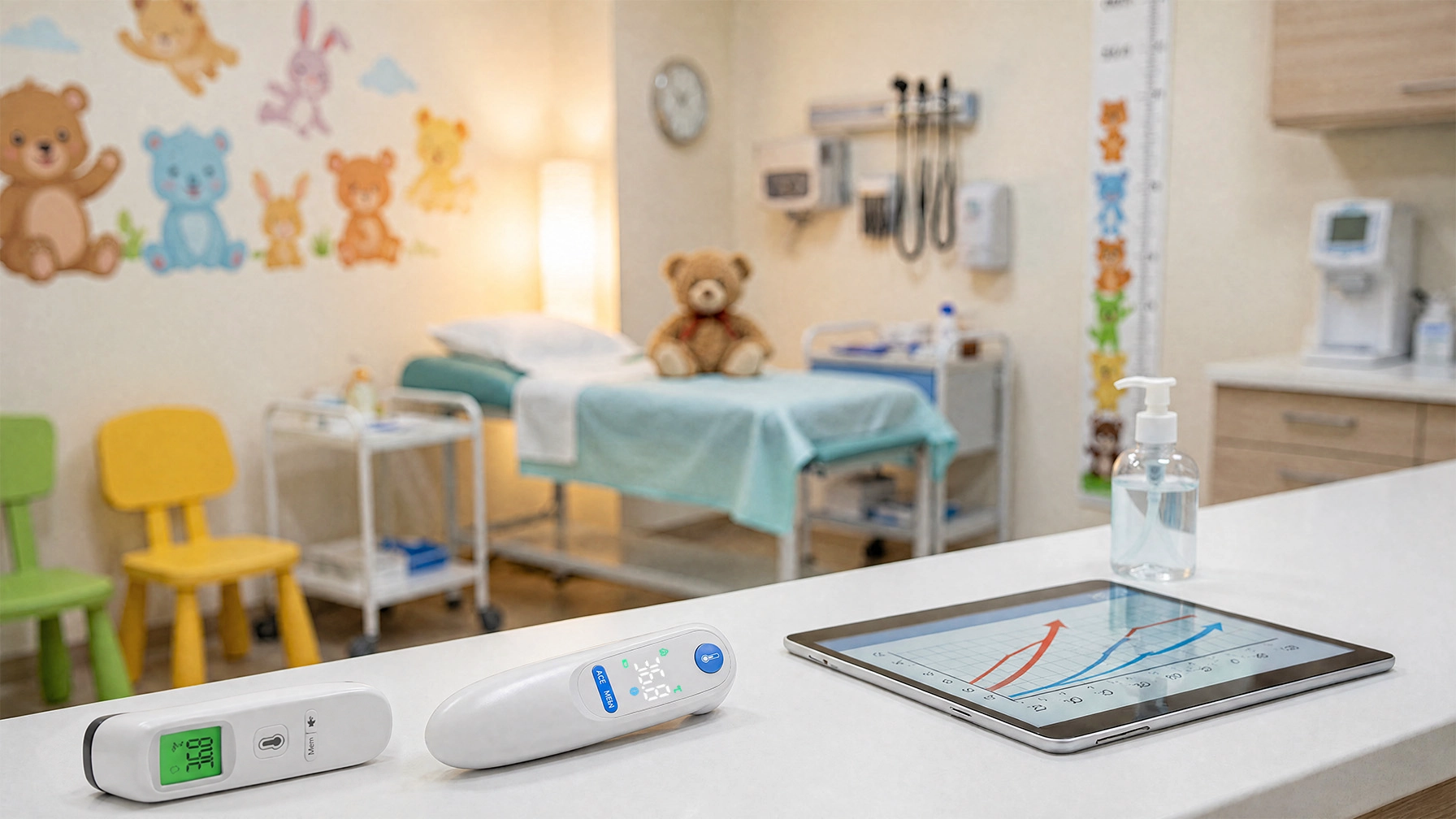
1. What Is the Difference Between Forehead and Ear Thermometers?
Both forehead and ear thermometers are infrared thermometers, meaning they detect infrared radiation emitted by body tissue and convert it into a temperature reading without physical contact with mucous membranes. The fundamental difference lies in the measurement site and the physiological basis of each reading.
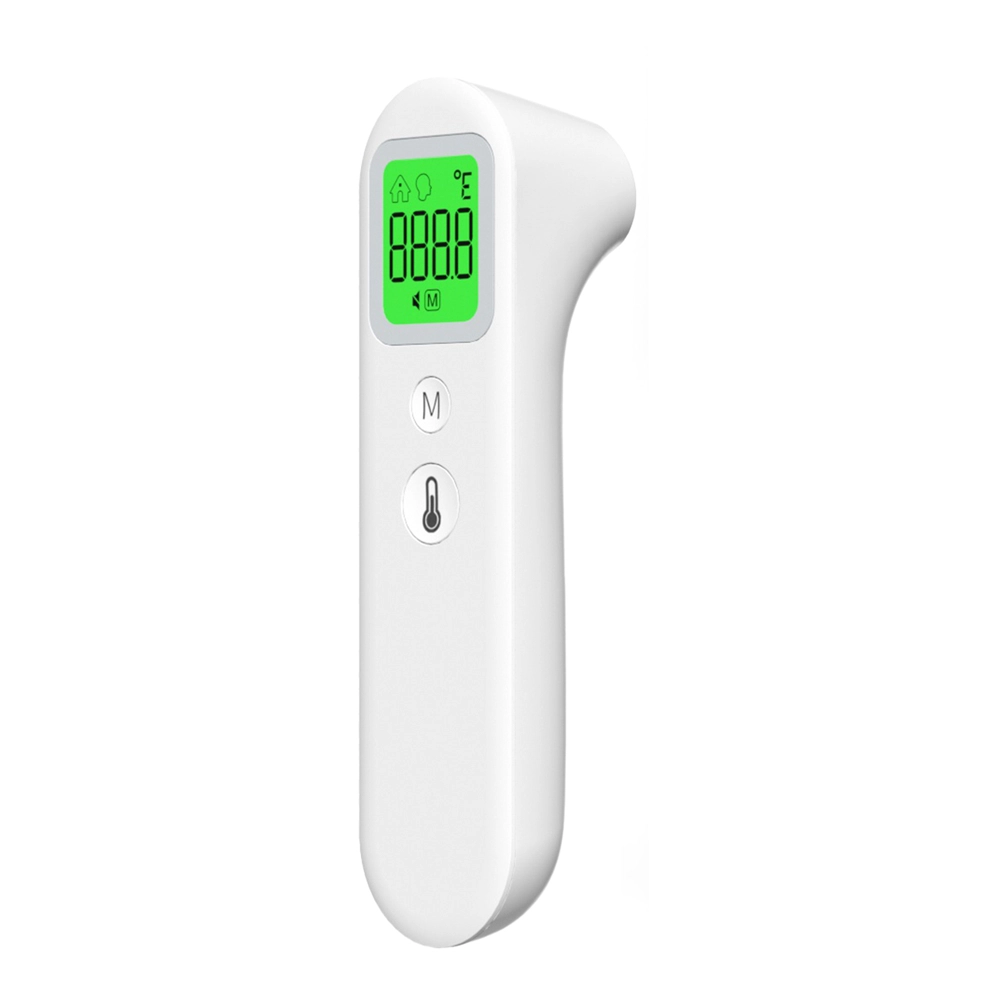
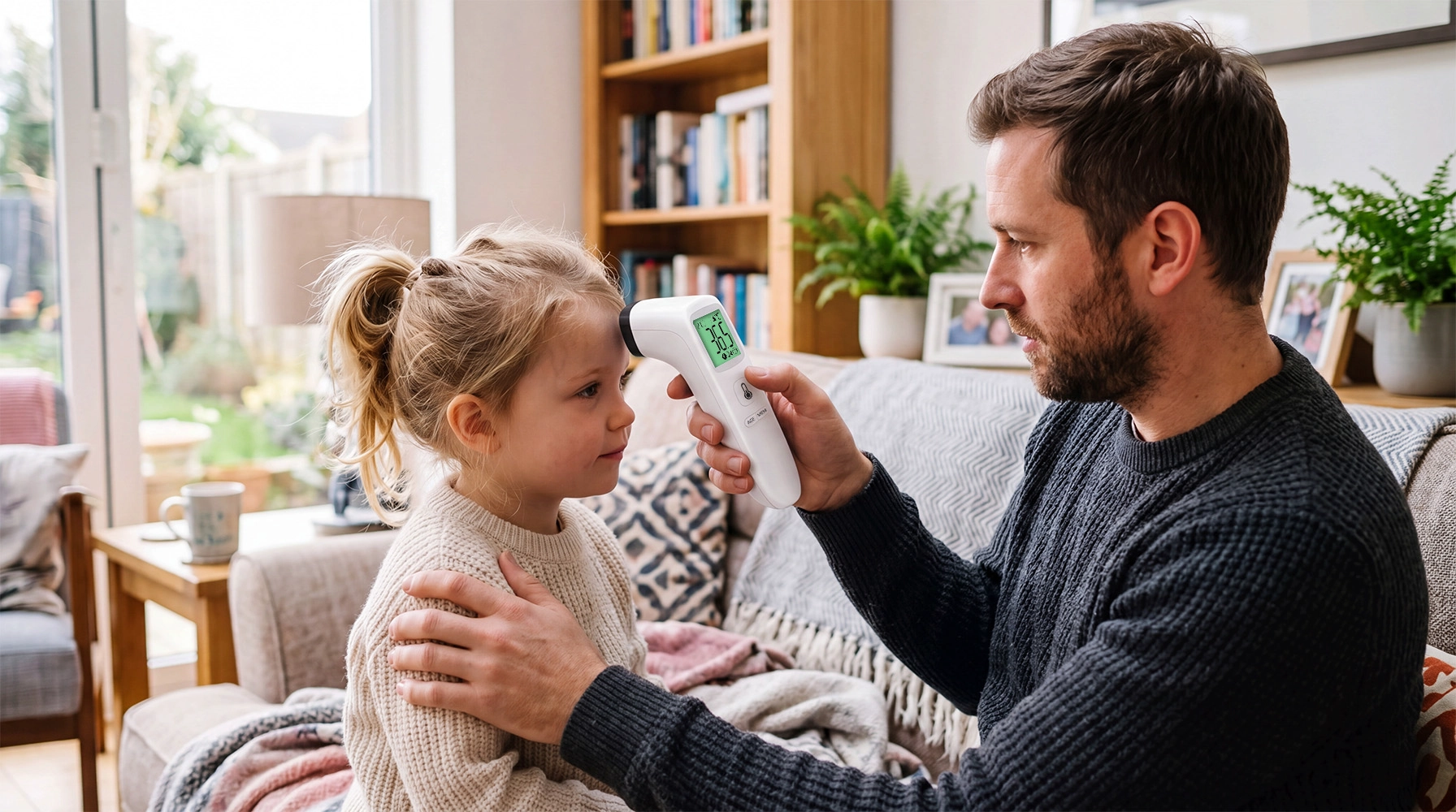
A forehead thermometer, also called a temporal artery thermometer when it scans the temporal artery across the forehead, measures skin surface temperature over the frontal region. Modern non-contact models such as the Finicare IR116 capture infrared energy from the forehead from a short distance, typically 1 to 5 centimeters away. The forehead offers a large, easily accessible measurement area, which makes these devices fast, hygienic, and well suited to screening large groups or measuring sleeping individuals.
An ear thermometer measures the infrared radiation emitted by the tympanic membrane and the surrounding ear canal. Because the tympanic membrane shares its blood supply with the hypothalamus, the body's temperature regulation center, the ear canal is considered a more direct proxy for core body temperature than the skin surface of the forehead. This physiological difference is the foundation of the clinical argument that ear thermometers can be more accurate than forehead devices when used correctly.
The two device types also differ in their practical profiles. Forehead measurement requires no probe insertion, no repositioning of the patient, and no waiting for the ear canal to be free of obstructions. Ear measurement requires gentle insertion of a probe tip into the ear canal, correct alignment with the tympanic membrane, and attention to factors such as earwax, ear infections, and the curvature of the canal. Each design reflects a different balance between clinical accuracy and ease of use.
2. How Forehead Thermometers Measure Temperature
Forehead thermometers operate on the principle of infrared thermometry. Every object with a temperature above absolute zero emits infrared radiation proportional to its surface temperature. The thermometer's thermopile sensor collects this radiation through an optical system, converts it into an electrical signal, and a microprocessor translates the signal into a temperature value displayed on the screen.
Non-contact forehead thermometers maintain a fixed distance from the skin, usually indicated by a distance sensor, LED guide, or beep pattern. When the device is held at the correct distance, the field of view covers a defined area of the forehead, and the reading reflects the average skin temperature across that area. Some devices apply proprietary algorithms to adjust the skin reading toward an estimated core temperature. The adjustment model used by the manufacturer significantly affects the final displayed value.
Environmental factors influence forehead readings more than ear readings. Direct sunlight, sweating, recently applied cosmetics, air conditioning drafts, and even a warm hat can shift skin surface temperature by several tenths of a degree. For this reason, clinical guidelines recommend allowing the patient to acclimate to indoor conditions for at least 10 to 15 minutes before measurement, and repeating the measurement if an abnormal value is obtained.
The main advantages of forehead thermometers include speed, hygiene, and acceptance. A measurement takes one to three seconds, no probe covers are required for non-contact models, and the method works with sleeping infants, restless toddlers, and adults who cannot tolerate ear probe insertion. The main limitation is that skin temperature responds to the environment and peripheral circulation, so forehead readings tend to be lower than core measurements, a finding repeated across multiple independent studies.
3. How Ear Thermometers Measure Temperature
Ear thermometers, also known as tympanic thermometers, use a similar infrared sensing principle with a different target. The probe tip is gently placed at the entrance of the ear canal, and the sensor measures the infrared radiation emitted from the tympanic membrane region. Because the blood supply to the tympanic membrane is closely linked to the hypothalamic thermoregulatory center, the tympanic temperature is considered one of the closest non-invasive approximations of core body temperature.
Correct technique is critical for ear thermometers. For children over 12 months and adults, the ear should be pulled gently up and back to straighten the ear canal; for infants under 12 months, the ear should be pulled gently back. The probe must seal the canal entrance to avoid measuring cooler air from outside. A single-use probe cover maintains hygiene and prevents cross-contamination between patients.
Several factors can distort ear readings. Impacted earwax can block infrared radiation and produce falsely low values. Otitis media (middle ear infection) and external ear infections can raise local temperature. Recent exposure to cold weather, swimming, or ear drops can alter canal temperature. Ear thermometers are not recommended for infants under 6 months of age because the ear canal is too narrow for accurate alignment with the tympanic membrane.
When technique is correct and the ear canal is clear, ear thermometry performs strongly in validation studies. In a comparative study published in a peer-reviewed journal, a tympanic thermometer achieved a mean measurement error of 0.044 degrees Celsius, the smallest deviation among the tested methods, while forehead and temporal artery approaches showed larger discrepancies from the reference standard. This is why ear thermometers are often recommended for regular self-assessment and pediatric screening.
4. Accuracy Comparison: What Clinical Research Shows
The forehead vs ear thermometer accuracy question has been examined in dozens of clinical studies with broadly consistent conclusions. Ear thermometers generally outperform forehead thermometers when both are used correctly, but the margin depends on the population, the device quality, and the measurement protocol.
A comparative accuracy study found that tympanic measurement delivered the smallest mean error, at 0.044 degrees Celsius, among all tested modes. A separate pediatric study examining children concluded that ear temperature measurement is useful for fever screening in children aged 6 months to 5 years, with sensitivity exceeding 90 percent. The same body of research found that non-contact forehead measurement, while convenient, could not reliably substitute for reference measurements in clinical settings, particularly for detecting low-grade fever.
Two systematic patterns emerge from the literature. First, forehead thermometers tend to read lower than reference temperatures, which means a low-grade fever could be missed if the device and technique are not validated for the intended population. Second, ear thermometers show greater agreement with reference values, provided the user follows the manufacturer's positioning instructions and the ear canal is unobstructed.
Device quality matters as much as measurement site. Certification under medical device standards such as ASTM E1965 and ISO 80601-2-56, combined with clinical validation data, indicates that a manufacturer has verified accuracy claims independently. The Finicare R&D team emphasizes that two thermometers of the same type can differ significantly in performance if one is a validated medical device and the other is an uncertified consumer gadget.
5. Which Is Better for Infants, Children, and Adults?
The answer to the forehead vs ear thermometer question depends substantially on the age of the person being measured. Clinical guidance converges on the following recommendations.
For newborns up to 3 months of age, rectal measurement remains the reference standard, and any abnormal infrared reading should be confirmed with a rectal or axillary measurement. For infants aged 3 to 6 months, non-contact forehead measurement is often preferred because the ear canal is too narrow for reliable tympanic alignment. For children aged 6 months to 5 years, ear thermometers deliver their strongest performance, with screening sensitivity above 90 percent in published studies, and they are the recommended infrared method for this age band. For older children and adults, both methods perform acceptably, and the choice often comes down to user preference, patient comfort, and workflow.
Practical scenarios also influence the choice. A sleeping infant should not be disturbed for an ear measurement when a non-contact forehead reading can be taken instantly. A crying toddler with a draining ear infection should not have a probe inserted into the affected ear. A school or airport screening station benefits from the speed and zero-contact hygiene of forehead devices, while a pediatric ward tracking fever curves benefits from the tighter core-temperature correlation of tympanic measurement.
The distinction that resolved the debate in many households is a dual-mode device that performs both measurements in one instrument. The Finicare IR116 combines forehead and ear modes with a one-second reading, three-color fever indication, and a baby mode, allowing caregivers to select the method appropriate to the situation rather than committing to a single technology.
6. Fever Detection Reliability: Sensitivity and Specificity Data
Sensitivity and specificity define how well a thermometer detects true fever and correctly identifies the absence of fever. A device with high sensitivity rarely misses a fever; a device with high specificity rarely raises a false alarm. Both metrics matter in the forehead vs ear thermometer comparison.
For ear thermometry in children aged 6 months to 5 years, published screening studies report sensitivity above 90 percent, which supports its use as a first-line screening tool in pediatric settings. Values in this range mean that fewer than one in ten true fevers would be missed when the device is used correctly.
For non-contact forehead thermometry, study results vary more widely because the reading depends on ambient conditions and distance control. Some studies found that forehead devices, when applied to a low-fever threshold, achieved useful screening performance, but others concluded that forehead measurement alone could not replace reference methods for precise fever determination. The measured value also depends on the fever threshold programmed into the device. Because forehead readings run lower than core temperature, manufacturers who apply a validated offset algorithm achieve better agreement with clinical judgments than devices that display raw skin temperature.
For both methods, the practical recommendation is the same. Confirm any borderline reading after 15 to 30 minutes of rest in a stable indoor environment, measure twice when possible, and rely on validated medical-grade devices rather than uncertified consumer products for fever decisions involving infants and chronically ill patients.
7. Speed, Hygiene, and Comfort: Practical Considerations
Beyond accuracy, the forehead vs ear thermometer comparison involves user experience factors that determine whether a device is actually used correctly and consistently.
Speed favors forehead measurement by a small margin. A non-contact forehead thermometer produces a reading in one to two seconds without touching the patient. Ear thermometers typically deliver a reading in one to three seconds but require probe positioning and, for multi-patient use, a fresh probe cover for each measurement.
Hygiene is a stronger differentiator. Non-contact forehead thermometers never touch mucous membranes or skin, which eliminates cross-contamination risk in clinics, schools, and workplaces. Ear thermometers require disposable probe covers in professional settings, adding consumable costs and a small workflow step. For home use with a single family, this difference is minor.
Comfort and cooperation strongly favor forehead measurement for infants, sleeping children, and patients with cognitive impairment. Ear measurement requires patient stillness for correct alignment, which can be challenging with a crying or squirming child. Conversely, some clinicians prefer ear devices because the closed ear canal is less affected by ambient airflow than exposed skin.
Durability and maintenance requirements are comparable between the two types. Both benefit from protective storage, periodic cleaning of the sensor window or probe lens with a soft cloth and alcohol swab, and calibration checks according to the manufacturer's schedule. Both are sensitive to extreme storage temperatures and should be kept at room temperature when not in use.
8. Finicare IR116: A Dual-Mode Forehead and Ear Thermometer
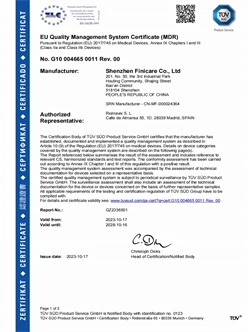
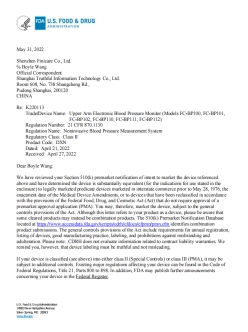
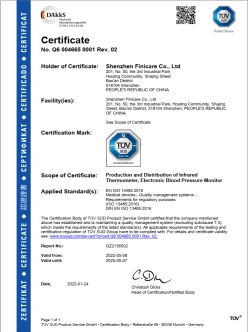
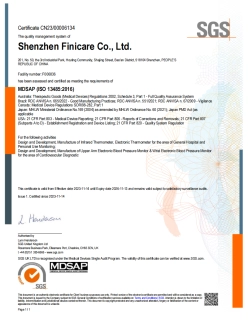
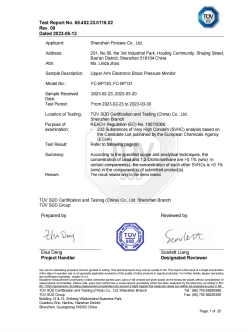
Finicare was established in 2017 as a high-tech enterprise integrating research and development, production, and sales. The company's main products include Electronic Blood Pressure Monitors, Infrared Thermometers, Digital Thermometers, and other home medical devices. Since its founding, Finicare has adhered to the business philosophy of quality first, integrity-based, and customer-centric innovation, earning recognition as a leading medical device brand from China. Products are certified under FDA 510(k), CE (MDR), TGA, MDL, UKRP, NMPA, FSC, FCC, and RoHS, while the factory system holds ISO 13485, MDSAP, and BSCI certifications. Finicare devices are exported to more than 80 countries across Europe, North America, the Middle East, and Southeast Asia.
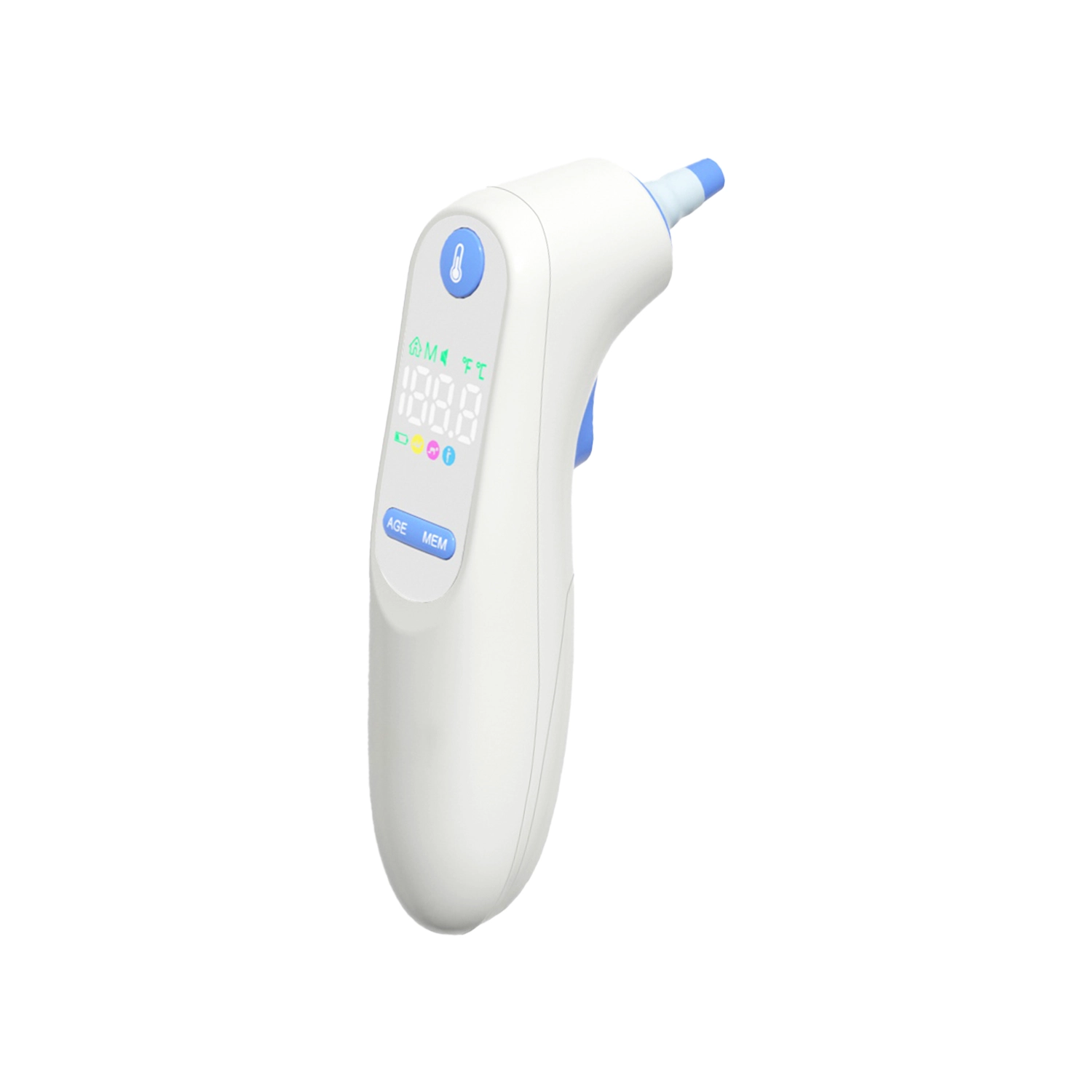
The Finicare IR116 resolves the forehead vs ear thermometer dilemma by combining both modes in a single medical-grade instrument. The device measures ear temperature through a soft blue probe tip and forehead temperature through a non-contact infrared sensor, switchable with one button. The one-second reading, three-color indicator light, and baby mode make fever checks fast and intuitive for parents, while the 35-group memory function and fever alarm support ongoing monitoring of fever curves.
Key features of the IR116 include Accu-sensor Technology for stable readings, ear and forehead dual measurement modes, object and room temperature measurement, Fahrenheit and Celsius switching, and an LED display readable in low light. The white ergonomic body with blue accents is designed for one-handed operation during infant care. For clinical teams, the dual-mode design reduces the number of devices required at each station, and for families, it removes the need to choose between the accuracy of ear measurement and the convenience of forehead measurement.
9. Best Practices for Accurate Measurement With Each Method
Whether the household ultimately favors forehead or ear measurement, technique determines whether the reading can be trusted. The following practices apply to both methods.
Before measurement, ensure the patient has been indoors for at least 15 minutes. Remove hats, headbands, and hearing aids. Wipe away sweat or moisture from the forehead, and check that the ear canal is free of visible earwax. Avoid measuring immediately after bathing, exercise, or outdoor exposure in cold weather.
For forehead measurement, hold the device perpendicular to the forehead at the distance specified by the manufacturer, typically 1 to 5 centimeters. Move hair aside so the sensor sees only skin. Press the measure button and wait for the completion beep or indicator. If the reading seems inconsistent with the patient's condition, repeat after 30 seconds.
For ear measurement, fit a clean probe cover, pull the ear gently up and back for children over 12 months and adults, and gently insert the probe until it seals the canal entrance. Press the button and hold the device steady until the reading completes. Never force the probe, and do not use the ear mode when the patient has ear pain, discharge, or a recent ear surgery.
Record readings with time stamps to track trends. A single elevated value is less informative than a consistent pattern, and clinicians make better decisions when they can see the fever curve rather than one number.
10. Making the Choice: Forehead vs Ear Thermometer Decision Guide
The forehead vs ear thermometer decision can be reduced to a short set of practical rules derived from the clinical evidence.
Choose an ear thermometer when accuracy relative to core temperature is the priority, when measuring children aged 6 months to 5 years, when the ear canals are clear and healthy, and when the patient can remain still for a few seconds. Ear measurement remains the strongest infrared method for tight fever tracking in pediatric care.
Choose a forehead thermometer when the patient is a sleeping infant, a newborn during initial screening, a person with an ear infection or ear pain, or when speed, hygiene, and zero contact are the dominant requirements, such as in school, workplace, or public health screening settings.
Choose a dual-mode device when the household or clinic serves a range of ages and situations. The Finicare IR116 exists precisely for this scenario, offering validated ear and forehead modes in one instrument, so the user never has to compromise between the two technologies. For procurement teams, stocking a dual-mode device also simplifies training, spare parts management, and calibration scheduling compared with maintaining separate inventories of ear-only and forehead-only units.
Whatever device is selected, confirm that it is certified as a medical device, carries a clear accuracy specification, and includes instructions that match the measurement site. A validated thermometer used with correct technique outperforms a premium device used carelessly, and in fever management, the quality of the reading is what protects the patient.
Summary
The forehead vs ear thermometer question has a practical answer that depends on age, situation, and device quality. Ear thermometers achieved a mean error of just 0.044 degrees Celsius in comparative testing, show better agreement with core body temperature because of the tympanic membrane's shared blood supply with the hypothalamus, and deliver screening sensitivity above 90 percent for children aged 6 months to 5 years. Forehead thermometers offer unmatched speed, hygiene, and comfort, work with sleeping infants and uncooperative patients, but tend to read lower than core temperature and depend heavily on distance control and ambient conditions.
Key takeaways include the following. For children aged 6 months to 5 years, ear measurement is the preferred infrared method. For newborns, infants under 6 months, and sleeping patients, forehead measurement is safer and more practical. Never force an ear probe when ear pain, discharge, or infection is present. Technique matters as much as technology: acclimation time, positioning, clean sensors, and repeated measurements determine real-world accuracy. And dual-mode devices such as the Finicare IR116 let families and clinics use the right method for each situation without buying two instruments.
Finicare, established in 2017 and integrating R&D, production, and sales, manufactures certified infrared thermometers exported to more than 80 countries, with product certifications including FDA 510(k), CE (MDR), TGA, MDL, UKRP, NMPA, FSC, FCC, and RoHS, and factory certifications including ISO 13485, MDSAP, and BSCI.
References
1. Studying the Accuracy and Function of Different Thermometry Methods - PMC. https://pmc.ncbi.nlm.nih.gov/articles/PMC8698704/
2. Forehead or ear temperature measurement cannot replace rectal measurements - BMC Pediatrics. https://pmc.ncbi.nlm.nih.gov/articles/PMC5787302/
3. Forehead vs. Ear vs. Oral Thermometers: Which One Gives the Most Accurate Results - GBL Pharma. https://www.gblpharma.com/forehead-vs-ear-vs-oral-thermometers-which-one-gives-the-most-accurate-results/
4. Thermometers: Understand the Options - Mayo Clinic. https://www.mayoclinic.org/diseases-conditions/fever/in-depth/thermometers/art-20046737