















Clinical Blood Pressure Monitor: Accuracy Standards and How to Choose the Right Device
Preface
Blood pressure measurement is one of the most common yet consequential procedures in all of medicine. An error of just 5 mmHg can mean the difference between a patient being classified as normotensive or hypertensive, which directly influences whether medication is prescribed.
The global blood pressure monitoring devices market was valued at approximately USD 5.7 billion in 2025 and is projected to reach USD 8.08 billion by 2034, driven by rising hypertension prevalence and the shift toward connected, validated devices. A clinical blood pressure monitor differs from a consumer-grade model in that it has undergone independent validation against internationally recognized protocols such as AAMI, ESH, and ISO 81060-2.
This guide is written for healthcare professionals, procurement specialists, and informed patients who need to understand what makes a clinical blood pressure monitor accurate, how validation standards work, and what features to prioritize when selecting a device for hospital, clinic, or home use.
Table of Contents
1. What Is a Clinical Blood Pressure Monitor?
2. The Three Pillars of Clinical Validation: AAMI, ESH, and ISO 81060-2
3. Oscillometric vs. Auscultatory Measurement Technology
4. Why Accuracy Matters: The Clinical Impact of Measurement Error
5. Key Features of Hospital-Grade Blood Pressure Monitors
6. Cuff Selection and Sizing for Clinical Accuracy
7. Finicare Clinical Blood Pressure Monitor Technology
8. Calibration, Maintenance, and Device Lifespan
9. Connected and Smart Monitoring: The Digital Health Era
10. Choosing the Right Clinical Blood Pressure Monitor: A Checklist
Summary
References
1. What Is a Clinical Blood Pressure Monitor?
A clinical blood pressure monitor is a device that has been independently tested and validated to meet recognized accuracy standards for use in professional healthcare settings and home monitoring programs. Unlike unvalidated consumer monitors that may carry FDA clearance for safety without undergoing rigorous accuracy testing, a clinical blood pressure monitor has demonstrated through published validation studies that its readings fall within accepted error margins when compared to a reference standard.
The distinction matters because the FDA does not validate the accuracy of blood pressure devices it clears for sale. FDA clearance confirms that a device is safe and substantially equivalent to a predicate device, but it does not guarantee measurement accuracy. For this reason, organizations such as the American Medical Association and the British and Irish Hypertension Society maintain independently curated lists of validated devices. The AMA's US Blood Pressure Validated Device Listing (VDL) at validatebp.org and the BIHS Approved Monitor List serve as gold-standard references for clinicians and consumers seeking a clinical blood pressure monitor.
A true clinical blood pressure monitor typically features robust construction for multi-patient use, a comprehensive range of cuff sizes, advanced arrhythmia detection, and connectivity options for integration with electronic health record systems. These features distinguish it from basic consumer models that may lack validation, durability, or the clinical features necessary for professional use.
2. The Three Pillars of Clinical Validation: AAMI, ESH, and ISO 81060-2
Three major validation protocols have shaped the landscape of clinical blood pressure monitor accuracy assessment:
The Association for the Advancement of Medical Instrumentation (AAMI) standard, first published in 1987 and updated through SP10, established the foundational requirement that at least 75 percent of readings in a validation study must fall within 5 mmHg of the reference measurement. This standard has been widely adopted in the United States and forms the basis for many FDA-cleared devices.
The European Society of Hypertension (ESH) International Protocol, introduced in 2002 and revised in 2010, provides a streamlined validation methodology used extensively across Europe. The ESH protocol requires 33 subjects measured in sequences of four readings alternating between the test device and a mercury sphygmomanometer, with specific passing criteria at each stage.
The ISO 81060-2:2018 standard, developed jointly by the International Organization for Standardization with input from AAMI and ESH experts, represents the current universal protocol. It is designed to be applicable across general populations and special populations, including children, pregnant women, and patients with large arms. A clinical blood pressure monitor validated to ISO 81060-2:2018 meets the most rigorous and internationally harmonized accuracy requirements available. The standard was further amended in 2020 (Amd.1:2020) to refine testing procedures and reporting requirements.
3. Oscillometric vs. Auscultatory Measurement Technology
Most modern clinical blood pressure monitors use oscillometric technology, which detects vibrations in the arterial wall as the cuff deflates. A microprocessor analyzes the amplitude of these oscillations to determine systolic, diastolic, and mean arterial pressures. This method is fully automated, reducing observer bias and enabling use by non-specialist staff.
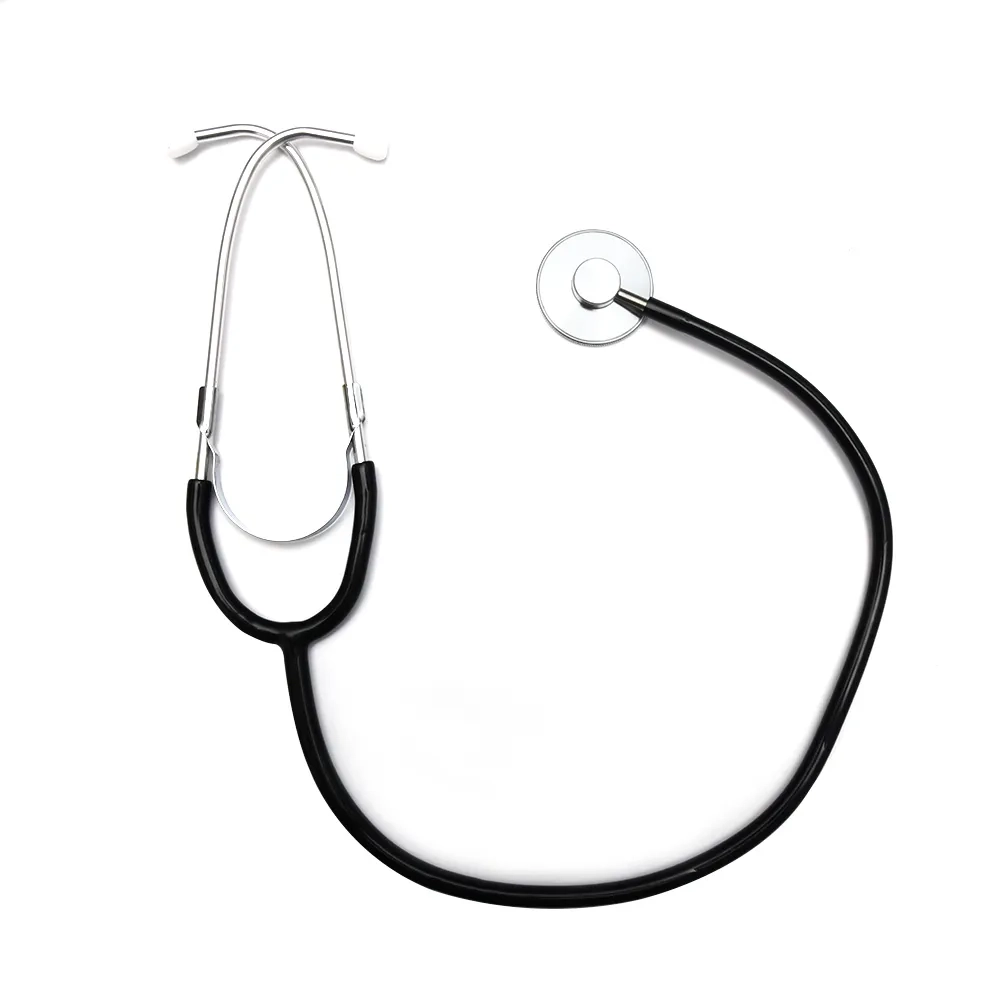
Some professional-grade monitors also offer an auscultatory mode, allowing clinicians to manually verify readings using a stethoscope while the cuff inflates and deflates. This dual capability provides an additional layer of diagnostic confidence in cases where oscillometric readings may be unreliable, such as in patients with arrhythmias, very stiff arteries, or extremely low blood pressure.
The Finicare BP113 clinical blood pressure monitor employs advanced oscillometric technology with motion artifact detection, which alerts the user when patient movement may compromise reading accuracy. This feature is particularly valuable in busy clinical environments where patients may have difficulty remaining perfectly still during measurement.
4. Why Accuracy Matters: The Clinical Impact of Measurement Error
Inaccurate blood pressure readings can lead to significant diagnostic errors. A falsely high reading may result in unnecessary medication prescription, exposing patients to adverse drug effects without benefit. A falsely low reading may delay essential intervention, allowing cardiovascular damage to progress undetected.
The American Heart Association emphasizes that accurate blood pressure measurement is the foundation of effective hypertension management. The condition is often asymptomatic, meaning that treatment decisions rely almost entirely on measurement data. When that data is unreliable, the entire treatment pathway is compromised.
Research has shown that measurement errors of just 5 mmHg can reclassify millions of people. A clinical blood pressure monitor that has been validated to ISO 81060-2:2018 standards minimizes this risk by ensuring that readings consistently fall within acceptable error margins across diverse patient populations.
5. Key Features of Hospital-Grade Blood Pressure Monitors
A hospital-grade clinical blood pressure monitor incorporates several features that distinguish it from consumer models:
Robust construction. Professional devices are built for frequent multi-patient use in demanding clinical environments. They feature durable housings, cleanable surfaces, and components rated for tens of thousands of measurement cycles.
Multiple cuff sizes. Clinical monitors come with a comprehensive range of cuff sizes to accommodate patients from pediatric to bariatric. Proper cuff sizing is essential for accurate readings, as an incorrectly sized cuff can significantly skew results.
Advanced arrhythmia detection. Hospital-grade monitors can detect irregular heart rhythms during measurement, flagging potential atrial fibrillation that may require further cardiac evaluation.
Motion artifact detection. This feature alerts clinicians when patient movement may compromise reading accuracy, allowing for immediate re-measurement rather than recording an erroneous value.
Connectivity options. Professional monitors offer integration with hospital information systems and electronic health records, streamlining workflow and reducing transcription errors.
Dual-mode operation. Some clinical blood pressure monitor models offer both oscillometric and auscultatory modes, providing clinical flexibility for complex cases.
6. Cuff Selection and Sizing for Clinical Accuracy
Proper cuff sizing is one of the most critical factors in accurate blood pressure measurement. The American Academy of Family Physicians and the American Heart Association recommend that the cuff bladder length should cover 75 to 100 percent of the arm circumference, while the bladder width should be 37 to 50 percent of the arm circumference.
A clinical blood pressure monitor used in a hospital or clinic setting must have access to multiple cuff sizes to accommodate the full range of patient arm circumferences. Standard adult cuffs typically fit arms from 22 to 32 centimeters, large cuffs fit 32 to 42 centimeters, and extra-large cuffs fit 42 to 52 centimeters. Pediatric and thigh cuffs extend the range further.
The Finicare BP113 ships with an adult cuff covering 22 to 42 centimeters (8.7 to 16.5 inches), which accommodates both regular and large arms in a single wrap. For clinical and OEM partners, Finicare offers the full range of cuff sizes from small pediatric through extra-large bariatric, ensuring that every patient can be measured with an appropriately sized cuff.
7. Finicare Clinical Blood Pressure Monitor Technology
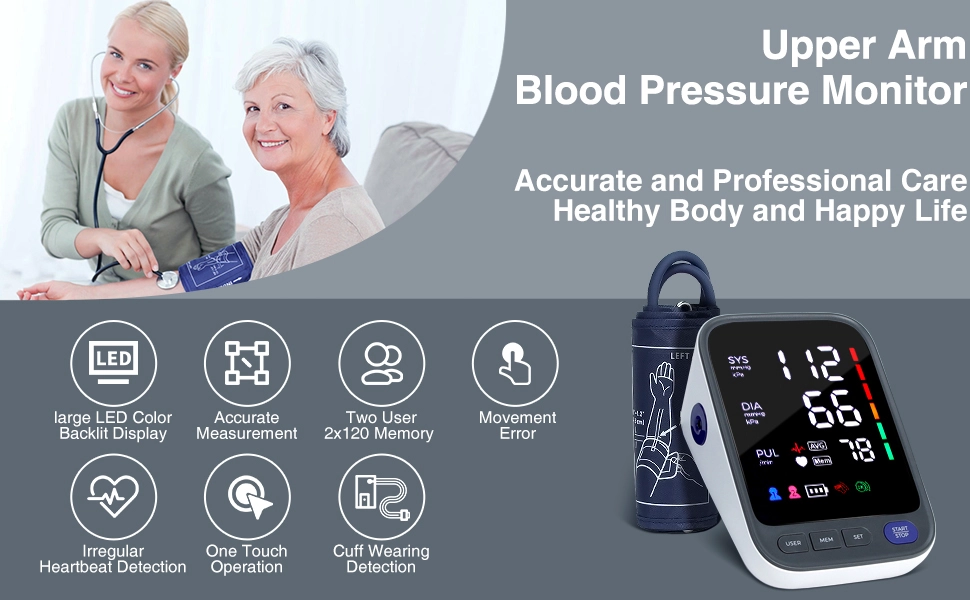
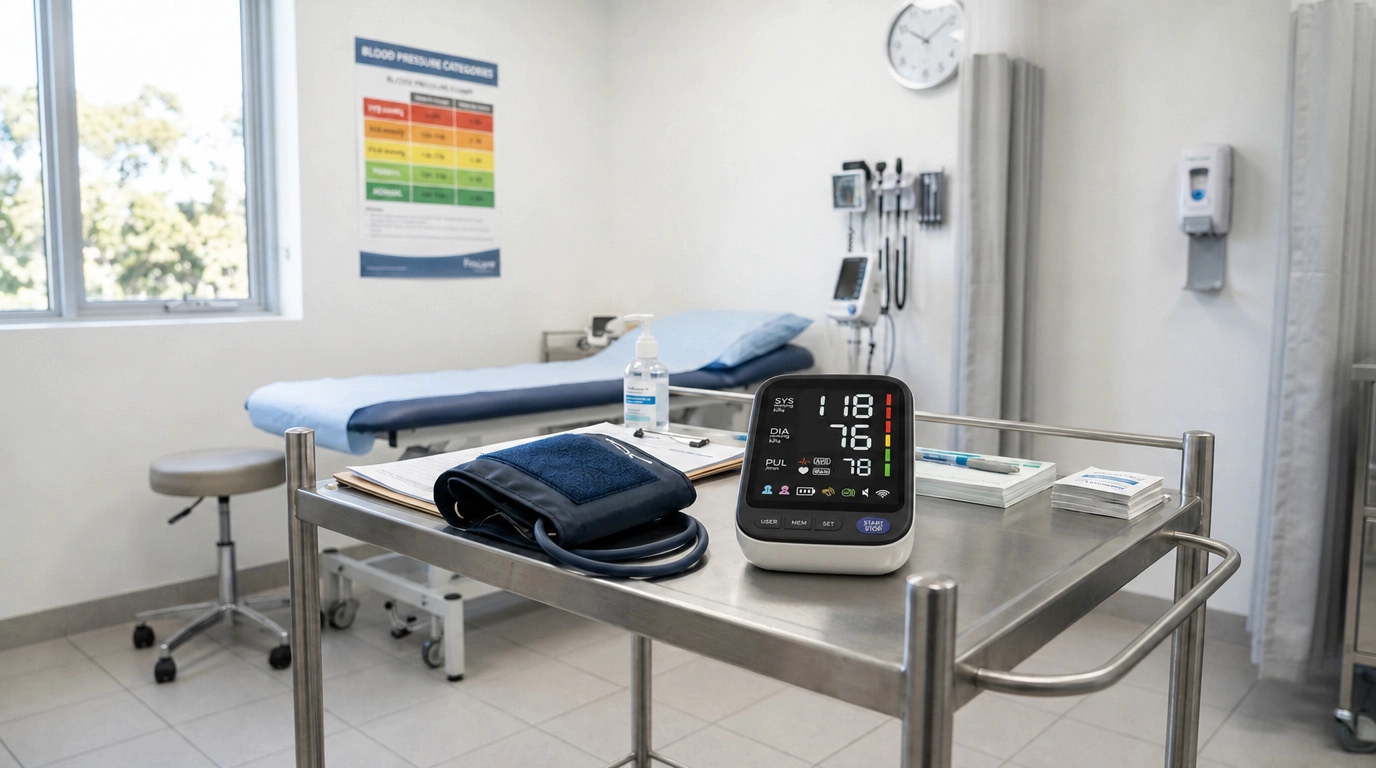
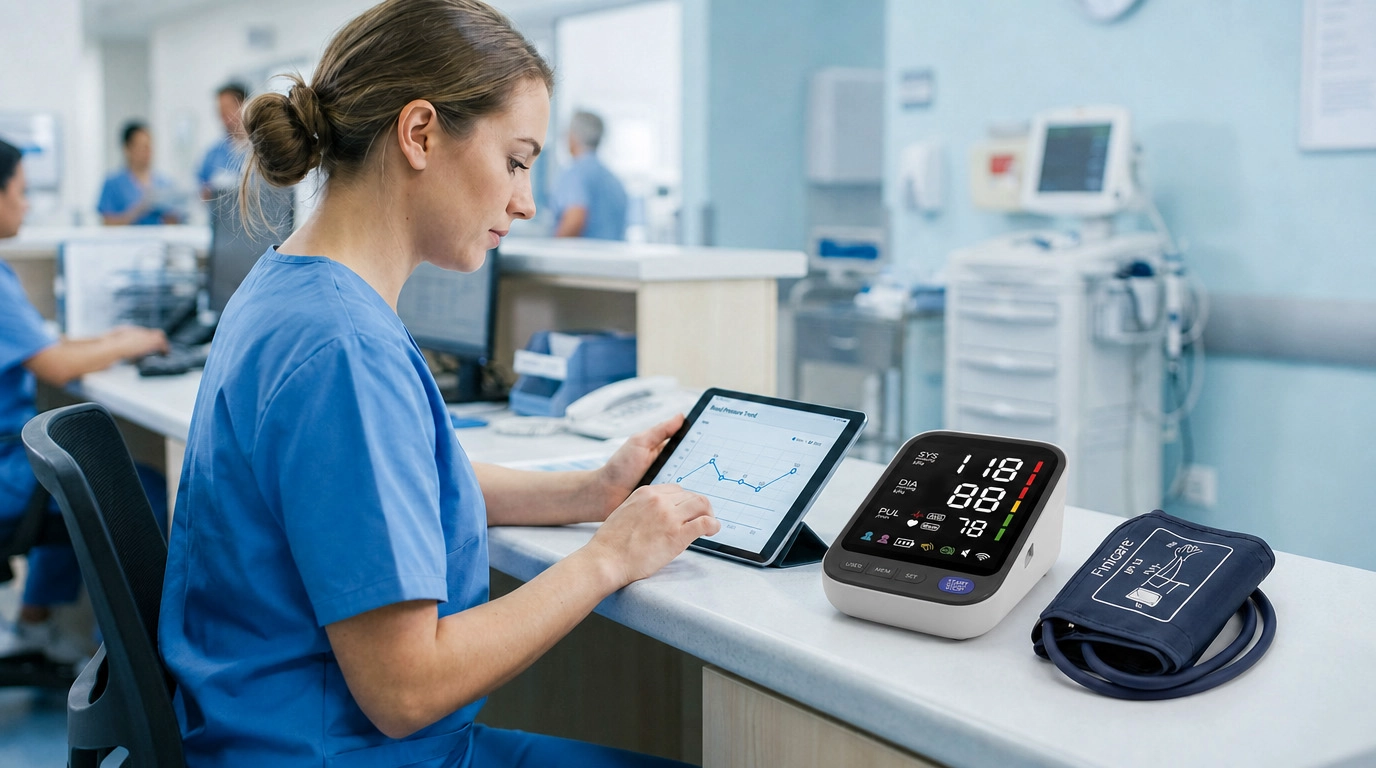
Finicare was established in 2017 and is a high-tech enterprise integrating research and development, manufacturing, and sales. Headquartered in Shenzhen, China, the company specializes in electronic blood pressure monitors, pulse oximeters, infrared thermometers, mesh nebulizers, and other home medical devices. Finicare products are exported to more than eighty countries across Europe, North America, the Middle East, and Southeast Asia.
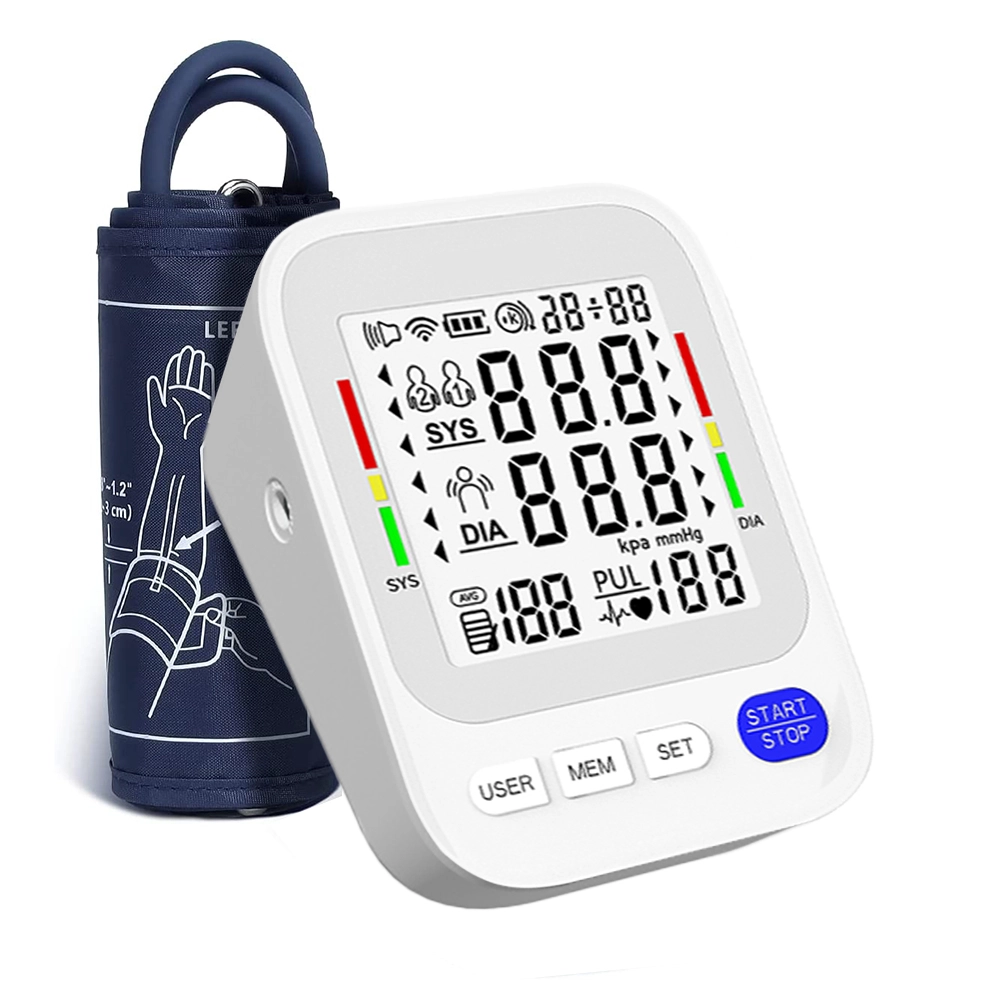
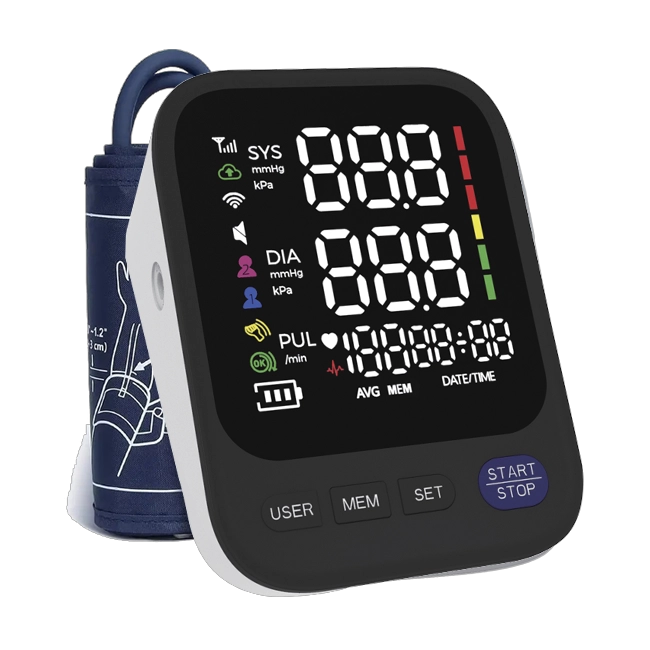
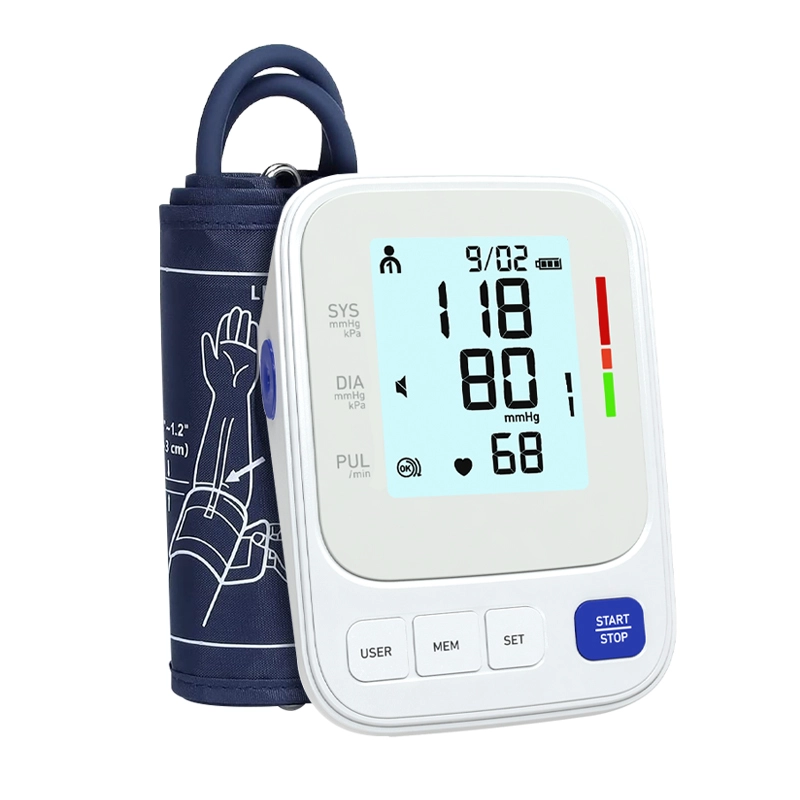
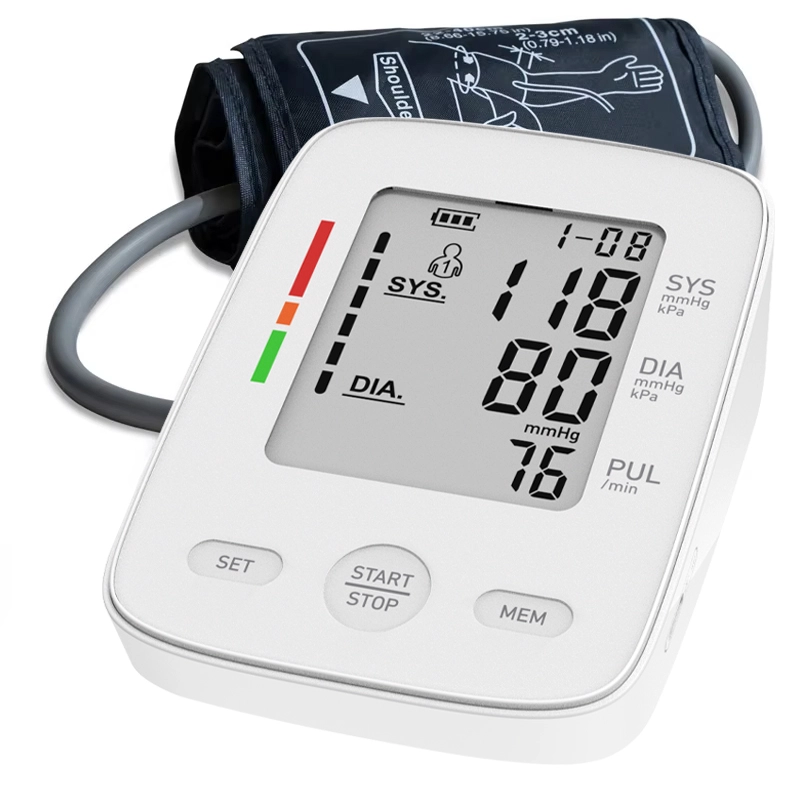
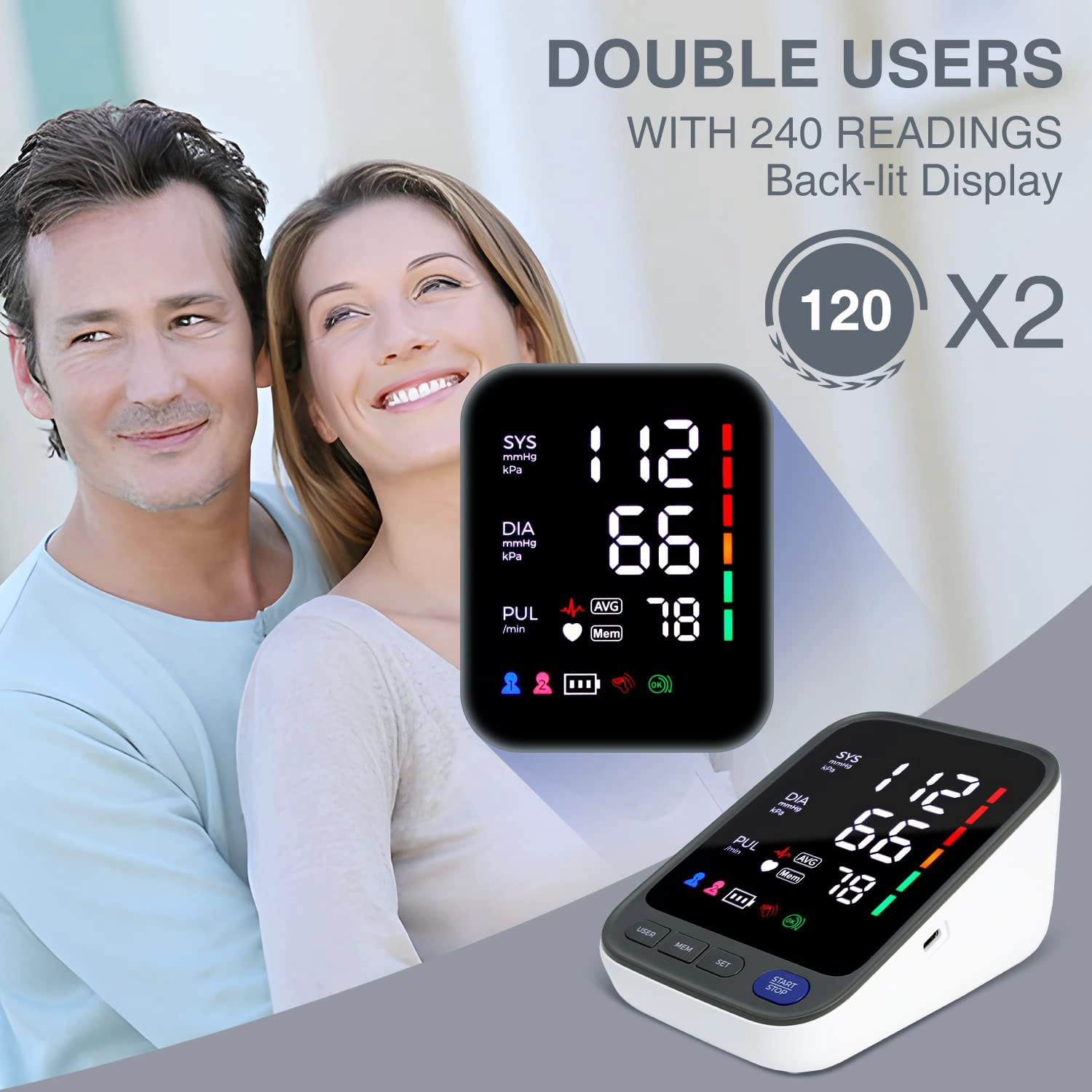
The Finicare BP113 is a clinical blood pressure monitor designed to professional standards. It features a white plastic body with rounded corners and a gray front bezel surrounding a large black LCD display. The screen shows systolic, diastolic, and pulse readings simultaneously in large white digits, with a vertical color-coded health indicator bar (red, yellow, green) on the right side for instant risk assessment. Four clearly labeled buttons — USER, MEM, SET, and START/STOP — provide intuitive operation, with the blue oval START/STOP button designed for easy identification. A circular blue side button provides quick access to power functions.
The BP113 supports dual-user profiles with onboard memory, allowing two patients or family members to track readings independently. The display includes user profile indicators (User 1 in blue, User 2 in pink), a battery level icon, a heart rate waveform indicator, and a wireless connectivity icon. Motion artifact detection alerts the user when movement may affect accuracy.
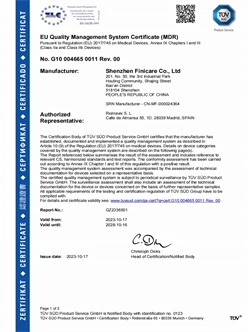
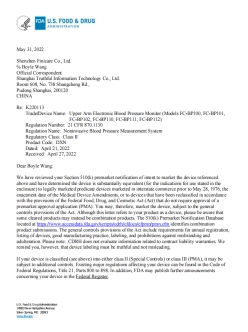
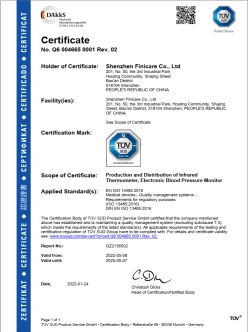
Every Finicare clinical blood pressure monitor is manufactured under ISO 13485 quality management, carries FDA 510(k) clearance and CE MDR marking, and undergoes incoming inspection, in-process quality control, final testing, and outbound audit before shipment. The company offers OEM and ODM customization including custom cuff sizing, multilingual interfaces, and connectivity integration for specific market requirements.
8. Calibration, Maintenance, and Device Lifespan
Even the most accurate clinical blood pressure monitor requires regular maintenance to sustain its performance over time. The British and Irish Hypertension Society notes that evidence exists for degradation in the accuracy of automated monitors over time, and recommends that monitors used in clinical environments should be recalibrated at least annually as a minimum.
For home-use clinical blood pressure monitor models, the BIHS recommends replacement after a maximum of four years of use, or sooner if there is evidence of damage, particularly to the cuff, or concern about accuracy. The ACCU-RATE study by Hodgkinson and colleagues found that a significant proportion of home monitors owned by patients with hypertension did not meet accuracy standards when tested.
Calibration should be performed by qualified technicians according to manufacturer specifications. Regular calibration verifies the device's accuracy against a known standard, compensating for any drift that may occur with use. Proper maintenance protocols protect the investment and, more importantly, safeguard patient diagnostic integrity.
9. Connected and Smart Monitoring: The Digital Health Era
The broader growth of telehealth and remote patient monitoring programs is expanding the addressable market for connected clinical blood pressure monitor devices. Healthcare providers and insurers increasingly reimburse for remote monitoring services that rely on patient-generated data, pushing manufacturers to build stronger software, cloud, and clinician-dashboard capabilities around their hardware.
Consumer demand for devices that sync readings to smartphone apps, track trends over time, and share data with physicians is accelerating the shift from traditional mechanical devices toward smart and connected monitors. The Finicare BP113 includes wireless connectivity capability, allowing readings to be transmitted to a companion application for long-term trend tracking and secure sharing with healthcare providers.
Emerging cuffless and wearable technologies, including optical and pulse-wave-based sensing, are attracting significant investment as companies race to bring continuous, cuff-free blood pressure tracking to market. However, the BIHS and AHA continue to recommend validated upper-arm cuff monitors as the gold standard for accuracy. A clinical blood pressure monitor with established validation remains the most reliable tool for cardiovascular risk assessment, even as wearable technology evolves.
10. Choosing the Right Clinical Blood Pressure Monitor: A Checklist
When evaluating a clinical blood pressure monitor for purchase, consider the following checklist:
Independent validation. Verify that the device has been validated by AAMI, ESH, or ISO 81060-2 standards. Check the AMA VDL at validatebp.org and the BIHS list for published validation reports.
Regulatory clearance. Confirm FDA 510(k) clearance or equivalent local regulatory approval for your market.
Cuff range and durability. Ensure that appropriate cuff sizes are available for your patient population and that cuffs are designed for clinical, multi-patient use with easy cleaning.
Technology and features. Evaluate oscillometric and auscultatory modes, arrhythmia detection, motion artifact detection, and any advanced features relevant to your clinical setting.
Connectivity options. Determine whether the device can integrate with existing electronic health record or hospital information systems for seamless data transfer.
Ease of use. Assess whether the interface is intuitive for clinical staff, minimizing training time and reducing the risk of operator error.
Durability and warranty. Verify that the device is built for a demanding clinical environment and understand the manufacturer's warranty and support terms.
Calibration and service. Confirm recommended calibration intervals and ensure that qualified service options are readily available in your region.
Summary
A clinical blood pressure monitor is a device that has undergone independent validation against internationally recognized protocols (AAMI, ESH, ISO 81060-2:2018) to ensure measurement accuracy suitable for professional healthcare settings. The global market for blood pressure monitoring devices is projected to grow from USD 5.7 billion in 2025 to USD 8.08 billion by 2034, driven by hypertension prevalence and the shift toward connected, validated devices. Key features of a clinical blood pressure monitor include robust construction for multi-patient use, multiple cuff sizes, advanced arrhythmia detection, motion artifact detection, and EHR connectivity.
The Finicare BP113 exemplifies these standards with its FDA 510(k) clearance, ISO 13485 manufacturing, CE MDR marking, large black LCD display with color-coded risk indicator, dual-user memory, motion artifact detection, wireless connectivity, and blue fabric cuff supporting arm circumferences from 22 to 42 centimeters. By selecting a validated clinical blood pressure monitor and following proper calibration and maintenance protocols, healthcare providers can ensure accurate readings that support better diagnostic and treatment decisions.
References
1. British and Irish Hypertension Society. "Validated BP Monitors: Clinical, Policy, and Procurement Guidance." https://bihs.org.uk/blood_pressure_technology/bp_monitor_validations.aspx
2. USH. "Sourcing Hospital-Grade Blood Pressure Monitors: Clinical Accuracy." https://ush.com.tw/patient-monitors-equipment/vital-sign-monitors/sourcing-hospital-grade-blood-pressure-monitors-clinical-accuracy
3. Intellectual Market Insights. "Top 10 Leading Companies in the Global Blood Pressure Monitoring Devices Market." August 10, 2026. https://www.intellectualmarketinsights.com/blogs/the-evolution-of-blood-pressure-monitoring-devices-trends-innovations-and-market-insights
4. American Medical Association. "US Blood Pressure Validated Device Listing." https://validatebp.org
5. Stergiou GS, et al. "A Universal Standard for the Validation of Blood Pressure Measuring Devices." Hypertension, 2018. https://www.ahajournals.org/doi/10.1161/hypertensionaha.117.10237