














Blood Pressure Monitor with Large Cuff: Why Cuff Size Matters for Accurate Readings
Preface
Nearly half of all adults in the United States have high blood pressure, yet a Johns Hopkins University study found that more than half of American adults need a large or extra-large blood pressure cuff. Using a cuff that is too small can overestimate systolic blood pressure by up to 20 mmHg, potentially leading to misdiagnosis and inappropriate medication.
A blood pressure monitor with large cuff is not just a convenience for people with bigger arms — it is a clinical necessity for anyone with an upper-arm circumference above 32 centimeters. This guide is written for patients, caregivers, and healthcare professionals who need to understand why cuff size matters, how to choose the right blood pressure monitor with large cuff, and what features to prioritize for accurate, reliable home blood pressure monitoring.
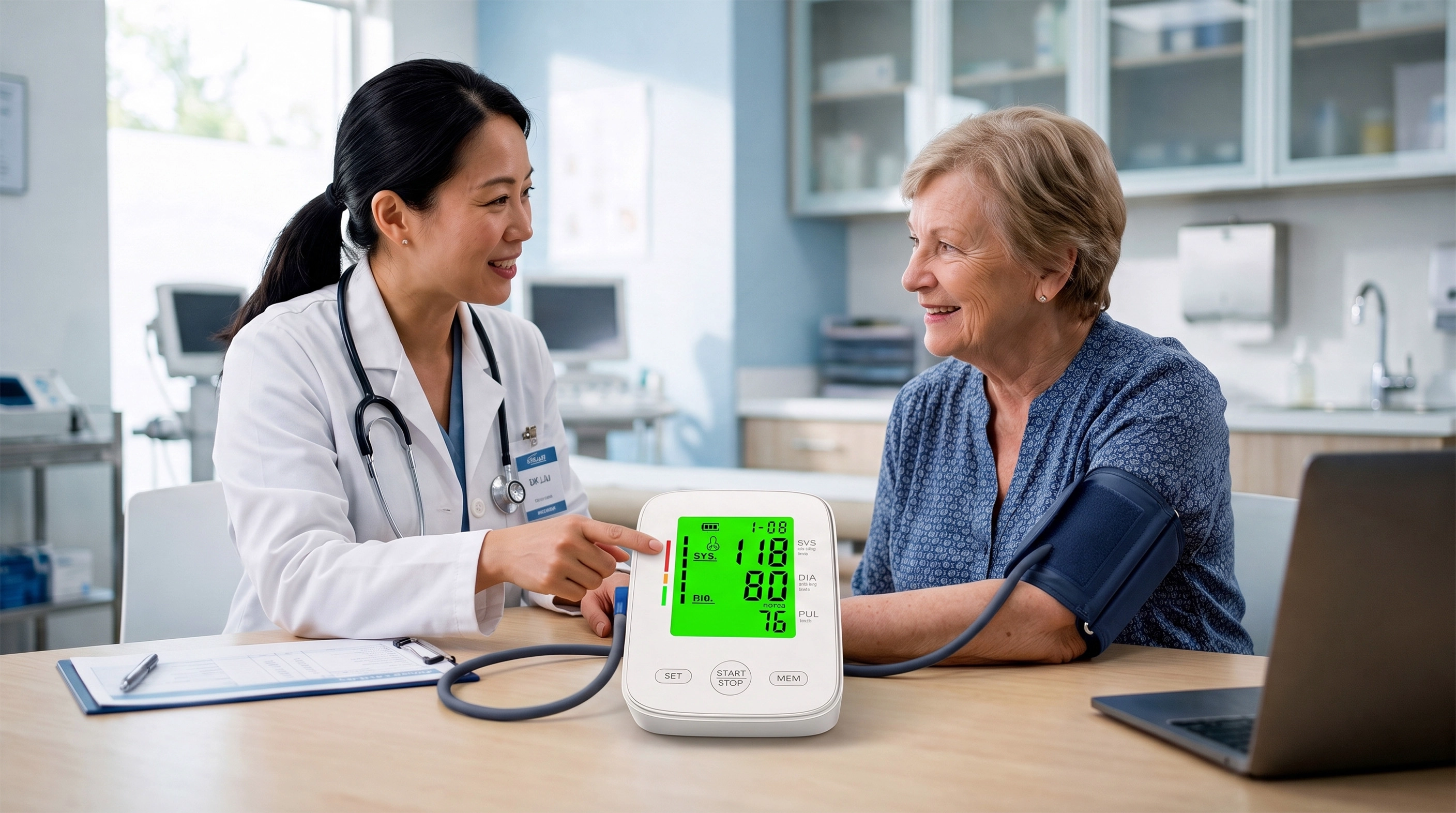
Table of Contents
1. Why Cuff Size Is the Number One Factor in Blood Pressure Accuracy
2. How a Blood Pressure Monitor with Large Cuff Prevents Overestimation
3. Understanding the Four Standard Cuff Sizes
4. Who Needs a Blood Pressure Monitor with Large Cuff?
5. Key Features to Look for When Buying
6. Clinical Evidence: The Johns Hopkins Cuff Size Study
7. Finicare Blood Pressure Monitor with Large Cuff Solutions
8. Proper Measurement Technique for Users with Larger Arms
9. Comparing Popular Brands and Cuff Ranges
10. The Future of Universal Cuff Technology
Summary
References
1. Why Cuff Size Is the Number One Factor in Blood Pressure Accuracy
The single most common mistake people make when measuring blood pressure at home is using a cuff that does not fit properly. The American Academy of Family Physicians and the American Heart Association both emphasize that the cuff bladder length should cover 75 to 100 percent of the arm circumference, while the bladder width should be 37 to 50 percent of the arm circumference. When a standard-size cuff is placed on an arm that requires a larger size, the cuff compresses the brachial artery unevenly, producing artificially high readings.
A blood pressure monitor with large cuff addresses this problem by providing a bladder and wrap that fully encircle the upper arm without gaps or excessive tightness. The result is an oscillometric measurement that accurately reflects the true pressure inside the artery. Without the correct cuff, even the most advanced digital monitor will deliver unreliable data, potentially leading to unnecessary medication changes or missed diagnoses.
2. How a Blood Pressure Monitor with Large Cuff Prevents Overestimation
Research published in JAMA Internal Medicine documented the magnitude of the cuff-size problem. In a randomized crossover trial of 195 community-dwelling adults, researchers at Johns Hopkins University found that participants who required a large or extra-large cuff had their systolic blood pressure overestimated by approximately 5 mmHg and 20 mmHg respectively when measured with a regular-size cuff. Diastolic readings were also affected, with overestimations of 1.8 mmHg and 7.4 mmHg.
These errors are clinically significant. An overestimation of just 5 mmHg in systolic blood pressure could lead to the misclassification of an estimated 84 million people worldwide as having hypertension, resulting in unnecessary medication or lifestyle anxiety. A blood pressure monitor with large cuff eliminates this systematic error by ensuring the inflatable bladder covers the required percentage of arm circumference.
3. Understanding the Four Standard Cuff Sizes
The United States recognizes four standard blood pressure cuff sizes for adults:
Small cuff: designed for mid-arm circumferences of 20 to 25 centimeters, or approximately 7.9 to 9.8 inches. This size is typically used by slender adults and some adolescents.
Regular cuff: designed for mid-arm circumferences of 25.1 to 32 centimeters, or approximately 9.9 to 12.6 inches. Most pharmacy-sold monitors include this size by default.
Large cuff: designed for mid-arm circumferences of 32.1 to 40 centimeters, or approximately 12.7 to 15.7 inches. This size accommodates many adults with above-average arm muscle or adipose tissue.
Extra-large cuff: designed for mid-arm circumferences of 40.1 to 55 centimeters, or approximately 15.8 to 21.7 inches. This size is essential for individuals with obesity or very large arms.
A blood pressure monitor with large cuff typically supports the large range (32 to 40 cm) or, in the case of wide-range cuffs, spans from regular through extra-large (22 to 52 cm) in a single inflatable bladder. Wide-range cuffs are increasingly popular because they eliminate the need to purchase separate cuffs for different family members.
4. Who Needs a Blood Pressure Monitor with Large Cuff?
Several groups of people benefit from a blood pressure monitor with large cuff:
Adults with above-average arm circumference. The CDC reports that the average arm circumference for American men is approximately 35 centimeters and for women approximately 32 centimeters. Since the large cuff range begins at 32.1 cm, a significant portion of the population falls into the large or extra-large category.
Athletes and bodybuilders. Resistance training increases arm muscle mass, which can push arm circumference well above 40 centimeters even at low body fat percentages. A regular cuff will produce falsely elevated readings for this group.
Pregnant women. Weight gain during pregnancy can increase arm circumference, making a large cuff necessary for accurate monitoring of gestational hypertension and pre-eclampsia.
Elderly patients with changing body composition. Age-related muscle loss and fat redistribution can alter arm size, requiring a larger cuff than was needed earlier in life.
Overweight and obese individuals. The obesity epidemic means that millions of people who need blood pressure monitoring the most are the same people who need a blood pressure monitor with large cuff.
5. Key Features to Look for When Buying
When selecting a blood pressure monitor with large cuff, consider these essential features:
Cuff range and fit. The cuff should cover at least 80 percent of the upper arm. Look for models that support arm circumferences up to at least 42 centimeters. Wide-range cuffs covering 22 to 52 centimeters offer the greatest flexibility.
Clinical validation. Choose a device that has been validated against the AAMI, ESH, or ISO 81060-2:2018 standard. Check the AMA Validated Device Listing at validatebp.org to confirm the model's status.
Display readability. A large LCD screen with clearly labeled systolic, diastolic, and pulse readings helps users read results without squinting. Color-coded risk indicators (red, amber, green) provide instant visual feedback about blood pressure category.
Memory and multi-user support. Look for at least 90 to 200 readings of onboard storage and support for two or more users. This allows family members to share a device while keeping their data separate.
Irregular heartbeat detection. This feature flags potential atrial fibrillation during measurement, providing an early warning that should prompt follow-up with a healthcare provider.
Power options. Rechargeable lithium-ion batteries with USB charging are preferable to disposable batteries for long-term use and environmental sustainability.
6. Clinical Evidence: The Johns Hopkins Cuff Size Study
The landmark study by Ishigami and colleagues, published in JAMA Internal Medicine in 2023, provided the most compelling evidence to date that cuff size matters enormously for blood pressure accuracy. The researchers recruited 195 community-dwelling adults with a mean age of 54 years.
Each participant underwent four sets of triplicate blood pressure measurements using appropriately sized, too-small, and too-large cuffs in randomized order. The study found that 54 participants required a regular cuff, 35 required a small cuff, and 106 required a large or extra-large cuff. This means that more than half of the study population needed a larger-than-regular cuff.
The key findings were striking:
Participants needing a large cuff had systolic blood pressure overestimated by 4.8 mmHg when a regular cuff was used. Participants needing an extra-large cuff had systolic blood pressure overestimated by 19.7 mmHg when a regular cuff was used. The study authors concluded that on a global scale, a 5 mmHg measurement error could lead to the misclassification of 84 million people to either undertreatment or overtreatment of hypertension.
This research underscores why purchasing a blood pressure monitor with large cuff is not optional — it is essential for accurate cardiovascular risk assessment.
7. Finicare Blood Pressure Monitor with Large Cuff Solutions
Finicare was established in 2017 and is a high-tech enterprise integrating research and development, manufacturing, and sales. Headquartered in Shenzhen, China, the company specializes in electronic blood pressure monitors, pulse oximeters, infrared thermometers, mesh nebulizers, and other home medical devices. Finicare products are exported to more than eighty countries across Europe, North America, the Middle East, and Southeast Asia.
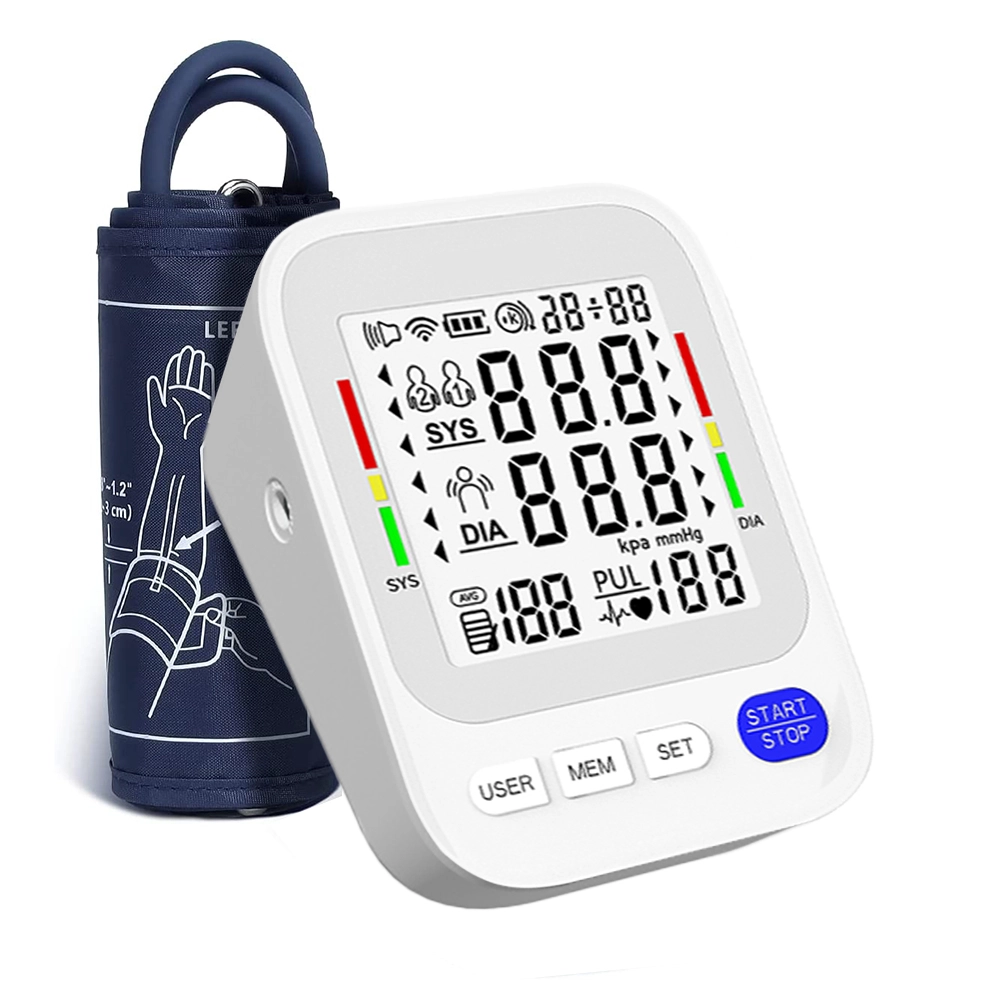
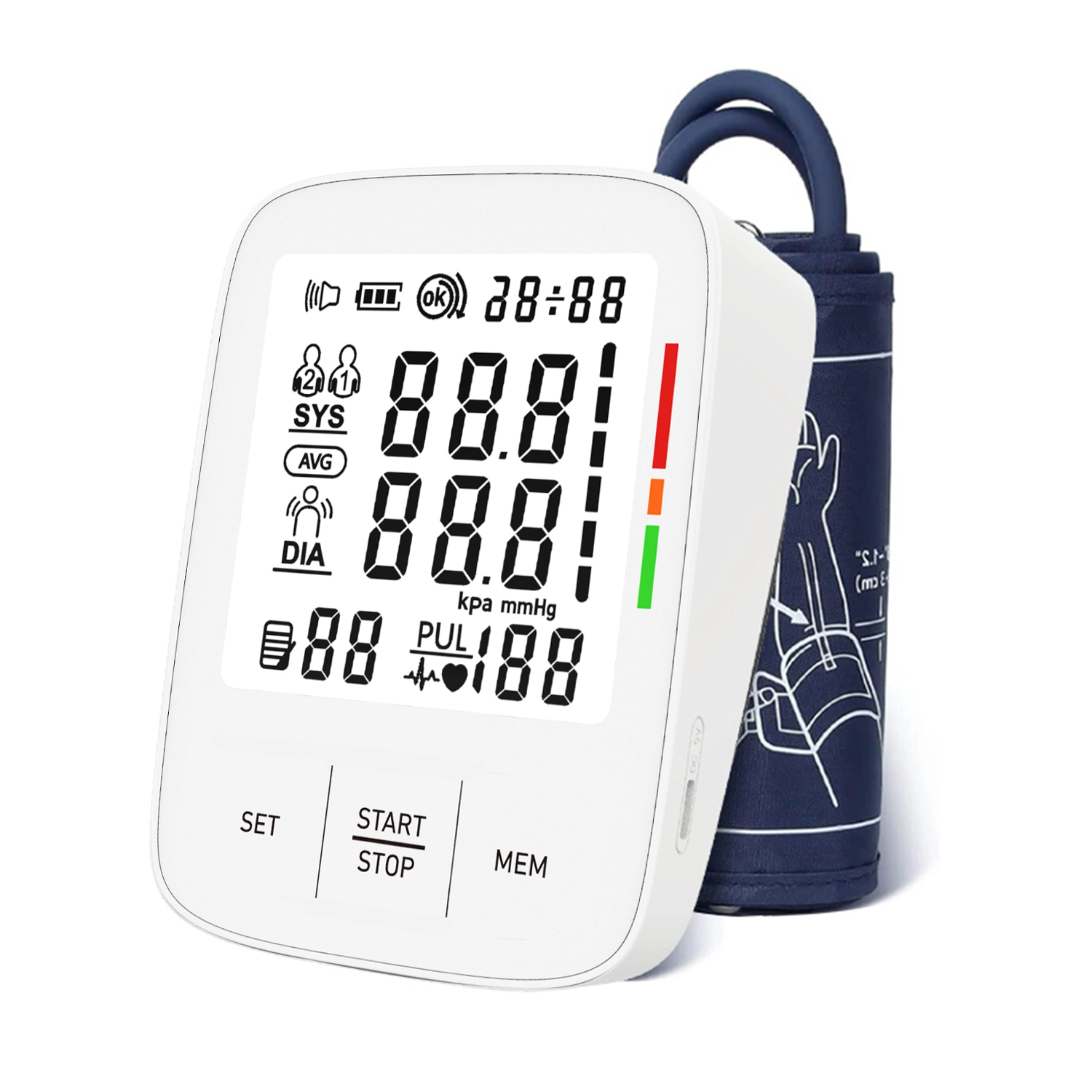
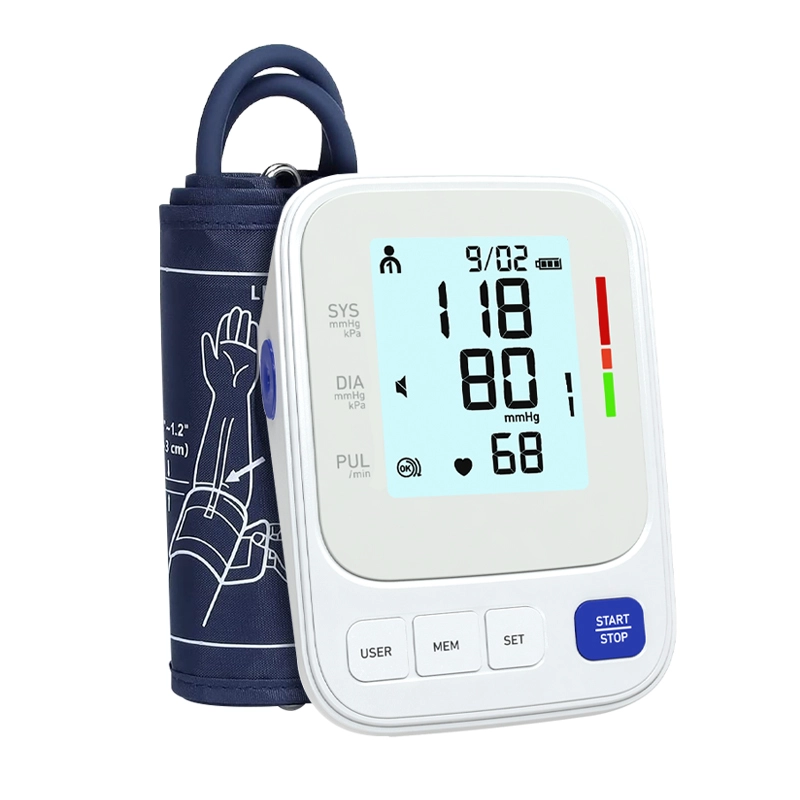
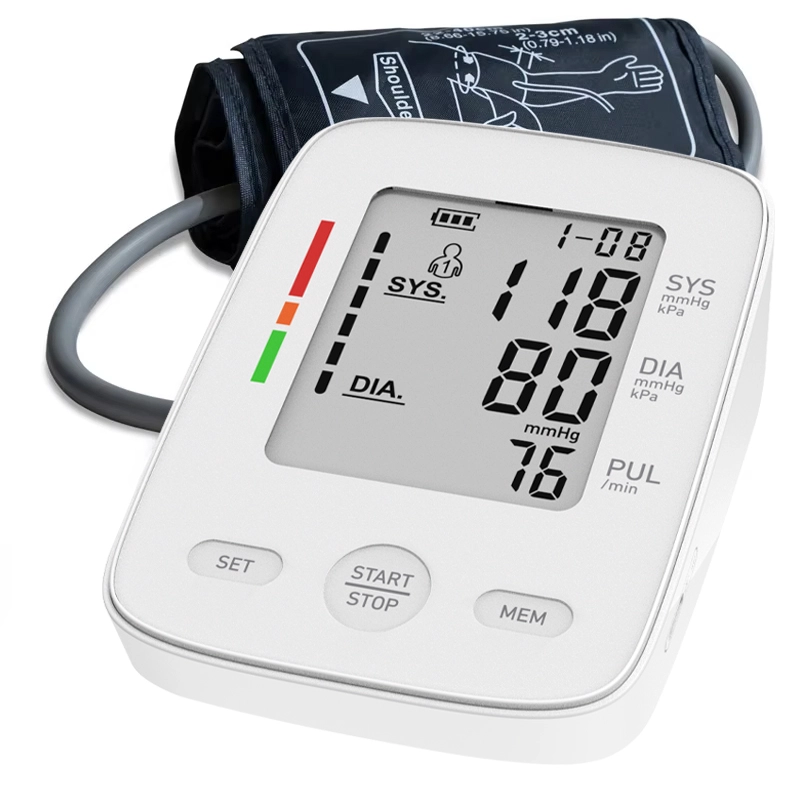
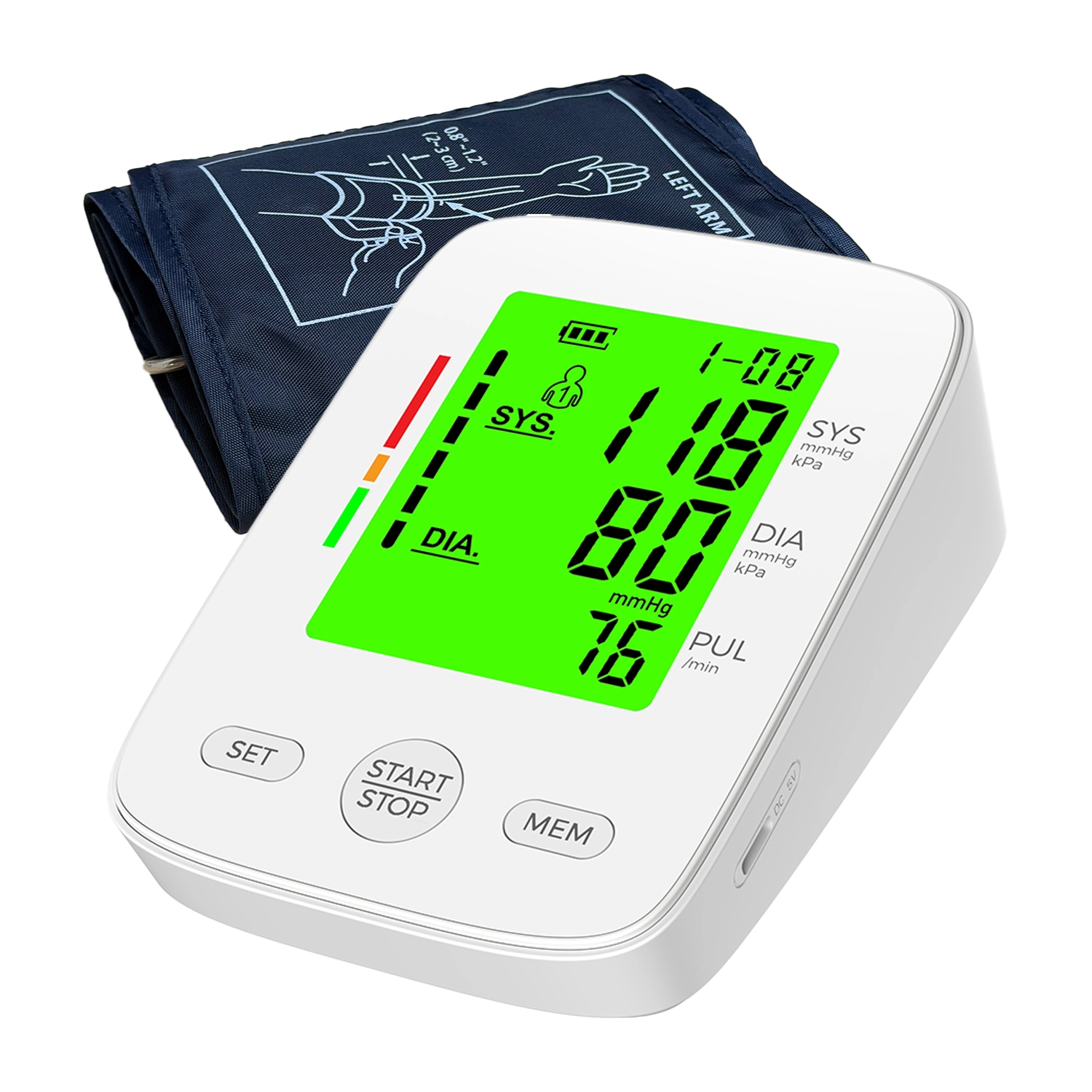
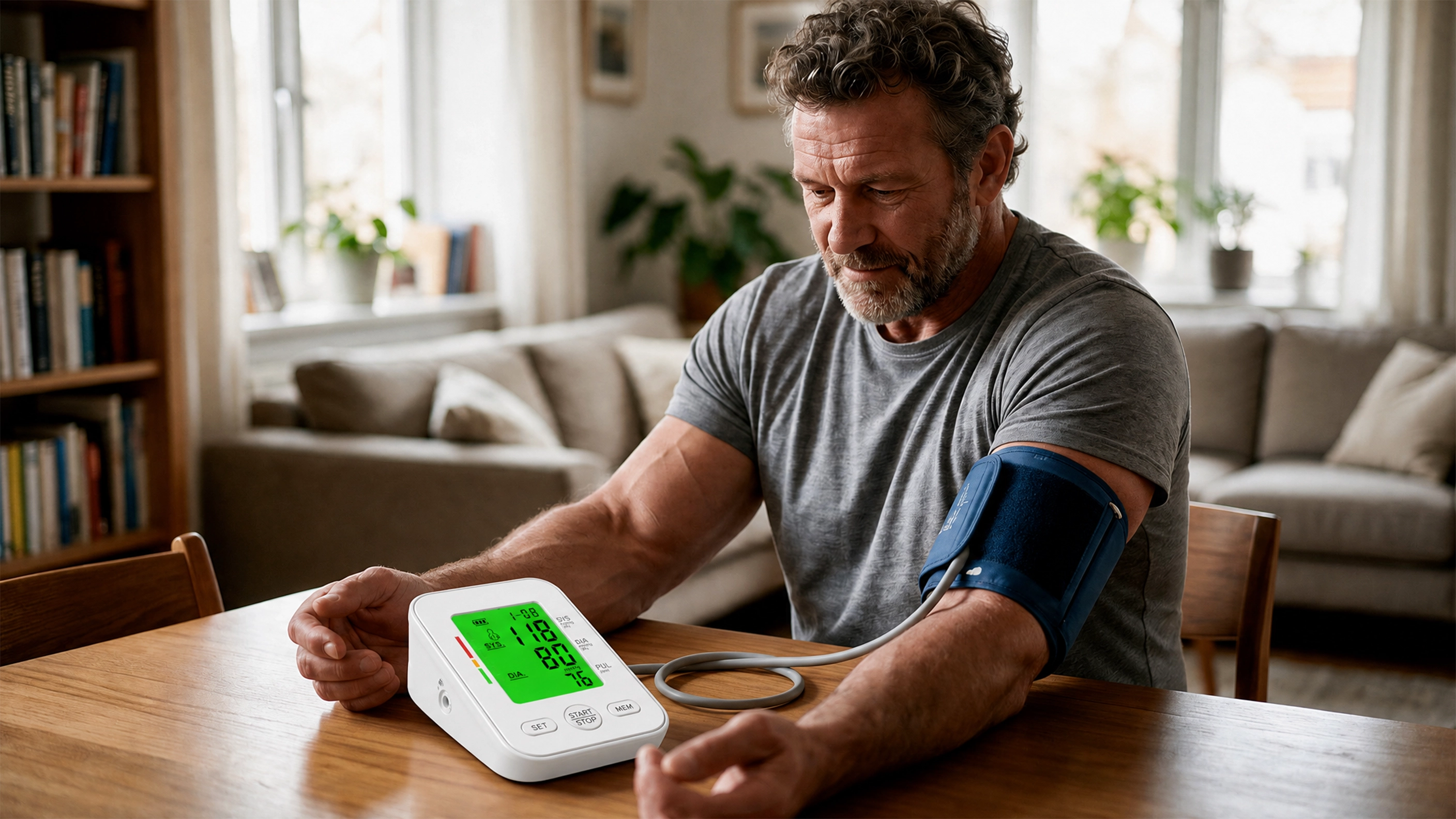
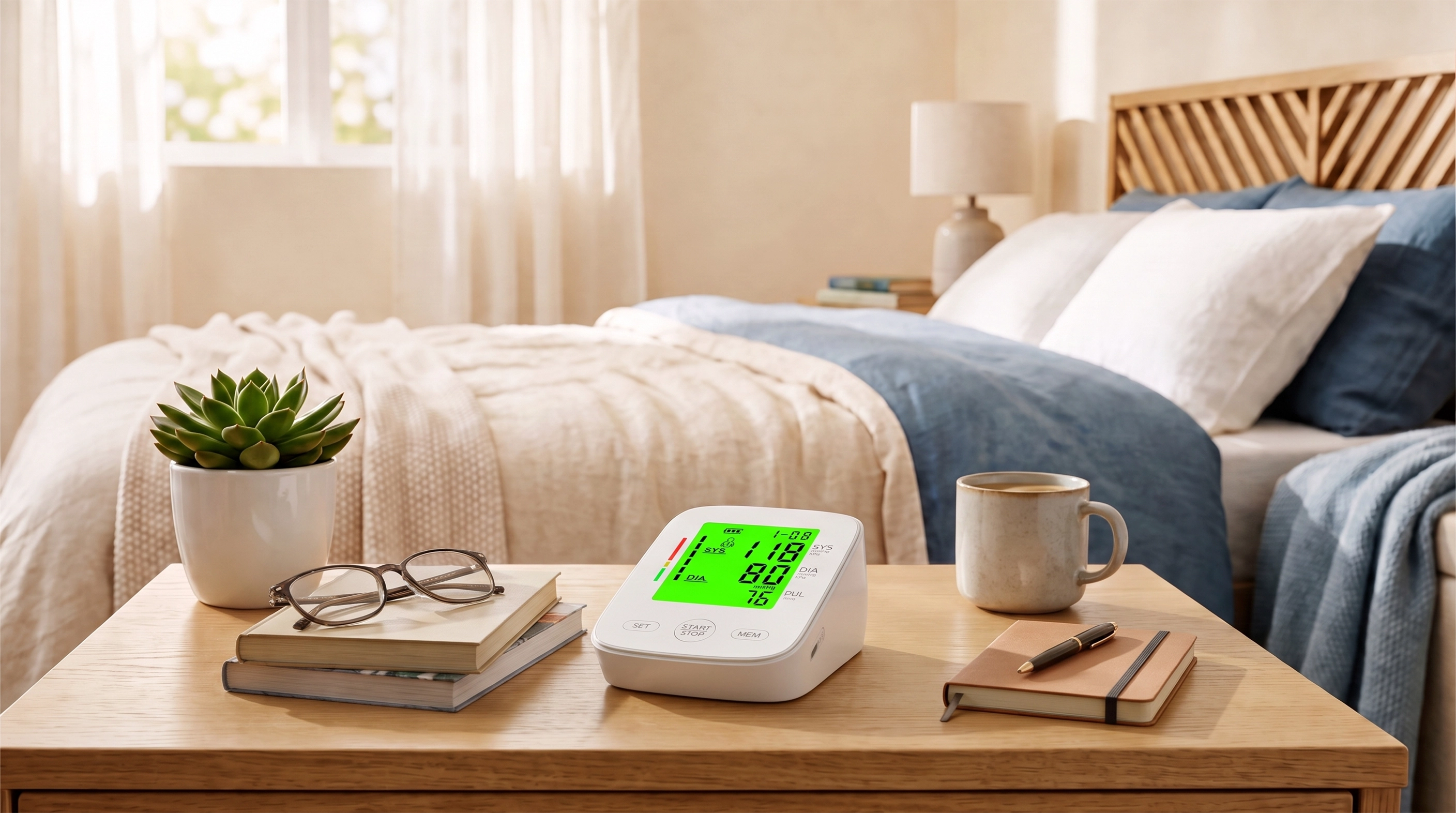
The Finicare BP120 is a digital upper-arm blood pressure monitor with large cuff capability, featuring a white plastic body with rounded corners, a large green-tinted LCD display showing systolic, diastolic, and pulse readings simultaneously, and a vertical color-coded health indicator bar (red, orange, green) for instant risk assessment. Three clearly labeled buttons — SET, START/STOP, and MEM — provide intuitive one-touch operation. The included blue fabric adult cuff supports arm circumferences from 22 to 42 centimeters, covering both regular and large users in a single wrap.
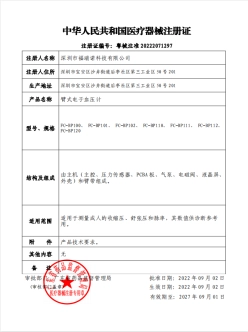
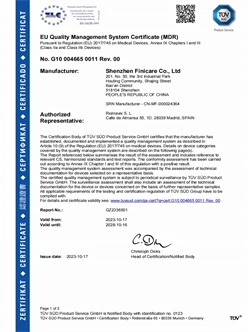
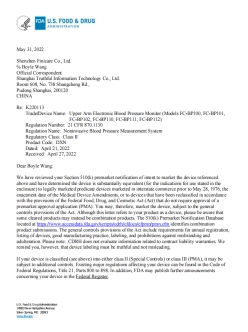
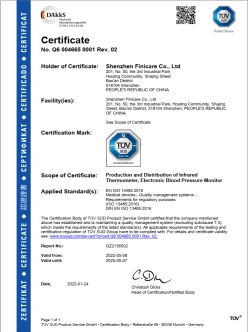
Every Finicare blood pressure monitor with large cuff is manufactured under ISO 13485 quality management and carries FDA 510(k) clearance and CE MDR marking. The company performs incoming inspection, in-process quality control, final testing, and outbound audit before every shipment. For OEM and ODM clients, Finicare offers custom cuff sizing to accommodate specific market requirements, including extra-large cuffs up to 52 centimeters.
8. Proper Measurement Technique for Users with Larger Arms
Even the best blood pressure monitor with large cuff will produce inaccurate readings if used incorrectly. Follow these guidelines specifically for users with larger arms:
Measure arm circumference before purchasing. Use a cloth measuring tape at the midpoint of the upper arm (between the shoulder and the elbow). Record this measurement and compare it to the cuff's stated range before buying.
Sit properly. Sit in a chair with back support, feet flat on the floor, and legs uncrossed. Rest the arm on a flat surface at heart level. For users with larger arms, a wider table or armrest may be needed to provide adequate support.
Apply the cuff on bare skin. Remove clothing from the upper arm. The cuff should sit approximately one inch above the elbow crease, with the artery marker aligned over the brachial artery on the inner side of the arm.
Do not talk during measurement. Conversation can elevate blood pressure by several mmHg. Sit quietly for five minutes before starting the measurement and remain still throughout.
Take multiple readings. The American Heart Association recommends averaging two or three consecutive readings taken one minute apart. Most modern monitors, including the Finicare BP120, support multi-reading averaging.
9. Comparing Popular Brands and Cuff Ranges
The market for blood pressure monitors with large cuff support varies significantly across brands. The Oxiline Pressure XS Pro includes both a standard cuff (8.7 to 16.5 inches) and an XL cuff (8.6 to 18.9 inches) in the box, providing coverage up to approximately 48 centimeters. The Omron 3 Series offers a cuff range of 9 to 17 inches (approximately 23 to 43 centimeters). The LifeSource Extra Large Cuff model accommodates arms up to 23.6 inches (approximately 60 centimeters), making it one of the few monitors suitable for very large arms.
The Finicare BP120 supports arm circumferences from 22 to 42 centimeters (8.7 to 16.5 inches) with its standard included cuff, and Finicare offers optional extra-large cuffs up to 52 centimeters for OEM partners. This flexibility allows distributors to tailor cuff sizes to their target markets, whether the primary users are average-size adults in East Asia or larger adults in North America and Europe.
When comparing brands, prioritize the cuff range that covers your specific arm circumference, then evaluate clinical validation status, memory capacity, display readability, and app connectivity. A blood pressure monitor with large cuff that is clinically validated will always outperform a non-validated device regardless of its feature set.
10. The Future of Universal Cuff Technology
The blood pressure monitoring industry is actively developing universal cuff technologies that could eliminate the sizing problem entirely. Several manufacturers are testing adaptive bladders that automatically adjust to different arm sizes, using variable inflation patterns and multi-sensor arrays to maintain accuracy across a wide range of circumferences.
Wrist-based continuous blood pressure monitors are also advancing, with devices like the Apple Watch exploring optical sensor-based blood pressure estimation that does not require a cuff at all. However, the American Heart Association continues to recommend upper-arm cuff monitors as the most accurate option for home use, and clinical validation of cuffless devices remains limited.
Finicare's R&D team is researching next-generation cuff materials that combine elastic fabric with segmented bladders to improve comfort and accuracy for users with large arms. The goal is to create a blood pressure monitor with large cuff that fits arms from 22 to 55 centimeters without requiring the user to swap cuffs, while maintaining AAMI and ESH validation standards.
Summary
A blood pressure monitor with large cuff is essential for accurate home blood pressure monitoring because using a cuff that is too small can overestimate systolic readings by up to 20 mmHg. The Johns Hopkins University study of 195 adults found that more than half of participants needed a large or extra-large cuff, yet most pharmacy-sold monitors include only a regular-size cuff. When choosing a blood pressure monitor with large cuff, prioritize clinical validation (AAMI, ESH, or ISO 81060-2), a cuff range that covers your arm circumference, clear display readability, multi-user memory, and irregular heartbeat detection.
The Finicare BP120 exemplifies these standards with its FDA 510(k) clearance, ISO 13485 manufacturing, large green LCD display, color-coded risk indicator, and blue fabric cuff supporting arm circumferences from 22 to 42 centimeters. By measuring your arm circumference before purchasing and following proper measurement technique, you can ensure accurate readings that support better cardiovascular health decisions.