












Bluetooth Blood Pressure Monitor: The Smart Way to Track Your Heart Health at Home
Preface
Nearly half of all adults in the United States have high blood pressure, according to the Centers for Disease Control and Prevention. The American Heart Association recommends home monitoring for anyone with hypertension, yet manually recording readings in a notebook is error-prone and difficult to share with doctors. A bluetooth blood pressure monitor solves this problem by wirelessly syncing each reading to a smartphone app, creating a continuous digital record that can be shared with healthcare providers in seconds.
The global digital blood pressure monitors market is projected to grow from USD 1.92 billion in 2026 to USD 3.76 billion by 2033, driven by smart connected devices and remote patient monitoring adoption. This guide is written for patients, caregivers, and healthcare professionals who want to understand how bluetooth blood pressure monitors work, what features to look for, and how to choose a clinically validated device that delivers accurate, actionable data for long-term cardiovascular health management.
Table of Contents
1. What Is a Bluetooth Blood Pressure Monitor?
2. How Bluetooth Connectivity Transforms Home Monitoring
3. Clinical Validation Standards: AAMI, ESH, and ISO 81060-2
4. Key Features to Look for When Buying
5. Accuracy Compared to Doctor's Office Readings
6. Multi-User Support and Family Health Tracking
7. Finicare Bluetooth Blood Pressure Monitor Technology
8. App Integration with Apple Health and Google Fit
9. Common Mistakes That Affect Reading Accuracy
10. The Future of Connected Cardiovascular Monitoring
Summary
References
1. What Is a Bluetooth Blood Pressure Monitor?
A bluetooth blood pressure monitor is a digital upper-arm or wrist device that measures systolic and diastolic blood pressure and pulse rate using oscillometric technology, then transmits the data wirelessly to a paired smartphone application via Bluetooth Low Energy. Unlike traditional monitors that display readings only on a built-in screen and store them in limited onboard memory, a bluetooth blood pressure monitor offers unlimited cloud storage, trend visualization, and one-tap sharing with physicians.
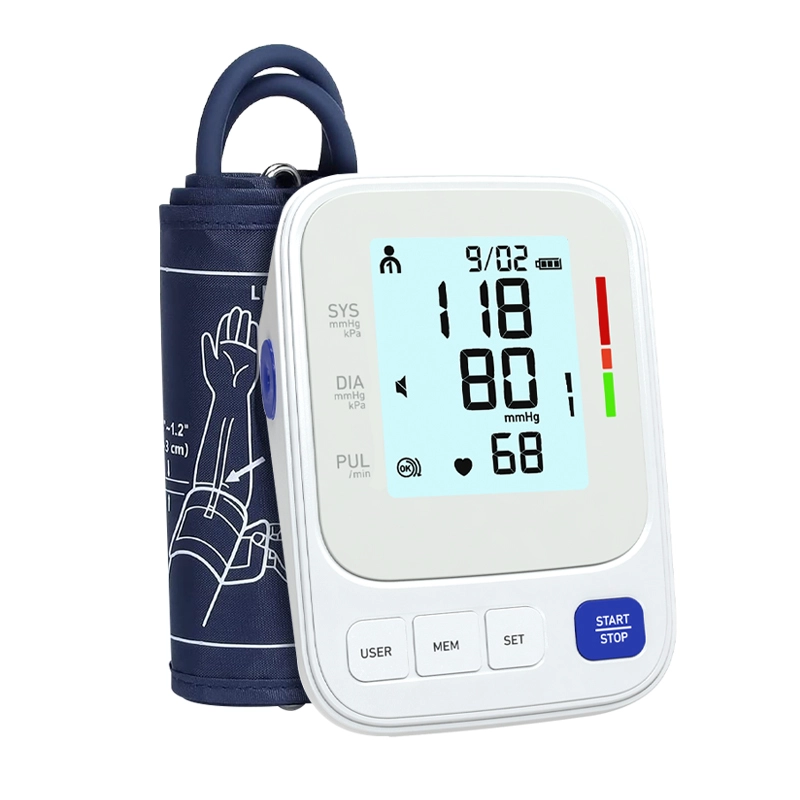
The core measurement technology remains the same as in non-connected devices. An inflatable cuff applies pressure to the brachial artery, and a sensor detects oscillations as the cuff deflates. What sets a bluetooth blood pressure monitor apart is the connectivity layer: a Bluetooth module sends each reading to a companion app, which logs the timestamp, systolic value, diastolic value, pulse rate, and any irregular heartbeat flags. This data is then synced to cloud servers for long-term analysis and sharing.
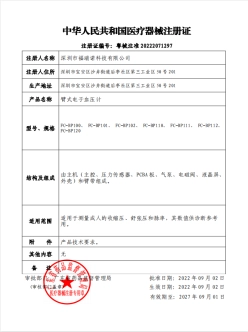
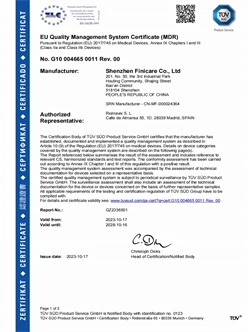
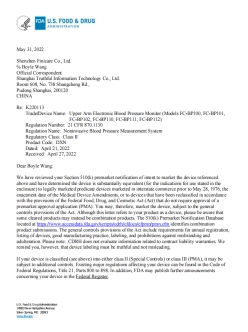
Most modern bluetooth blood pressure monitors are Class II medical devices that have received FDA 510(k) clearance or CE marking under the Medical Device Regulation. They typically include rechargeable batteries or AA power, USB-C charging ports, and cuffs sized for arms ranging from 22 to 42 centimeters in circumference.
2. How Bluetooth Connectivity Transforms Home Monitoring
The addition of Bluetooth to a blood pressure monitor fundamentally changes how patients interact with their health data. With a traditional monitor, the user must remember each reading, write it down, or rely on the device's limited internal memory. A bluetooth blood pressure monitor eliminates these friction points entirely.
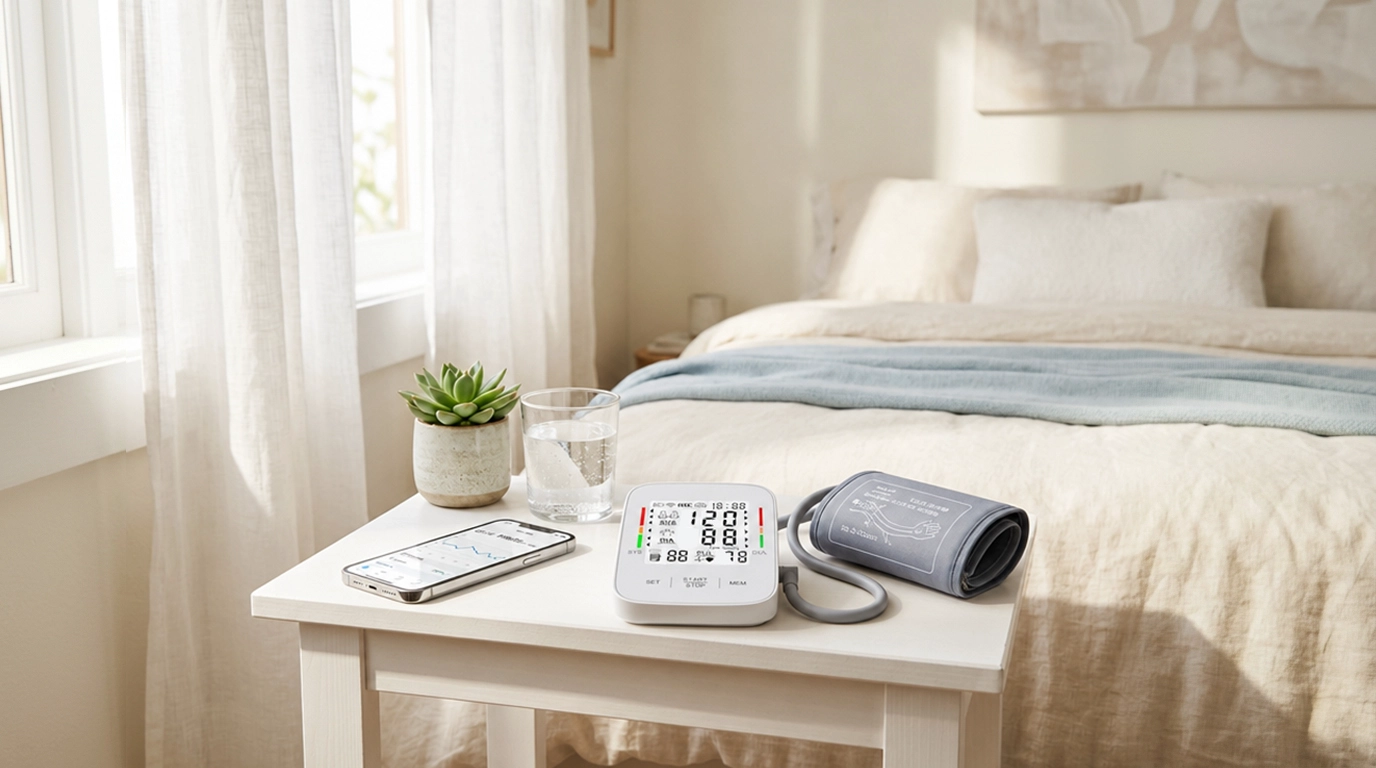
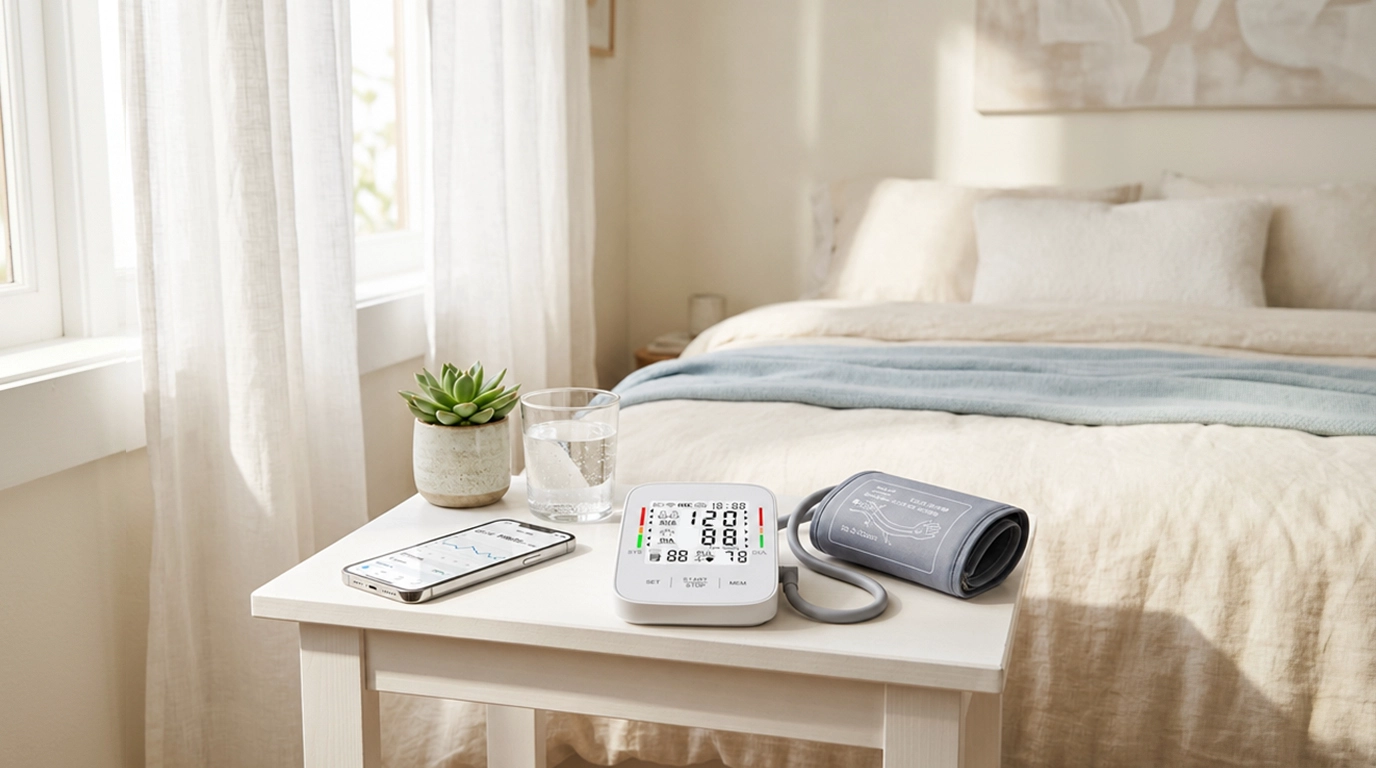
When a measurement is completed, the reading automatically appears in the paired smartphone app within seconds. The app organizes readings by date and time, creates visual trend graphs showing systolic and diastolic patterns over weeks or months, and can send alerts if readings exceed user-defined thresholds. This continuous data stream is invaluable for detecting white-coat hypertension, masked hypertension, and morning surges that single office readings cannot capture.
For healthcare providers, the benefits are equally significant. Instead of relying on a patient's handwritten log, which may be incomplete or inaccurate, a doctor can review a comprehensive digital report showing every reading taken over the past month, complete with timestamps, averages, and irregular heartbeat notifications. This data-driven approach supports better medication titration, earlier intervention for concerning trends, and more productive office visits.
3. Clinical Validation Standards: AAMI, ESH, and ISO 81060-2
Not all bluetooth blood pressure monitors are created equal. Clinical validation is the process by which an independent laboratory or research institution tests a device against a reference standard to confirm its accuracy. The three most widely recognized validation protocols are the Association for the Advancement of Medical Instrumentation (AAMI) standard, the European Society of Hypertension (ESH) International Protocol, and the ISO 81060-2:2018 standard.
A device that passes these protocols meets strict accuracy criteria, typically requiring that at least 75 percent of readings fall within 5 mmHg of the reference measurement. The American Medical Association maintains the US Blood Pressure Validated Device Listing (VDL) at validatebp.org, where consumers can check whether a specific model has been independently validated.
The Greater Goods Bluetooth Blood Pressure Monitor, Wirecutter's top pick after 60 hours of testing, appears on the AMA VDL and costs under 65 dollars. The Withings BPM Connect, another popular bluetooth blood pressure monitor, was clinically tested with 87 participants and achieved mean errors of just -0.27 mmHg for systolic and -0.16 mmHg for diastolic pressure, meeting all AAMI/ESH/ISO 81060-2:2018 requirements.
4. Key Features to Look for When Buying
When evaluating a bluetooth blood pressure monitor, consider these essential features:
Cuff size and fit. The cuff should encircle at least 80 percent of the upper arm. Standard cuffs fit arms from 22 to 36 centimeters. If you need a larger cuff, look for models that support extended ranges up to 52 centimeters.
Onboard memory. Even with Bluetooth connectivity, the device should store at least 60 to 200 readings locally in case the phone is not nearby during measurement. Dual-user memory allows two people to share one device without mixing data.
Irregular heartbeat detection. This feature flags potential atrial fibrillation during measurement. While it is not a diagnostic tool, it provides an early warning that should prompt medical follow-up.
App quality. The companion app should offer clear trend graphs, CSV export, email sharing, and integration with Apple Health or Google Fit. Poorly designed apps can make the bluetooth blood pressure monitor frustrating to use.
Battery life and charging. Rechargeable lithium-ion batteries typically last four to six months per charge. Models with USB-C charging are preferable to older micro-USB designs.
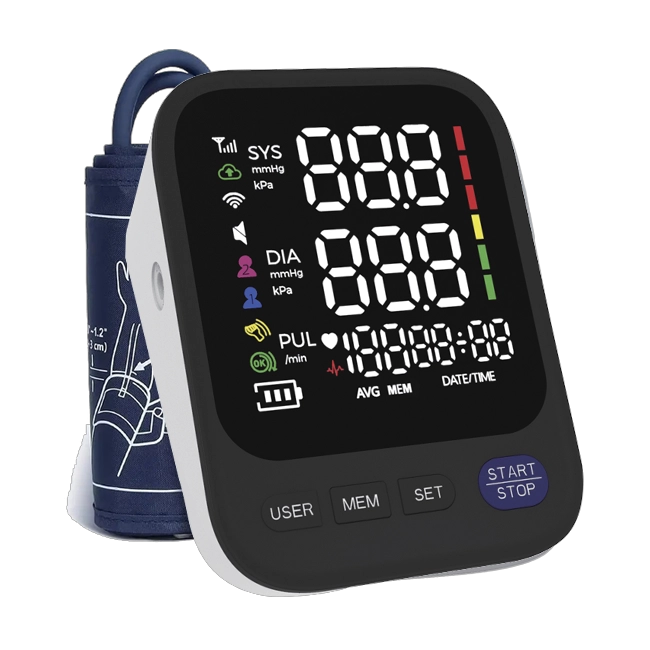
Color-coded results. A green-amber-red indicator bar on the display helps users instantly understand whether their reading falls within the normal, elevated, or hypertensive range without memorizing numerical thresholds.
5. Accuracy Compared to Doctor's Office Readings
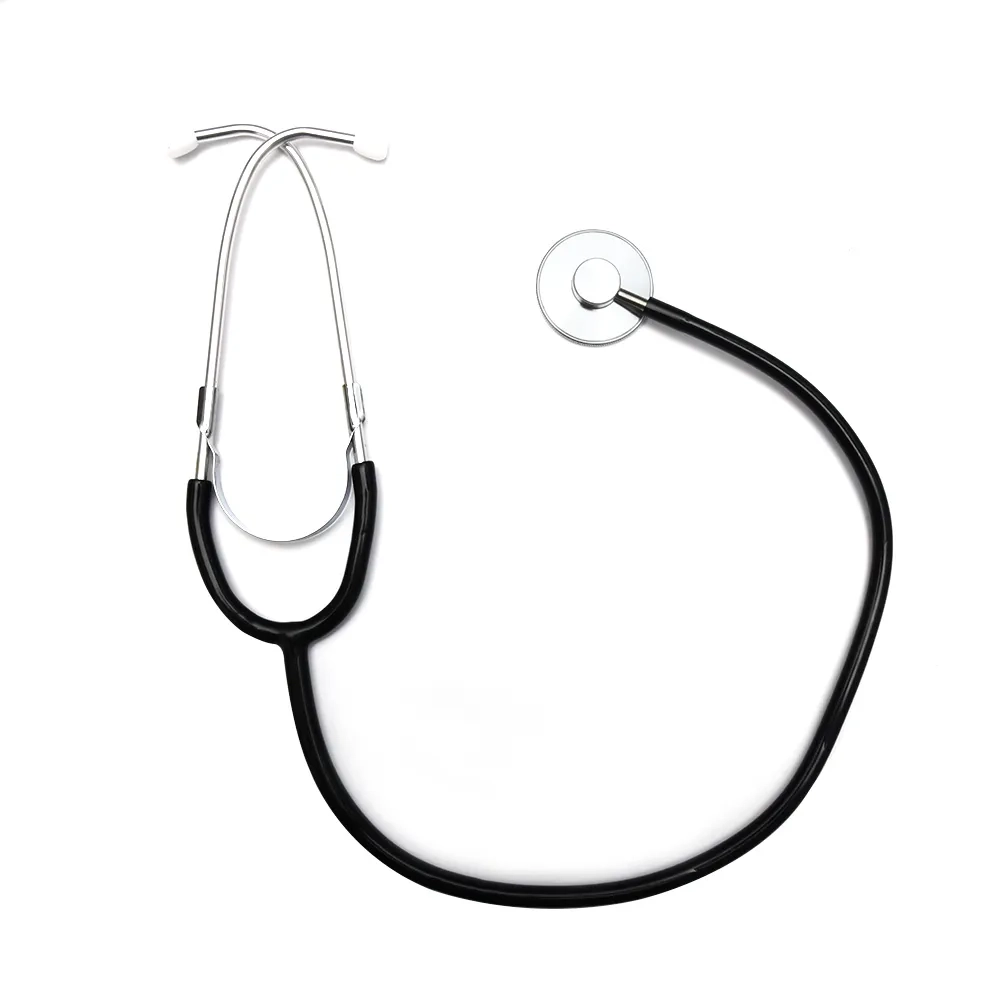
Home blood pressure monitors, including bluetooth blood pressure monitor models, are sometimes perceived as less accurate than the auscultatory method used in clinical settings. However, numerous studies have shown that validated home monitors can match or exceed office readings in reflecting true cardiovascular risk.
The phenomenon of white-coat hypertension, where blood pressure rises in clinical settings due to anxiety, affects up to 30 percent of patients. Home monitoring eliminates this variable. Conversely, masked hypertension, where readings are normal in the clinic but elevated at home, affects approximately 10 percent of adults and can only be detected through home monitoring.
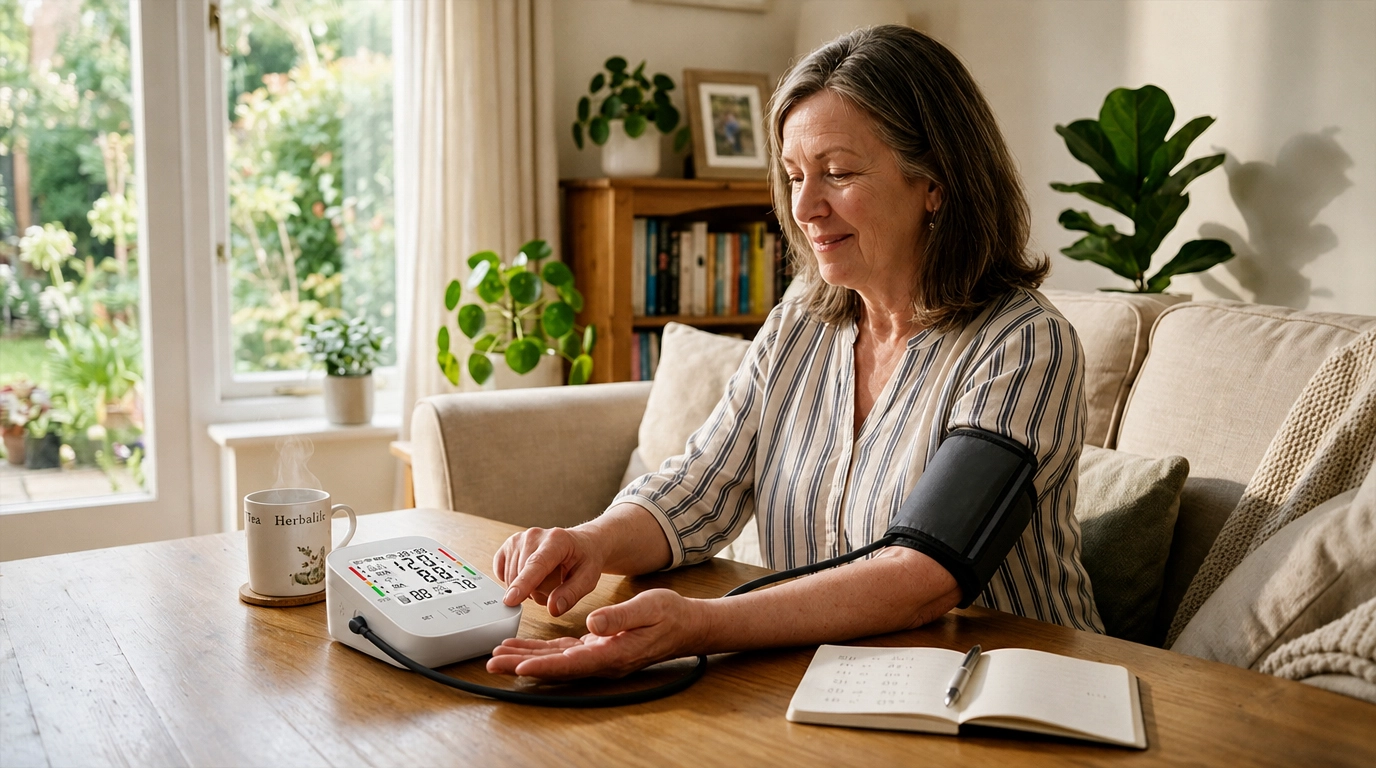
The American Heart Association recommends taking two readings one minute apart, morning and evening, for at least one week before a clinical visit. A bluetooth blood pressure monitor makes this protocol effortless by automatically timestamping and logging every reading. The resulting average provides a more reliable basis for treatment decisions than a single office measurement.
6. Multi-User Support and Family Health Tracking
Many households have more than one person who needs to monitor blood pressure. A quality bluetooth blood pressure monitor supports multiple user profiles, typically two to four, each with independent storage and trend tracking. The A&D Medical Premium+, for example, accommodates four users with 60 readings each, while the Finicare FC-BP123 supports dual-user profiles with 200 readings total.
Multi-user support is not just about storage capacity. Each user's data should be visually separated in the app, with distinct trend lines, averages, and alert thresholds. This separation prevents one family member's elevated readings from skewing another's baseline and ensures that medication decisions are based on the correct individual's data.
For aging parents, a bluetooth blood pressure monitor with remote sharing capabilities is particularly valuable. Adult children can receive their parents' readings via a shared app account, enabling proactive monitoring without daily phone calls. This feature supports independent living while providing peace of mind for the entire family.
7. Finicare Bluetooth Blood Pressure Monitor Technology
Finicare was established in 2017 and is a high-tech enterprise integrating research and development, manufacturing, and sales. Headquartered in Shenzhen, China, the company specializes in electronic blood pressure monitors, pulse oximeters, infrared thermometers, mesh nebulizers, and other home medical devices. Finicare products are exported to more than eighty countries across Europe, North America, the Middle East, and Southeast Asia.
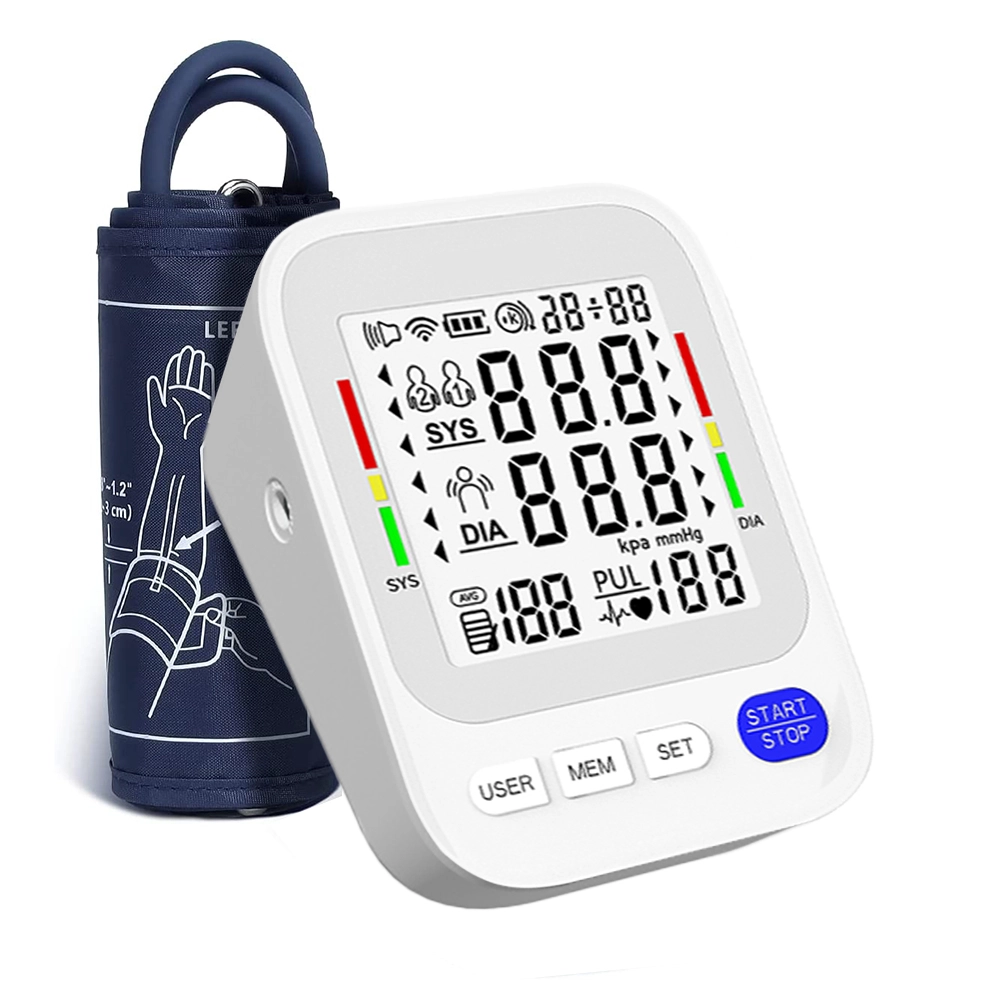
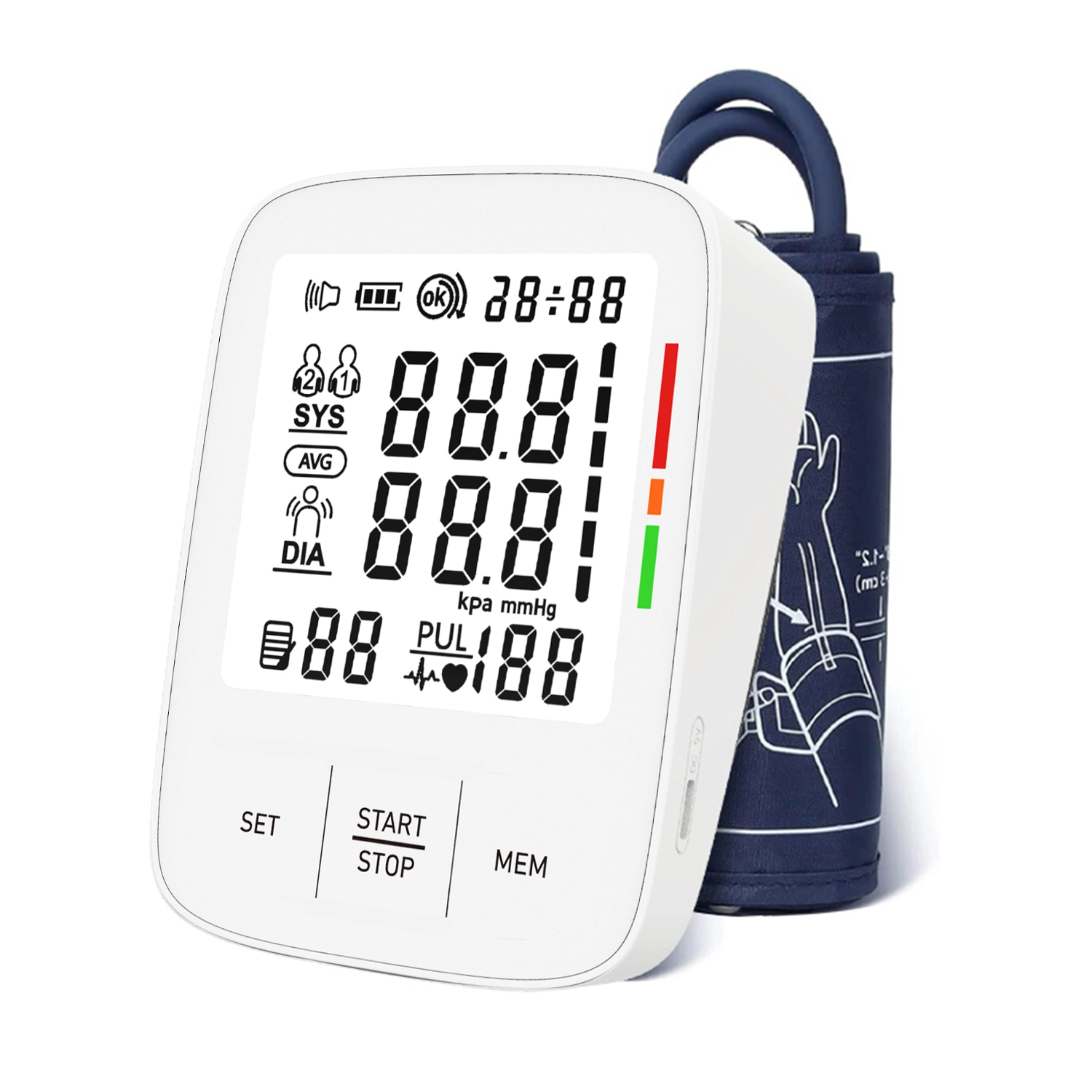
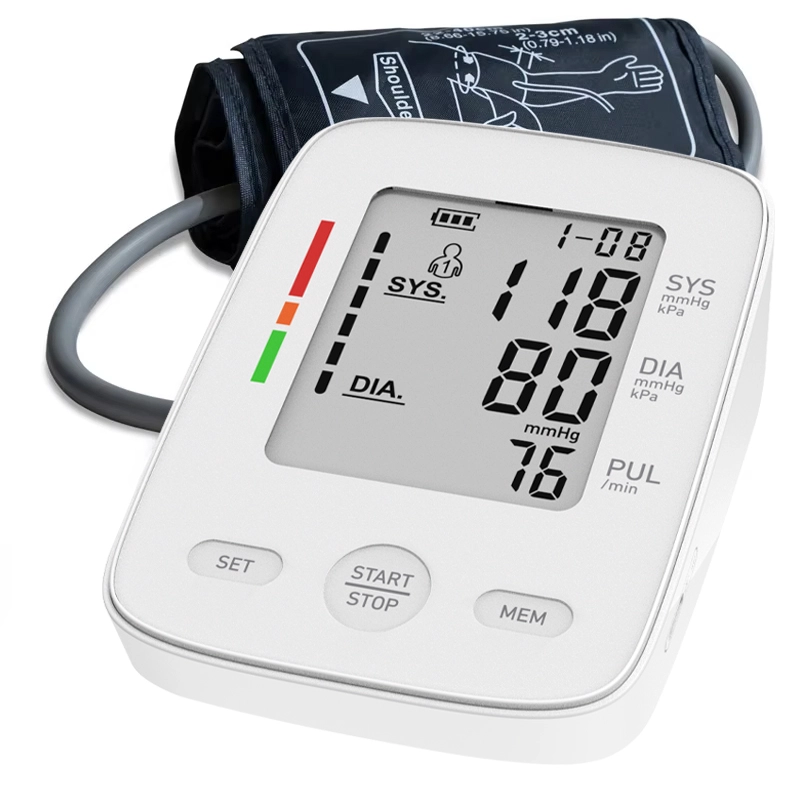
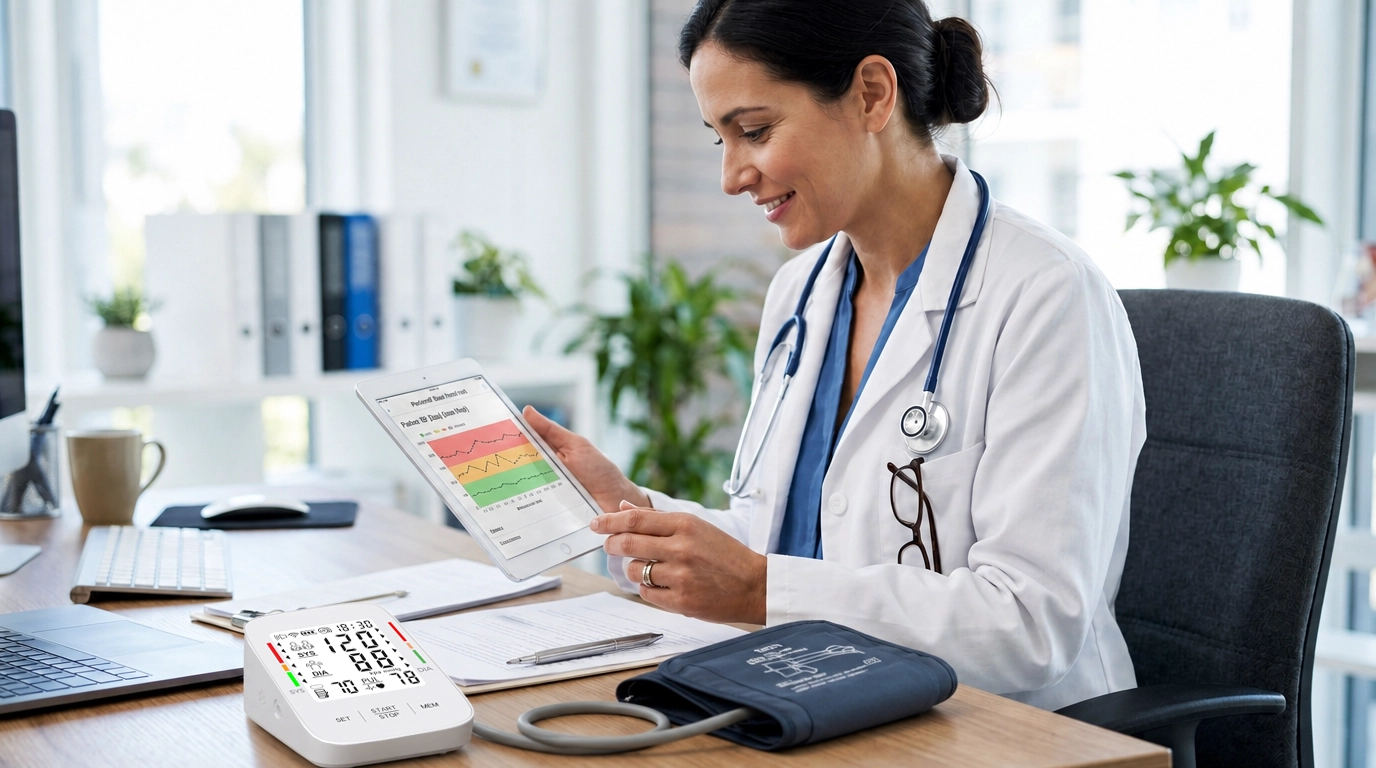
The Finicare FC-BP123 bluetooth blood pressure monitor exemplifies the company's design philosophy: clinical accuracy wrapped in an accessible, consumer-friendly form factor. The device features a white rounded rectangular body with a large LCD display showing systolic, diastolic, and pulse readings simultaneously. A color-coded risk indicator bar (red, orange, green) next to the readings provides instant visual feedback. Physical buttons include SET for configuration, START/STOP for one-touch measurement, and MEM for reviewing stored readings. The unit includes 200 onboard memory slots, dual-user support, USB-C charging, and an auto-off function to preserve battery life.
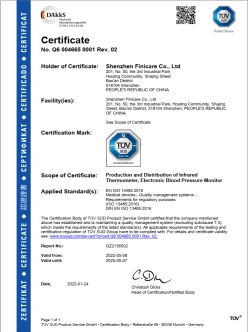
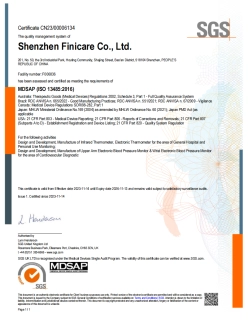
Every Finicare bluetooth blood pressure monitor is manufactured under ISO 13485 quality management, carries FDA 510(k) clearance and CE MDR marking, and undergoes incoming inspection, in-process control, final testing, and outbound audit before shipment. The companion app provides unlimited cloud storage, trend visualization, irregular heartbeat alerts, and secure data sharing with healthcare providers via email or PDF export.
8. App Integration with Apple Health and Google Fit
A bluetooth blood pressure monitor is only as useful as the ecosystem it connects to. The most valuable devices integrate with major health platforms so that blood pressure data becomes part of a holistic health picture rather than an isolated metric.
Apple Health integration allows systolic, diastolic, and heart rate data from a bluetooth blood pressure monitor to appear alongside steps, sleep, nutrition, and other metrics in the Apple Health app. This unified view helps users and their physicians identify correlations between lifestyle factors and cardiovascular trends.
Google Fit integration offers similar benefits for Android users. However, Google announced that the Google Fit API will be replaced by the Health Connect platform, and device manufacturers are updating their apps to support the new framework. Buyers should verify that the bluetooth blood pressure monitor they choose supports the latest platform version.
Beyond Apple and Google, many bluetooth blood pressure monitor apps offer direct integration with telemedicine platforms, enabling real-time data sharing during virtual consultations. This capability has become increasingly important as remote patient monitoring programs expand post-pandemic.
9. Common Mistakes That Affect Reading Accuracy
Even the best bluetooth blood pressure monitor will produce inaccurate readings if used incorrectly. The most common mistakes include:
Measuring immediately after eating, exercising, or consuming caffeine. Wait at least thirty minutes after any of these activities before taking a reading.
Talking during measurement. Conversation can raise blood pressure by several mmHg. Sit quietly with feet flat on the floor and back supported for five minutes before and during the measurement.
Incorrect cuff positioning. The cuff should be placed on bare skin, approximately two to three centimeters above the elbow crease, with the artery marker aligned over the brachial artery. A loosely or tightly applied cuff introduces systematic error.
Using the wrong cuff size. A cuff that is too small overestimates blood pressure, while one that is too large underestimates it. Measure arm circumference before purchasing a bluetooth blood pressure monitor and select the appropriate cuff size.
Taking only a single reading. The American Heart Association recommends averaging two or three consecutive readings taken one minute apart. A bluetooth blood pressure monitor with multi-reading averaging, such as the Omron TruRead feature, automates this process.
10. The Future of Connected Cardiovascular Monitoring
The bluetooth blood pressure monitor market is evolving rapidly. AI-powered algorithms are being integrated into companion apps to detect atrial fibrillation from blood pressure waveform data, with some devices achieving 95 percent sensitivity and 98 percent specificity in clinical studies. Apple introduced blood pressure alerts in its Apple Watch Series 11 in September 2025, signaling growing convergence between wearable and traditional monitoring technologies.
Cloud-integrated remote monitoring platforms are expanding, allowing healthcare systems to track patient blood pressure data in real time and intervene before complications develop. The Withings BPM Vision, unveiled at CES 2026, supports up to eight user profiles and features Wi-Fi connectivity for automatic syncing without a smartphone nearby.
Finicare's R&D team is actively developing next-generation bluetooth blood pressure monitor technology, including multi-wavelength sensors for enhanced arrhythmia detection, predictive analytics for cardiovascular risk assessment, and seamless integration with electronic health record systems. These innovations will further bridge the gap between home monitoring and clinical care, making a bluetooth blood pressure monitor an indispensable tool for preventive cardiology.
Summary
A bluetooth blood pressure monitor transforms home cardiovascular monitoring by wirelessly transmitting each reading to a smartphone app for unlimited storage, trend analysis, and easy sharing with healthcare providers. The global market is projected to grow at a 10.1 percent CAGR through 2033, driven by smart connected devices, AI-powered arrhythmia detection, and remote patient monitoring adoption.
When choosing a device, look for clinical validation (AAMI, ESH, or ISO 81060-2), AMA Validated Device Listing status, appropriate cuff size, multi-user support, irregular heartbeat detection, and seamless app integration with Apple Health or Google Fit. The Finicare FC-BP123 exemplifies these standards with its FDA 510(k) clearance, ISO 13485 manufacturing, CE MDR marking, color-coded risk indicator, 200-reading dual-user memory, and USB-C charging. By following proper measurement technique and leveraging Bluetooth connectivity for continuous data tracking, patients and physicians can make better-informed treatment decisions and achieve superior blood pressure control.