




Upper Arm vs Wrist Blood Pressure Monitor: Which Device Gives You a Number You Can Trust?
Preface
The choice between an upper arm and a wrist blood pressure monitor looks like a matter of convenience, and most comparisons of the upper arm vs wrist blood pressure monitor stop there. One device wraps around the bicep, the other straps to the wrist like a watch, and both display a systolic and diastolic number within a minute. The difference in practice is larger than the difference in appearance. The upper arm is the site used to validate clinical devices, the site where the artery is large, stable, and close to heart level, and the site that public health guidance recommends for home monitoring. The wrist is easier to put on, easier to store, and easier to use in a small apartment, but it measures a smaller peripheral artery and depends on the wrist being held at exactly heart level. A wrist device used correctly can produce useful numbers; a wrist device used casually can be wrong by fifteen to twenty millimeters of mercury. This guide compares the two form factors in detail: the physics of oscillometric measurement, the evidence on accuracy, the hydrostatic effect that makes wrist height so important, the users who genuinely benefit from a wrist model, and the checks that separate a validated device from a consumer gadget. It is written for people buying their first home monitor, caregivers choosing for a parent, clinic staff who teach patients, and distributors comparing product lines. The goal is not to declare one format universally superior, but to explain when each one can be trusted and what it takes to get there.
Table of Contents
- 1. The Short Answer: Why Arm Cuffs Remain the Reference
- 2. How Oscillometric Measurement Works in Each Device
- 3. Accuracy Evidence: What Guidelines and Studies Actually Say
- 4. The Hydrostatic Problem: Why Wrist Height Changes the Number
- 5. Who Should Choose a Wrist Monitor
- 6. Who Should Choose an Upper Arm Monitor
- 7. Cuff Fit and Arm Size: The Variable Nobody Measures
- 8. Using a Wrist Monitor Correctly
- 9. Validation, Standards, and What to Check Before Buying
- 10. Finicare BP210 and BP121: Two Form Factors, One Standard
- 11. Building a Side-by-Side Comparison at Home
1. The Short Answer: Why Arm Cuffs Remain the Reference
Every major guideline that addresses home blood pressure monitoring recommends a validated upper arm cuff device, and the recommendation is not arbitrary. The brachial artery in the upper arm is a large, central vessel. It sits close to the level of the heart when the arm is supported, it is surrounded by enough tissue for a cuff to compress it evenly, and it is the artery against which clinical validation studies compare every new device. When a manufacturer claims that a monitor meets ISO 81060-2, the reference measurement was almost certainly taken at the upper arm by a trained observer using auscultation or a validated reference device.
The wrist is a different measurement site with a different set of assumptions. The radial artery is smaller, more peripheral, and more responsive to vasoconstriction from cold or stress. Its position relative to the heart changes the moment the forearm moves. None of this makes wrist measurement invalid, but it makes the technique less forgiving. A wrist monitor can be accurate when it is validated, correctly fitted, and held at heart level for the entire reading. It can also be badly wrong when it is used with the arm resting on a lap or hanging at the side, which is how many people naturally use a watch-like device.
The practical answer to upper arm vs wrist blood pressure monitor is therefore conditional rather than absolute. For most people, most of the time, the upper arm device is the safer default because it produces usable numbers with less discipline. For a defined group of users, the wrist device is the better choice because the alternative is no measurement at all. The rest of this article explains where that line falls.
2. How Oscillometric Measurement Works in Each Device
A wrist device fitted in clinic with the forearm supported at heart level; an upper arm monitor waits on the desk for comparison.
Both formats use the oscillometric method. The cuff inflates above systolic pressure, then deflates in controlled steps. As the artery opens and closes beneath the cuff, pressure oscillations travel through the tubing to a transducer. The device records the amplitude of those oscillations at each pressure step and fits them to a curve. The point of maximum oscillation corresponds roughly to mean arterial pressure, and the systolic and diastolic values are derived from the shape of the envelope using an algorithm calibrated by the manufacturer. No microphone listens for Korotkoff sounds; the device is measuring pressure waves, not sound.
The difference between the formats lies in the artery being compressed and the tissue around it. An upper arm cuff surrounds the brachial artery with a broad bladder and a long wrap, which produces a relatively uniform compression field. A wrist cuff surrounds the radial artery with a much narrower band, and the artery sits close to the surface over bone and tendon. The signal is smaller and more sensitive to strap tension, wrist rotation, and movement. This is why wrist devices require a snug fit and a still arm, and why a loose strap can distort the reading more than the same mistake would on an upper arm cuff.
The algorithm also assumes a fixed relationship between the oscillation envelope and the true arterial pressure. That relationship is established during validation for a specific device on a specific population. A wrist device validated on adults with a normal wrist circumference may perform differently on a very thin or very large wrist, because the tissue between the cuff and the artery changes the transmission of pressure. The measurement principle is the same, but the margin for error is narrower, and the user's technique becomes part of the calibration. That is the practical difference in the upper arm vs wrist blood pressure monitor split: the principle is shared, the error budget is not.
3. Accuracy Evidence: What Guidelines and Studies Actually Say
The published evidence consistently favors the upper arm. Clinical guidance from major heart organizations recommends validated upper arm monitors for home use, and consumer health reviews repeat the same conclusion. Cleveland Clinic describes upper arm monitors as more reliable and suggests wrist devices mainly for people whose arms do not fit a standard cuff well or who find arm cuffs painful. A 2026 comparison published by Acibadem International notes that arm cuffs are preferred for accuracy and that wrist readings can be fifteen to twenty millimeters of mercury too high when the wrist is not positioned correctly.
The wrist literature is more nuanced than a simple verdict. Studies of validated wrist devices used under controlled conditions show acceptable agreement with reference measurement, which is why wrist monitors can be certified at all. The problem is the gap between controlled conditions and a living room. When researchers observe patients using wrist devices at home, positioning errors are common, and the resulting bias is large enough to change a diagnosis. The device is not inherently inaccurate; the technique required to keep it accurate is simply harder to sustain.
Cuffless wearables occupy a different category. A 2025 Harvard Health review of cuffless blood pressure technology noted that these devices still require periodic calibration against a traditional cuff and that clinical trials have not yet demonstrated equal effectiveness. A 2025 review in Hypertension Research reached a similar conclusion about wearable devices: the field is promising, but validation remains the bottleneck. For anyone choosing between an upper arm and a wrist monitor today, the relevant evidence is the validated cuff device literature, not the marketing claims around smartwatches.
4. The Hydrostatic Problem: Why Wrist Height Changes the Number
Blood has weight. A column of blood ten centimeters tall exerts roughly seven to eight millimeters of mercury of pressure, which means that the height of the measuring site relative to the heart directly changes the number the device reports. This is the hydrostatic effect, and it is the single most important reason wrist monitors fail in practice. When the wrist is held at heart level, the pressure at the radial artery matches the pressure at the aorta closely enough for a useful reading. When the wrist drops to the lap, the column of blood between the heart and the wrist adds pressure, and the device reads high. When the wrist is raised above the heart, the reading falls.
The magnitude is not trivial. A wrist positioned ten centimeters below heart level can add about seven millimeters of mercury; a wrist resting on a lap while the person leans back can be lower still. Acibadem's comparison cites errors of fifteen to twenty millimeters of mercury with poor positioning, which is enough to move a normal reading into the hypertensive range. Upper arm devices are less vulnerable because the cuff is already near heart level when the arm is supported, and because the brachial artery is closer to the central circulation. The upper arm still needs support, but the tolerance is larger. In this sense the upper arm vs wrist blood pressure monitor debate is a debate about hydrostatic distance.
This is why wrist monitor instructions are unusually specific about posture. The elbow must rest on a table, the forearm must be supported, and the wrist must be at the same height as the heart, usually described as mid-chest level. The hand should be relaxed, not clenched, because muscle contraction alters blood flow. The device should be worn on the bare wrist, with the cuff edge about one centimeter from the wrist crease. None of these instructions are decorative; each one controls a source of error that is larger on the wrist than on the arm.
5. Who Should Choose a Wrist Monitor
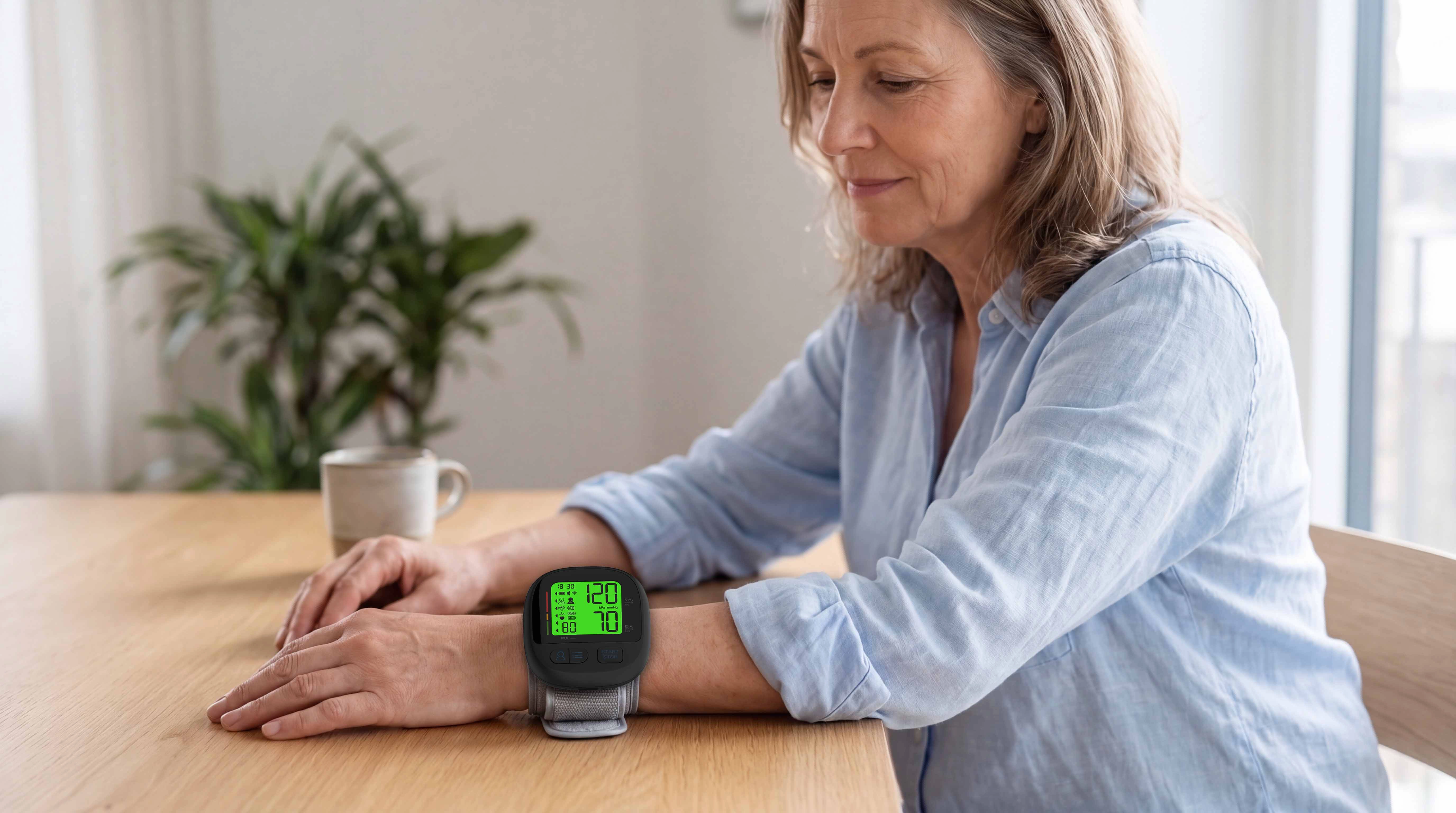
Correct wrist technique at home: forearm supported on the table, cuff snug on bare skin, wrist level with the heart.
A wrist monitor is the right purchase for a specific set of circumstances. The most common is arm size. Standard upper arm cuffs fit a limited circumference range, and a person with a very large arm may need a special cuff that is expensive, uncomfortable, or simply unavailable for the device they own. A wrist cuff covers a narrower range of anatomy and can be the only practical option. The second is mobility. People with shoulder or elbow problems, or who have limited range of motion after surgery, may find it difficult or painful to wrap an upper arm cuff and position the arm correctly. A wrist device that can be fastened with one hand removes a real barrier to monitoring.
The third circumstance is environment. Small apartments, shared housing, and workplaces may not have a table at the right height or a chair with proper back support. A wrist device can be used while seated at a desk, in a car, or during travel, provided the wrist can be supported at heart level. The fourth is behavioral. Some people simply will not measure consistently with an upper arm device, and a wrist monitor they actually use is better than an ideal device that stays in a drawer. Adherence matters as much as accuracy when the goal is a seven-day log rather than a single reading. None of this changes the physics, but it changes who can realistically satisfy the upper arm vs wrist blood pressure monitor requirements.
These advantages come with obligations. A wrist monitor should be validated, should fit the wrist circumference accurately, and should be used with the wrist supported at heart level every time. It should not be used to diagnose hypertension on its own, and it should not be compared directly with an office reading taken at the upper arm without acknowledging the difference in site. For users who meet the criteria and accept the technique, a wrist device can produce a reliable trend. For users who want the simplest path to a trustworthy number, it remains a second choice.
6. Who Should Choose an Upper Arm Monitor
An upper arm monitor is the better default for most adults, and the reasons are practical rather than ideological. It is the format used in validation studies, the format recommended by heart organizations, and the format that produces stable numbers with the least positional discipline. The cuff is larger, the artery is larger, and the measurement site is close to the heart even when the arm is only approximately supported. For a person measuring twice a day for a week, that tolerance translates into fewer unusable readings and a cleaner average.
Upper arm devices also offer a wider choice of validated models. The public validated device listings maintained by the American Medical Association and its partners are dominated by upper arm monitors, which means a buyer can verify accuracy before purchase rather than trusting a package claim. Cuff sizes are more varied, including small adult, adult, large adult, and thigh cuffs, and replacement cuffs are easier to source. For clinics and distributors, that ecosystem matters: a device with a documented validation file and a replaceable cuff is easier to support over its service life than a sealed wrist unit.
The upper arm format is not without demands. The cuff must be the right size, the arm must be bare or covered only by a thin sleeve, the back must be supported, the feet must be flat, and the arm must rest at heart level. The tube must not be kinked, and the cuff must sit two to three centimeters above the elbow crease. These are the same requirements described in any accurate measurement protocol, and they are easier to meet because the device is designed around them. When someone asks which side of the upper arm vs wrist blood pressure monitor debate they should choose, the honest answer is the upper arm unless a specific limitation makes it impractical.
7. Cuff Fit and Arm Size: The Variable Nobody Measures
Cuff fit is the most underrated source of error in home blood pressure measurement, and it affects both formats. An upper arm cuff that is too small overestimates pressure because the bladder cannot compress the artery evenly; a cuff that is too large can underestimate, though the effect is usually smaller. Clinical guidance describes the correct bladder as encircling 75 to 100 percent of the arm circumference, with a width of roughly 37 to 50 percent. A wrist cuff has a narrower fit range and a different geometry, and a strap that is too loose allows the device to shift during inflation.
Measuring the arm or wrist before buying is therefore part of the decision, not an afterthought. Arm circumference is measured at the midpoint between the shoulder and the elbow; wrist circumference is measured just proximal to the wrist crease. The manufacturer's range should be checked against the measurement, and the cuff should be replaced if the arm changes size substantially. A device that fits poorly is not made accurate by better posture, and a device that fits well is easier to use correctly. This is true whether the device is an upper arm model with a conical cuff or a wrist model with a flexible strap. For either format, the upper arm vs wrist blood pressure monitor decision starts with a tape measure, not a specification sheet.
Arm shape matters as well. A conical arm, wider at the shoulder than at the elbow, may need a conical cuff rather than a cylindrical one to avoid uneven compression. A very short upper arm may make it difficult to position a standard cuff two to three centimeters above the elbow without encroaching on the shoulder. A wrist that is very thin may not fill the cuff pad, and a wrist that is very thick may exceed the strap length. These are the cases where a wrist monitor becomes genuinely useful, and also the cases where a trial fitting before purchase is worth the effort.
8. Using a Wrist Monitor Correctly
Correct wrist technique begins before the cuff is fastened. The person should be seated with the back supported and feet flat, and the forearm should rest on a table or armrest so that the wrist sits at heart level. The sleeve should be removed from the wrist, and the cuff should be wrapped snugly against the skin with the display facing the user. The hand should be relaxed and open, not clenched, and the arm should not be tense. The device should be started only after five minutes of quiet rest, and the user should remain still and silent during inflation.
The most common mistake is letting the wrist drift downward during the reading. A wrist that starts at heart level and slowly drops as the cuff inflates can produce a reading that is several millimeters of mercury too high. Supporting the forearm on a firm surface, rather than holding it in the air, prevents this drift. The second most common mistake is measuring over clothing or with the cuff loose, which reduces the transmission of pressure to the artery. The third is measuring immediately after activity, when peripheral blood flow and pressure are still changing.
Repeatability is the final piece. Two readings should be taken at least one minute apart and averaged, with a third reading if the first two differ by more than five millimeters of mercury. The readings should be recorded with the date, time, and arm, and the same wrist should be used each time. A wrist device used this way can produce a usable trend, especially when the user understands that the number is a peripheral measurement rather than a central one. The technique is more demanding than upper arm measurement, but it is not mysterious, and most errors are visible once the user knows what to look for. That discipline is what makes the upper arm vs wrist blood pressure monitor comparison fair to the smaller device.
9. Validation, Standards, and What to Check Before Buying
Validation is the dividing line between a medical device and a gadget. A home monitor should be independently validated against a reference standard, and the international benchmark is ISO 81060-2, which requires a device's readings to agree with reference auscultation within defined limits, typically a mean difference no greater than five millimeters of mercury and a standard deviation no greater than eight. In the United States, the practical way to check is the public validated device listing maintained by the American Medical Association and its partners. In Europe, the manufacturer should be able to provide a validation study or a notified body certificate.
The validation question is especially important for wrist devices, because the wrist market includes many inexpensive products that have never been independently tested. A validated wrist monitor will state the standard it met and the population it was tested on. A device that cites only a CE mark or an ISO 13485 factory certificate has not demonstrated clinical accuracy; those documents certify manufacturing quality and market access, not measurement agreement. Buyers should ask for the validation report, not just the certificate, and should check that the model number in the report matches the product they are buying.
Regulatory status and validation are related but distinct. A device can be registered as a medical device in one market and still lack independent validation, and a device can be validated without being registered everywhere. For home use, the buyer needs both: a device that is legally marketed for blood pressure measurement in the relevant jurisdiction and a validation study that covers the model. The same logic applies to upper arm and wrist devices, but the wrist segment has more products that fail one or both tests, which is why the check matters more there. For the upper arm vs wrist blood pressure monitor decision, the same two documents settle the question for either format.
10. Finicare BP210 and BP121: Two Form Factors, One Standard
Finicare BP210 wrist monitor: green backlit LCD, dual-user memory, voice broadcast, and Bluetooth.
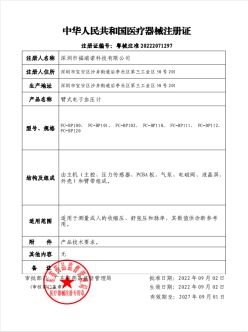
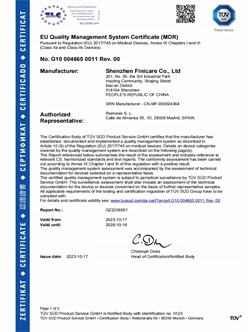
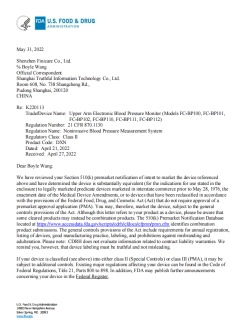
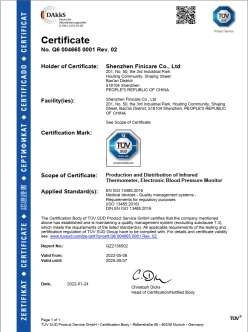
Finicare, established in 2017 and integrating research and development, production, and sales, is a Shenzhen-based medical device manufacturer exporting to more than 80 countries. Its portfolio includes blood pressure monitors in both formats, which makes the upper arm vs wrist blood pressure monitor comparison concrete rather than theoretical. The company's certified product file includes FDA 510(k), CE (MDR), TGA, MDL, UKRP, NMPA, FSC, FCC, and RoHS certifications, while the factory operates under ISO 13485 with MDSAP recognition and BSCI social compliance. Buyers evaluating either format should verify certificates and validation documents with the issuing body rather than relying on packaging claims.
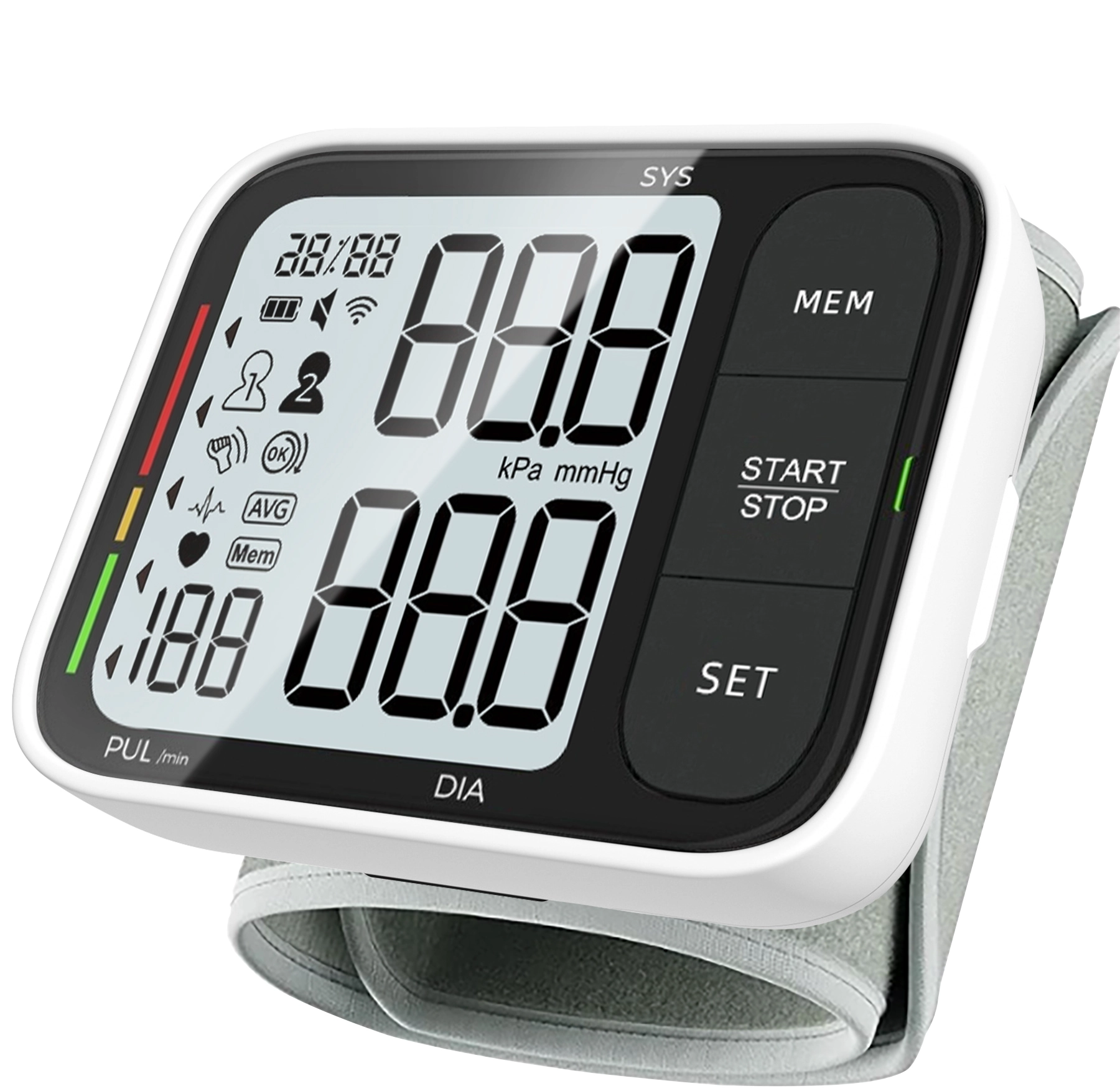
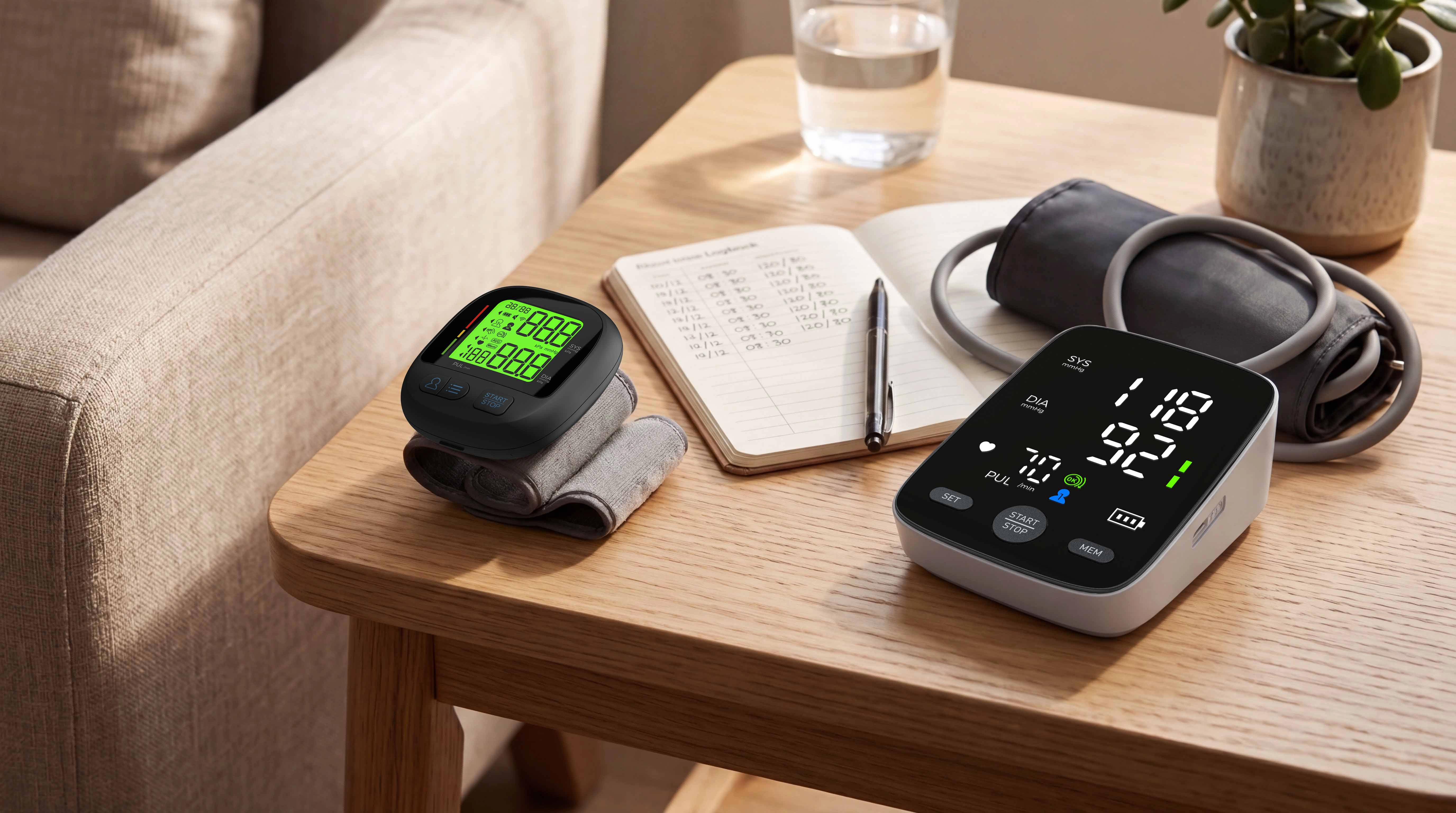
The BP210 is a wrist monitor designed around the constraints of wrist measurement. Its black rounded housing carries a bright green backlit LCD that displays systolic pressure, diastolic pressure, and pulse in large digits, with a color indicator bar, dual user memory, average mode, irregular heartbeat detection, voice broadcast, and Bluetooth connectivity. The cuff is a flexible strap sized for the wrist, and the device includes a self-test and body-movement warning that help the user notice a poor measurement. Those features do not remove the need for heart-level positioning, but they make the correct technique easier to repeat.
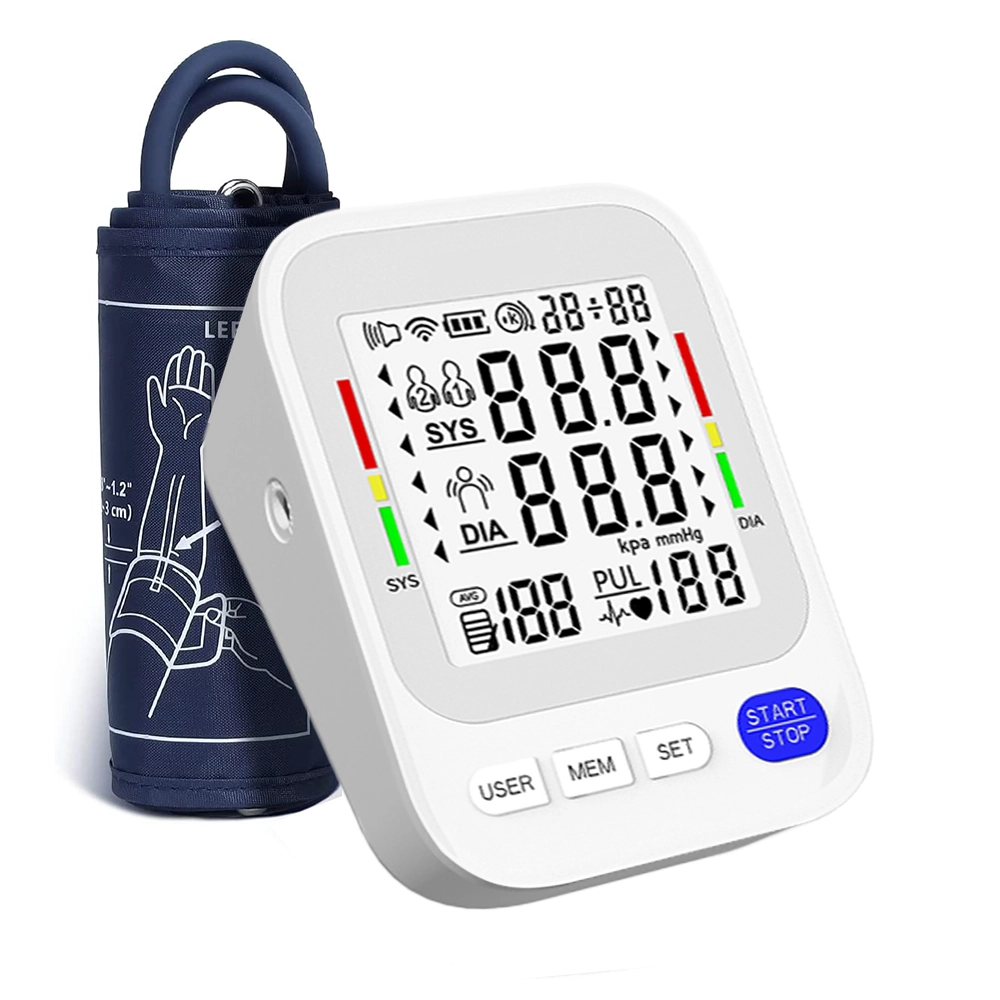
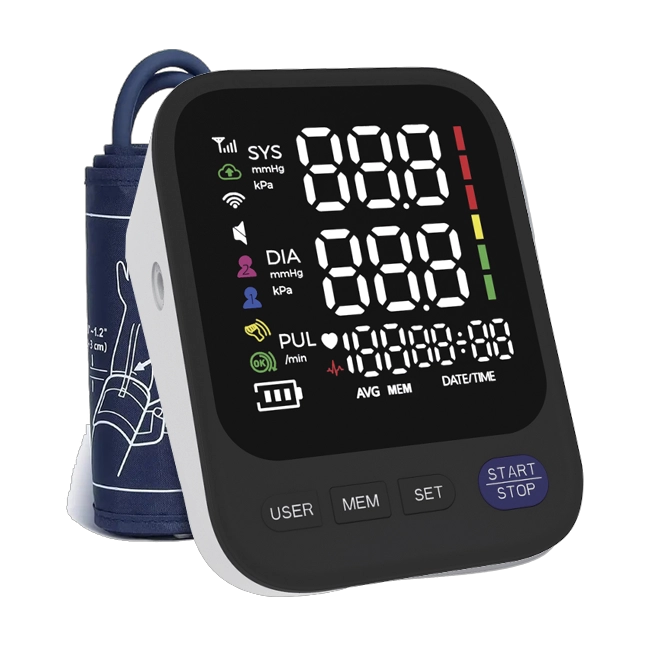
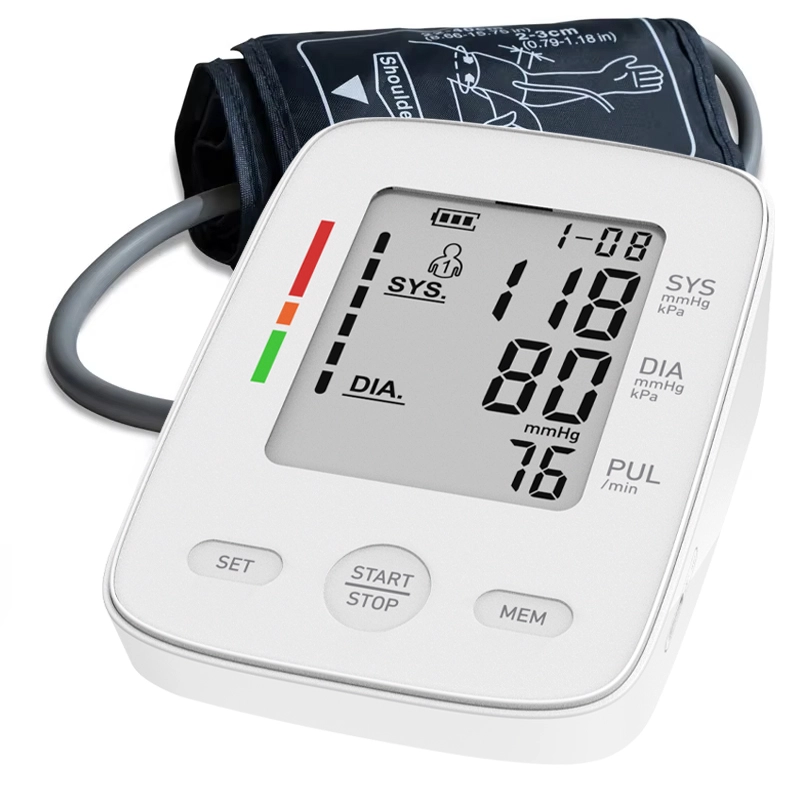
The BP121 is an upper arm monitor built for the same measurement standard in a different form. Its white rounded body carries a black front panel with a large LED display, dual user memory, averaging, voice broadcast, and Bluetooth, and it uses a standard upper arm cuff with a broad bladder. For a household that includes one person who needs a wrist device and another who prefers the upper arm, the two models can be used side by side with the same logging routine. The important point is not that one device is branded better than the other; it is that each format has a defined technique, and the manufacturer's documentation should describe the conditions under which the device was validated.
11. Building a Side-by-Side Comparison at Home
A side-by-side log at home: BP210 wrist monitor, BP121 upper arm monitor, and a paper record of daily readings.
A household that owns both formats can compare them in a way that is genuinely informative, provided the comparison is controlled. The person should rest for five minutes, then take two upper arm readings one minute apart with the arm supported at heart level, followed by two wrist readings one minute apart with the wrist supported at heart level. The order should be alternated on subsequent days to avoid an order effect, and all readings should be recorded with time and position. A consistent difference of five millimeters of mercury or less between the two sites is reassuring; a larger difference suggests a technique problem, a cuff-fit problem, or a device that needs verification. This is the only controlled way to answer the upper arm vs wrist blood pressure monitor question in your own home.
The comparison should not be used to decide which number is "real" in an absolute sense. The upper arm reading is closer to the validated reference, and the wrist reading is a peripheral measurement influenced by local anatomy. If the two disagree, the upper arm value should carry more weight in clinical discussions, and the wrist value should be treated as a trend that is useful only when the technique is consistent. A clinician can help interpret the difference, especially if one arm has a history of vascular access, injury, or surgery.
The final step is maintenance. Cuffs should be cleaned according to the manufacturer's instructions, tubes should be checked for cracks, and batteries should be replaced before performance degrades. Devices should be stored away from heat and direct sunlight, and a monitor that has been dropped or that produces implausible readings should be checked against a clinical measurement. A home monitor is a measuring instrument, and the comparison between upper arm and wrist is ultimately a comparison between two instruments that deserve the same scrutiny. The device that fits the user's body, technique, and daily routine is the one that will produce the most useful record, and that record is what a clinician can act on.
Summary
Upper arm monitors remain the reference for home blood pressure measurement because the brachial artery is large, central, and forgiving of small positional errors. Wrist monitors can be accurate when they are validated, correctly fitted, and held at heart level, but they are more sensitive to hydrostatic error, cuff fit, and movement, and poor positioning can inflate readings by fifteen to twenty millimeters of mercury. Wrist devices are the better choice for people with very large arms, limited mobility, or environments where an upper arm cuff is impractical, provided the user accepts the stricter technique. Upper arm devices are the safer default for most adults, and validated models are easier to verify through public listing programs.
Whichever format is chosen, accuracy depends on the same fundamentals: a validated device, a correctly sized cuff, five minutes of quiet rest, a supported back and arm, the cuff at heart level, two readings averaged, and an honest log. Finicare, established in 2017 and integrating R&D, production, and sales, manufactures both the BP210 wrist monitor with its green backlit LCD and dual-user memory and the BP121 upper arm monitor with its large LED display, exported to more than 80 countries under FDA 510(k), CE (MDR), TGA, MDL, UKRP, NMPA, FSC, FCC, and RoHS certifications, with ISO 13485, MDSAP, and BSCI factory certifications. The right device is the one whose measurement conditions the user can reproduce every day.